

Q&A
Suzanne Maloney, Aaron David Miller, Karim Sadjadpour
{
  "authors": [
    "Karim Sadjadpour"
  ],
  "type": "legacyinthemedia",
  "centerAffiliationAll": "dc",
  "centers": [
    "Carnegie Endowment for International Peace",
    "Malcolm H. Kerr Carnegie Middle East Center"
  ],
  "collections": [],
  "englishNewsletterAll": "menaTransitions",
  "nonEnglishNewsletterAll": "",
  "primaryCenter": "Carnegie Endowment for International Peace",
  "programAffiliation": "MEP",
  "programs": [
    "Middle East"
  ],
  "projects": [],
  "regions": [
    "Middle East",
    "Iran"
  ],
  "topics": [
    "Political Reform",
    "Foreign Policy"
  ]
}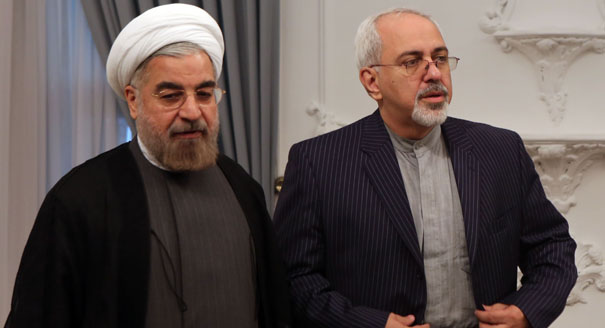
Source: Getty
While the United States and Iran have shared numerous adversaries, such as the Soviet Union, the Taliban, al-Qaeda, and now the Islamic Staet, the strategic enmity between the two countries has prevailed.
Source: European Council on Foreign Relations
“When you look at the main conflicts in today’s Middle East—Syria, Yemen, Bahrain, Lebanon, Iraq—one common element that transcends all these conflicts is the Iran-Saudi rivalry,” said Carnegie’s Karim Sadjadpour at the European Council on Foreign Relations. He explained that this conflict has three dimensions to it: ethnic, sectarian, and ideological. Both countries are confident that they’re the natural leader of the Islamic world and the Middle East, Sadjadpour continued.
In regards to the relationship between the United States and Iran, he argued that while both countries have shared numerous adversaries, such as the Soviet Union, the Taliban, al-Qaeda, and now the Islamic State, the strategic enmity between the United States and Iran has prevailed, driven more by Tehran than Washington. There’s a real fundamental incongruence between the urgent national security concerns of Iran, such as radical Sunni jihadism and Iran’s revolutionary ideology.
This presentation was originally published by European Council on Foreign Relations.

Senior Fellow, Middle East Program
Karim Sadjadpour is a senior fellow at the Carnegie Endowment for International Peace, where he focuses on Iran and U.S. foreign policy toward the Middle East.
Recent Work

Suzanne Maloney, Aaron David Miller, Karim Sadjadpour

Aaron David Miller, Karim Sadjadpour, Robin Wright
Carnegie does not take institutional positions on public policy issues; the views represented herein are those of the author(s) and do not necessarily reflect the views of Carnegie, its staff, or its trustees.

In the discussions made possible by the State Duma election campaign, one question is being asked more and more loudly. “What next?”

Andrey Pertsev

When faced with fuel shortages in the past, Central Asian governments could always count on additional supplies from Moscow. That safety net no longer exists.

Galiya Ibragimova

Two divergent trends—Putin’s hardline vision of how to prosecute the war in Ukraine, and a growing desire for change in Russia—could tear the regime apart.

Tatiana Stanovaya
Ultimately, Zelensky sided neither with the reform camp nor with the military establishment as such, but with political control.

Balázs Jarábik
Tokayev’s predecessor, Nursultan Nazarbayev, outlined arrangements for a power transition too soon and in too much detail, ultimately losing control over the process. Tokayev is determined not to meet the same fate.

Temur Umarov