

Commentary
Sarah Chayes
{
  "authors": [
    "Sarah Chayes"
  ],
  "type": "legacyinthemedia",
  "centerAffiliationAll": "dc",
  "centers": [
    "Carnegie Endowment for International Peace",
    "Malcolm H. Kerr Carnegie Middle East Center"
  ],
  "collections": [
    "Anti-Corruption"
  ],
  "englishNewsletterAll": "democracy",
  "nonEnglishNewsletterAll": "",
  "primaryCenter": "Carnegie Endowment for International Peace",
  "programAffiliation": "DCG",
  "programs": [
    "Democracy, Conflict, and Governance"
  ],
  "projects": [],
  "regions": [
    "North America",
    "United States",
    "Middle East",
    "Saudi Arabia",
    "Gulf"
  ],
  "topics": [
    "Political Reform",
    "Security",
    "Democracy",
    "Religion"
  ]
}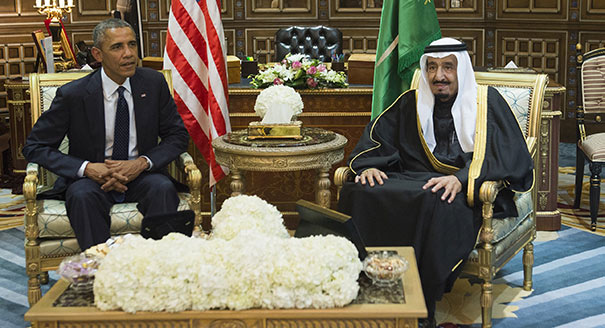
Source: Getty
U.S. officials, military and civilian, should ensure that issues of substantive political reform stay high on the agenda in interactions with their Saudi counterparts. Not in spite of the extremist menace, but because of it.
Source: Defense One
President Obama flies to Saudi Arabia on Tuesday, cutting short a visit to key democratic ally India, which recently organized the largest free and fair election in human history. In Riyadh, Obama will present our national condolences upon the death of King Abdullah ibn Abd al-Aziz. With Saudi Arabia a lynchpin of the anti-ISIS coalition and key to counterterrorism operations in imploding Yemen, the U.S.-Saudi alliance seems cemented more solidly than ever.
Is there a contradiction here?
One jarring aspect of the recent and momentous Saudi succession is that the baton passed without even the pretense of public participation. Salman ibn Abd al-Aziz was designated and crowned with no input on the matter from Saudi citizens. Rare these days are the countries — and rarer the U.S. allies — that don’t even pay lip service to the principle of democracy.Recent press coverage has drawn comparisons between the shari’a law punishments relished by ISIS, or the Islamic State, and similar sadism meted out by the courts of our key anti-ISIS ally. The public flogging of dissident blogger Raif Badawi earlier this month and the sentencing to death last fall of a Shi’ite activist are cases in point, as is the 200 lashes meted out to a Sunni writer known for building bridges with Shi’ites.
Beyond the physical and psychological abusiveness of such practices, they bode ill for the Kingdom’s political climate — and by extension that of its region. As my colleague Fred Wehrey has found, Saudi authorities seem bent on repressing minority Shi’ites rather than even considering their legitimate aspirations. Saudi officials typically demonize demands for broad-based political reform by painting them in sectarian terms. Not to mention the repression of women, among the most severe of any country on earth.
But perhaps the most disturbing Saudi legacy may be the spread of fundamentalist Islam itself. It is a matter of historical record that the ibn Saud clan made a deal with the religious establishment that espoused the rigid interpretation of Islam known as Wahhabism — especially when fighting to consolidate power over the peninsula in the early 20th century. In return for supporting the ibn Sauds, the Wahhabi establishment gained sweeping control over judicial, social, and educational affairs.
Anxious to keep the Wahhabis occupied and to deflect their puritanical zeal away from their own house, the ibn Sauds encouraged and helped finance a sweeping proselytization movement, which included the radicalization of guest-workers in Saudi Arabia and the establishment of thousands of fundamentalist mosques across much of the continent.
The United States is not blameless in the spread of this extreme brand of Islam. At the height of the Cold War, top U.S. officials such as Zbigniew Brzezinski viewed religious ideology as an antidote to Communist ideology. The U.S. joined forces with Saudi Arabia to pour rivers of cash — via the opportunistic and religiously conservative Pakistani military intelligence agency — to the most radical Islamist resistance factions in Afghanistan, for example. Thus did Washington and Riyadh fertilize seeds that eventually sprouted into the al-Qaeda network.
Some say the growth of al-Qaeda and the perhaps more frightening expansion of ISIS have caused Saudi leaders to reconsider their sorcerer’s-apprentice strategies. They have been cooperating with their U.S. counterparts on counterterrorism missions. Interior Minister and Deputy Crown Prince Muhammad ibn Nayef — the man now considered to be Saudi Arabia’s real ruler given the ill health of King Salman — is known for his de-radicalization efforts.
But even if the change of heart were genuine and complete, the impact of longstanding Saudi policies has been devastating and will not be rolled back by a few drone strikes in Yemen.
U.S. officials are proud of the Arab participation in their anti-ISIS effort. Saudi Arabia is the coalition’s crown jewel. But too often, Washington rewards counterterrorism cooperation with a blank check. One reason it should cease doing so is that counterterrorism alone is not the answer to extremism, and that’s a sentiment U.S. officials keep repeating. As Secretary of State John Kerry put it Friday at the World Economic Forum in Davos, “Eliminating the terrorists who confront us today actually only solves part of the problem…. We have to transform the very environment from which these movements emerge…. The future will be determined by accountable and accessible political and justice systems, so that people feel they can be protected by the government — not fear it.”
That sentiment applies strikingly to Saudi Arabia. For along with actively promoting Wahhabi ideology, its rulers helped spawn violent extremism by way of their autocratic practices, as a glance at al-Qaeda statements over the years makes plain. Indeed, some might say that allying with the Kindgom in the fight against violent extremism plays right into the hands of al-Qaeda and ISIS propagandists.
The U.S. should use this moment of transition and its new oil independence to adjust its relationship with Saudi Arabia, so that military considerations cease to dominate all others. In the chaotic aftermath of the Arab Spring, U.S. officials have not been especially consistent in their support for political reform in the Arab world. And the argument for authoritarianism may appear stronger than ever to Saudi rulers. But a reinforcement of past practices would be dangerous for the Middle East and ultimately for the Kingdom itself.
The suggestion here is not that Washington brand Saudi Arabia a pariah nation. It is that a close and substantive partnership does not mean an unconditional one. In the short term, as counterintuitive as it may seem, Washington should push for the rollback of recent Saudi antiterrorism laws. They are used to clamp down on ordinary political activism.
Most importantly, U.S. officials, military and civilian, should ensure that issues of substantive political reform stay high on the agenda in interactions with their Saudi counterparts. Not in spite of the extremist menace, but because of it.
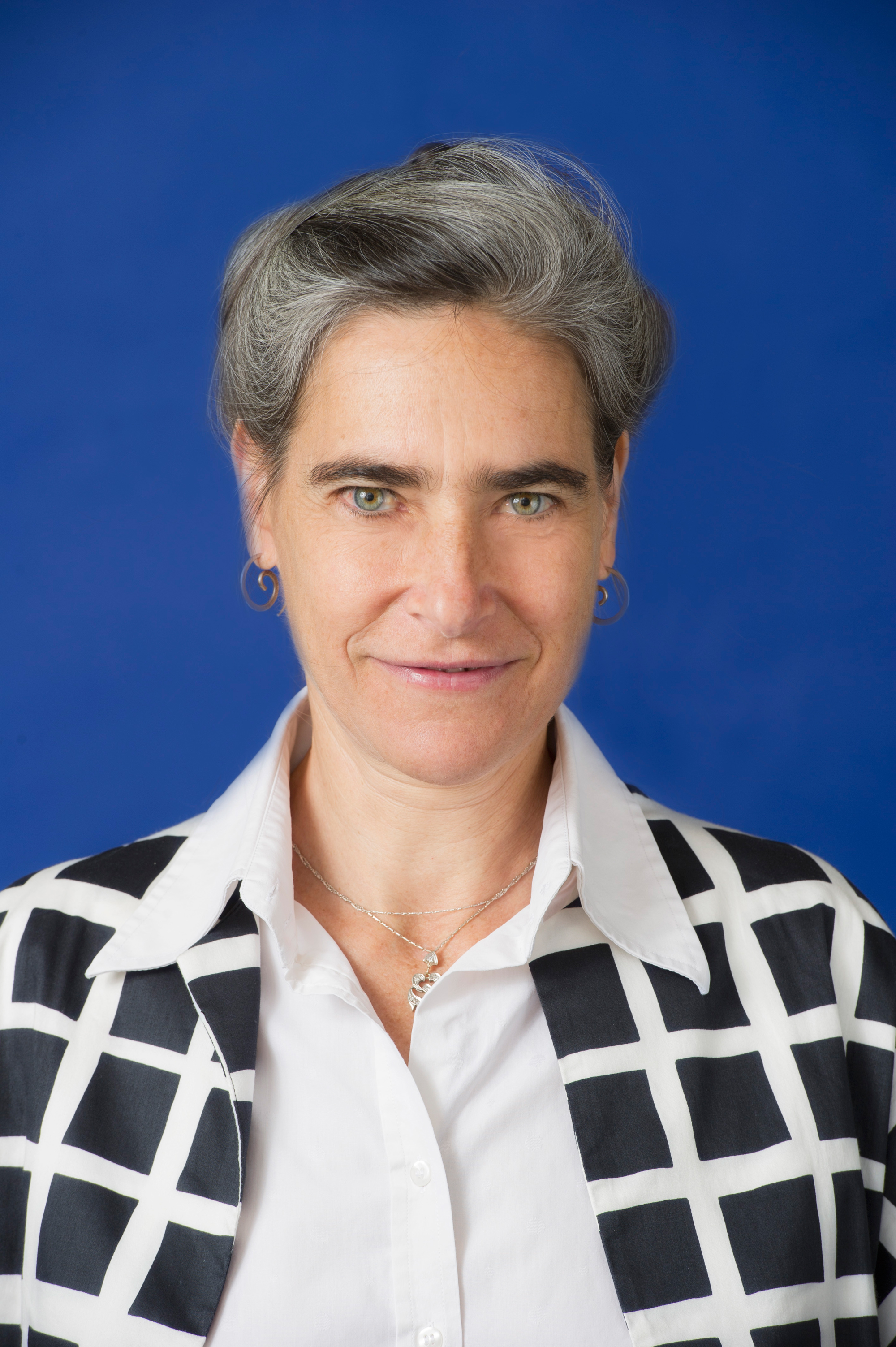
Former Senior Fellow, Democracy, Conflict, and Governance Program
Sarah Chayes is internationally recognized for her innovative thinking on corruption and its implications. Her work explores how severe corruption can help prompt such crises as terrorism, revolutions and their violent aftermaths, and environmental degradation.
Recent Work
Sarah Chayes
Carnegie does not take institutional positions on public policy issues; the views represented herein are those of the author(s) and do not necessarily reflect the views of Carnegie, its staff, or its trustees.
Ultimately, Zelensky sided neither with the reform camp nor with the military establishment as such, but with political control.

Balázs Jarábik
Tokayev’s predecessor, Nursultan Nazarbayev, outlined arrangements for a power transition too soon and in too much detail, ultimately losing control over the process. Tokayev is determined not to meet the same fate.

Temur Umarov
Andrey Melnichenko’s essay offers no answer to the fundamental question of how, under any kind of negotiated settlement, Europe can protect itself from the Russian ressentiment that is inevitable in all scenarios except for an outright victory for Putin.

Leonid Bershidsky

Despite unhappiness on the ground, Moscow is determined to use both carrot and stick to ensure there is record support for United Russia in occupied Ukraine.

Konstantin Skorkin

Whether PAS can refocus on the unfinished business of state-building may ultimately prove more consequential for Moldova’s European future than the pace of its accession negotiations.
Balázs Jarábik