

Paper
Ashley J. Tellis
{
  "authors": [
    "Ashley J. Tellis"
  ],
  "type": "legacyinthemedia",
  "centerAffiliationAll": "dc",
  "centers": [
    "Carnegie Endowment for International Peace"
  ],
  "collections": [],
  "englishNewsletterAll": "ctw",
  "nonEnglishNewsletterAll": "",
  "primaryCenter": "Carnegie Endowment for International Peace",
  "programAffiliation": "SAP",
  "programs": [
    "South Asia"
  ],
  "projects": [],
  "regions": [
    "North America",
    "United States",
    "South Asia",
    "India"
  ],
  "topics": [
    "Foreign Policy"
  ]
}
Source: Getty
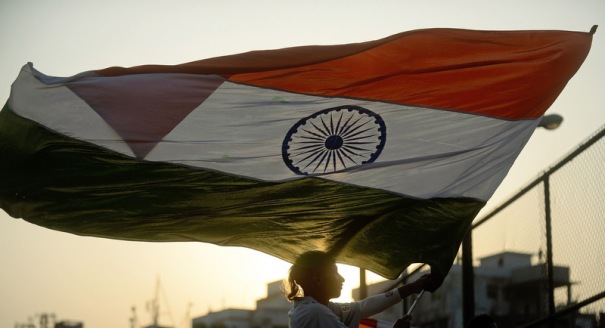
For the foreseeable future, Washington must be reconciled to the fact that the success of the bilateral relationship will require asymmetrical American contributions to India.
Source: Live Mint
For the foreseeable future, Washington must be reconciled to the fact that the success of the bilateral relationship will require asymmetrical American contributions both because of the power-political advantages enjoyed by the US vis-à-vis India and because all American investments made in enhancing Indian power ultimately represent contributions toward cementing American primacy in international politics for a while longer.
Conscious US movement toward such a pattern of engagement is obviously difficult for a country accustomed to dealing mainly with either allies or adversaries. India can certainly help the process, and its own cause as well, by articulating—publicly to the extent possible—a geopolitical vision that preserves a special priority for the US. Looking for creative ways in which to demonstrate solidarity with Washington while also remaining true to its own founding ethos would be immensely helpful. All of this would reward US policymakers for their benefaction merely as a way to continually elicit American support for accelerating India’s economic development and its rise to power.
Even if these new terms of association—the “unity in difference” that characterizes this strategic solution—can be successfully forged to engender productive bilateral cooperation in the future, each partner is likely to emphasize different aspects of the quest. For the US, the ultimate value of the US-Indian relationship is that it helps preserve American primacy. It achieves this by cementing an affiliation that aids in the preservation of the balance of power in Asia, enhances American competitiveness and enlarges its markets through deepened linkages with a growing Indian economy, and strengthens the American vision of a concert of democratic states by incorporating a major non-Western exemplar of success such as India. For India, the ultimate value of the US-Indian relationship is that it helps New Delhi to expand its national power more easily than it might have done otherwise. It also limits the dangers that might be posed by unrestrained Chinese power. And, finally, it helps to legitimize India’s entrance on the world stage if such occurs with American acquiescence, not to mention support.Any growth that occurs in Indian capabilities in this way leads inexorably toward a multipolar world—a reality that, strictly speaking, implies the demise of American hegemony.
But the leadership in New Delhi is realistic enough to understand that American primacy is unlikely to be dethroned anytime soon and certainly not as a result of the growth of Indian power. Rather, Indian national ambitions will find assertion in geographic and issue areas that are more likely to be contested immediately by China than by the US. As such, astute American and Indian policymakers recognize that only protective benefits accrue to New Delhi from American primacy, despite India’s own formal—but not substantive—discomfort with such a concept.
Given this fact, a close US-Indian bilateral relationship is both possible and fundamentally necessary because both countries will be increasingly critical to the achievement of those goals valued by each side. This consideration acquires even greater salience given that, despite any tensions in the two countries’ grand strategies or national priorities, no differences in vital interests would cause either state to levy mortal threats against the other or to undercut the other’s core objectives on any issue of strategic importance. These two realities, informed by the convergence in interests, values, and intersocietal ties, provide a basis for practical cooperation between the US and India.
The US-Indian affiliation is thus unique among Washington’s relationships with the other major, continent-sized nations in Asia. The fact that the US and India have never threatened each other’s security by force of arms despite moments of deep disagreement provides an enormous cushion of comfort in the bilateral relationship. And the fact that taking up arms against each other going forward is inconceivable insulates policymakers on both sides from having to confront the prospect of how to manage such a scenario. US relations with Russia and China enjoy no comparable protection.
Therefore, even when US-Indian relations may be confronted by profound disputes, these altercations would be no better and no worse that those arising with other friends and allies. This phenomenon in effect bounds the lowest limits of the relationship. While disagreements between friends and allies are never desirable, there is at least the reassurance that any such dispute will not end in violent conflict, and that by itself creates the opportunity for exploring positive-sum solutions.
If such outcomes can be produced, the continuing struggle for an enduring US-Indian partnership will have proven to be a worthwhile investment in the long-term security and relative power positions of both India and the US.
Former Senior Fellow
Ashley J. Tellis was a senior fellow at the Carnegie Endowment for International Peace.
Recent Work
Ashley J. Tellis
Ashley J. Tellis
Carnegie does not take institutional positions on public policy issues; the views represented herein are those of the author(s) and do not necessarily reflect the views of Carnegie, its staff, or its trustees.

Despite a new textbook, an influx of Russian teachers and managers, and an end to the teaching of Ukrainian, the Kremlin is unlikely to have “reprogrammed” locals.

Konstantin Skorkin

Cargo traffic through Russia’s Northern Sea Route has increased because of the disruption caused by the conflict in the Middle East, the Ukraine war, and U.S.-China tensions.

Mikhail Korostikov

Trump has promised Belarus a massive potash deal. But Minsk is seeking something greater: restored Western transit and greater room for maneuver from Russia.

Balázs Jarábik

Minsk clearly expected the dialogue with Washington to yield more results, in particular the lifting of EU sanctions and permission to export potash.

Artyom Shraibman

With the growth in points of friction between the great powers, organizations like the SCO will continue to play a role in the strategic adaptation of the smaller powers caught between them.

Temur Umarov