

Commentary
Trump has promised Belarus a massive potash deal. But Minsk is seeking something greater: restored Western transit and greater room for maneuver from Russia.
Balázs Jarábik
{
  "authors": [
    "James F. Collins",
    "Ross A. Virginia",
    "Kenneth S. Yalowitz"
  ],
  "type": "legacyinthemedia",
  "centerAffiliationAll": "dc",
  "centers": [
    "Carnegie Endowment for International Peace"
  ],
  "collections": [],
  "englishNewsletterAll": "ctw",
  "nonEnglishNewsletterAll": "",
  "primaryCenter": "Carnegie Endowment for International Peace",
  "programAffiliation": "russia",
  "programs": [
    "Russia and Eurasia"
  ],
  "projects": [],
  "regions": [
    "North America",
    "United States",
    "Russia",
    "Western Europe"
  ],
  "topics": [
    "Climate Change",
    "Foreign Policy"
  ]
}
Source: Getty
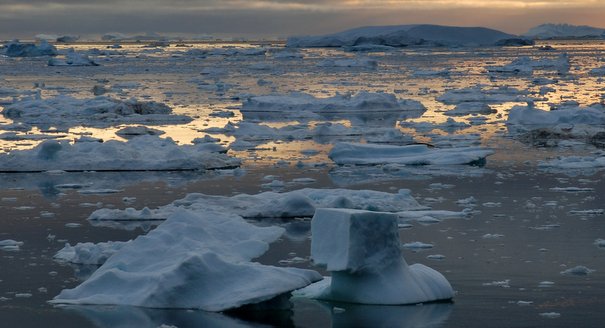
Despite ongoing geopolitical tensions between the West and Russia, cooperation is still possible—and necessary—on long-term issues critical to the Arctic region.
Source: Project Syndicate
Geopolitical tensions between Russia and the West have been high in recent years, but there remain areas where constructive cooperation and dialogue remain possible. These include not only acute questions like Iran’s nuclear program, but also long-term issues critical to the Arctic region, such as maritime safety, energy development, responses to oil spills, and fisheries management.
As the United States convenes foreign ministers from Arctic and key non-Arctic states in Alaska on August 31 to discuss climate change and other topics concerning the region, it is vitally important that disagreements in other parts of the world not be allowed to derail the discussions.When the US – an Arctic state with a strong interest in the region – assumed the chairmanship of the Arctic Council in April, it emphasized its readiness to cooperate with all of the organization’s members, including Russia. The August conference, appropriately named GLACIER, will feature an address by President Barack Obama. It is not an Arctic Council event, but it will likely be the highest-level international forum that the US leads during its two-year term as the Council’s chair.
Since April, we have spoken with Russian officials and academics, as well as officials from several other Arctic Council member states. In these discussions, all parties affirmed their readiness to cooperate regarding the Arctic. But they also underscored the risks to this hoped-for cooperation if external issues are permitted to intrude into the conversation.
Discord between Russia and the West over the conflict in Ukraine was perceived as the most likely threat to collaboration. Even as our Russian interlocutors agreed on the importance of cooperation in the Arctic, they vigorously supported their country’s annexation of Crimea and insisted that US sanctions on Russian oil and gas projects in the Arctic have dangerously injected geopolitical issues into the region. The US and Europe, for their part, have held firm on sanctions and regard Russia’s heightened military presence in the Arctic as provocative and unnecessary.
Despite these underlying tensions, there is widespread agreement on the most pressing Arctic issues. The US, Russia, Canada, Norway, and Denmark, for example, have agreed to prohibit commercial fishing in the international waters of the Arctic Ocean until research can be carried out on how fish stocks are being affected by rapidly melting ice and warming seas.
The development of the region’s oil and gas fields ranks high on the agenda of most of the countries with interests in the region; but operating costs in the Arctic are high, and, with energy prices low, most projects have been slowed or delayed. Even so, major energy companies are preparing for the inevitable development of the Arctic’s rich resources, which means that working together to manage oil spills will be essential.
All countries – and Russia in particular – have infrastructure deficiencies in the Arctic; and, even with the sea ice melting, shipping remains risky and uncertain. A Coast Guard Chiefs’ forum will be meeting soon to work on strengthening search and rescue capabilities. Meanwhile, Russian sources have been expressing concern over their aging icebreaker fleet. The US itself has only one functional icebreaker. There may be room for creative initiatives in this area, as some countries, most notably Finland, have extensive fleets and capacity to spare.
But disagreements remain. While the West accepts that Russia wants to strengthen its infrastructure in the region to support its economic and security interests, the Kremlin’s military maneuvers there remain a sore point. These issues would generally be discussed in meetings of the defense chiefs of Arctic Council states, but these talks have been put on hold in response to the conflict in Ukraine. Convening a forum to address these topics would be beneficial to all.
In August, Russia submitted a claim under the UN Convention on the Law of the Sea that would vastly extend its territorial shelf in the Arctic Ocean, potentially fueling conflict with other claimants. It will take years to sort out the competing claims under the treaty, but so far all of the concerned states are playing by the rules. The process would be strengthened if the US joined all of the other Arctic countries and ratified the Convention.
For the most part, however, the serious gaps in communication and understanding between Russia and the West have yet to spill over into the high north. As Arctic Council Chair, the US must work to maintain a constructive environment in the region. Doing so will require keeping the door open for serious dialogue with Russia, aimed at identifying issues on which collaboration could be mutually beneficial.
No one expects constructive diplomacy between Russia and the West to be easy anywhere. But both sides are well aware that cooperation in the Arctic is far preferable to conflict. That shared interest would be a good place for GLACIER to start.
Nonresident Senior Fellow, Russia and Eurasia Program; Diplomat in Residence
Ambassador Collins was the U.S. ambassador to the Russian Federation from 1997 to 2001 and is an expert on the former Soviet Union, its successor states, and the Middle East.
Ross A. Virginia
Dartmouth College
Kenneth S. Yalowitz
Dartmouth College
Carnegie does not take institutional positions on public policy issues; the views represented herein are those of the author(s) and do not necessarily reflect the views of Carnegie, its staff, or its trustees.

Trump has promised Belarus a massive potash deal. But Minsk is seeking something greater: restored Western transit and greater room for maneuver from Russia.

Balázs Jarábik

The European far right might fail to steer EU policy in the direction Russia wants, but they will create enough chaos inside Europe to benefit the Kremlin.

Dimitar Bechev

Minsk clearly expected the dialogue with Washington to yield more results, in particular the lifting of EU sanctions and permission to export potash.

Artyom Shraibman

Russia’s ruling party would have benefited from Putin appearing as its distant patron, but as an active frontman imposing his views on the public, he has done nothing but harm both the party’s election campaign and the ruling system overall.

Andrey Pertsev

Depleted financial reserves and a shrinking tax base mean it is no longer possible to simultaneously deliver high defense spending, price stability, and economic growth.

Alexandra Prokopenko