

Commentary
Japan’s long-term security policy is driven by concerns about China, and there is little appetite for (or interest in) pursuing a confrontation with Moscow.
James D.J. Brown
{
  "authors": [
    "Pavel Koshkin",
    "Andrei Kolesnikov"
  ],
  "type": "legacyinthemedia",
  "centerAffiliationAll": "dc",
  "centers": [
    "Carnegie Endowment for International Peace",
    "Carnegie Russia Eurasia Center"
  ],
  "collections": [
    "Inside Russia"
  ],
  "englishNewsletterAll": "ctw",
  "nonEnglishNewsletterAll": "",
  "primaryCenter": "Carnegie Endowment for International Peace",
  "programAffiliation": "russia",
  "programs": [
    "Russia and Eurasia"
  ],
  "projects": [],
  "regions": [
    "Russia"
  ],
  "topics": [
    "Political Reform",
    "Democracy"
  ]
}
Source: Getty
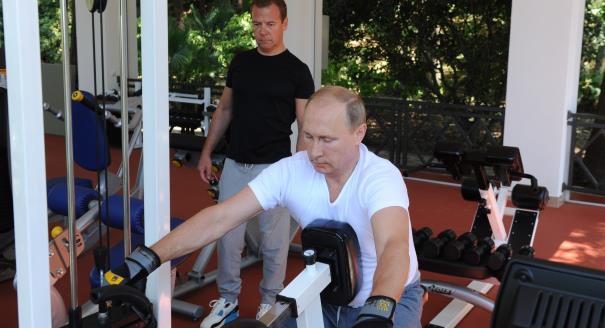
Russia’s political elites and, particularly, its president have no strategic vision of the future and no adequate assessment of reality. The authorities are seeking to prolong the inertia model until the presidential elections in 2018, but afterwards the Kremlin will need strategic decisions.
Source: Russia Direct
This interview originally appeared in Russia Direct.
On Sept. 17, Russia’s leading economists, including the dean of Lomonosov Moscow State University, Alexander Auzan, will discuss the Kremlin’s new long-term strategy document, known as Strategy 2030. Since this document is an attempt to describe the Kremlin’s long-term priorities for the next decade and beyond, it could provide significant insights into how the Russian government views the current economic, political and social situation within the country, as well as important milestones on the road from 2015 to 2030.
Russia Direct recently sat down with Andrei Kolesnikov of the Carnegie Moscow Center in an effort to understand better the Kremlin’s current strategic priorities, as well as how the Kremlin may attempt to manage current perceptions within society in order to achieve those priorities.
But this strategic thinking is foreign to the current authorities and they don’t need it at all for several reasons. One could illustrate this trend with the example of Strategy 2020, which, in fact, wasn’t very strategic. It contained neither political nor social components. It deals with just economic aspects and budget policy.
But in the end it failed to come to fruition. Instead of low military spending we have seen high spending on [army and defense]; instead of high level of spending on human capital, we see low spending on health and education. So, all these initiatives remained on paper and had lost their relevance by the end of the presidential tenure of Dmitry Medvedev.
So, the Russian authorities do not take the modernization vector seriously. What they take seriously is the vector to resolving current, day-to-day tasks. This results from the assumption of the Russian political elites that Russia has already reached a new level of development.
Yes, they believe that there are no strategic tasks and, instead, they should maintain a certain level of income and expand the middle class, develop the economy in its current condition, all while overcoming the economic crisis. They just believe that the downturn will go away.
It is related to a very important trait of Russia’s political elites and, particularly, its president: There is no strategic vision of the future, no adequate assessment of reality. It might stem from the fact that people [at the helm] are not rotated for a long time and their perception of reality has been changed.
Or it is because the president looks through primarily three folders that come from the FSB (Federal Security Service), SVR (Foreign Intelligence Service) and FSO (Federal Protective Service) and, thus, has an absolutely distorted picture of the world.
Or it might be related to the anti-Western — half-nationalistic and half-imperialistic — outlook, which hampers the ability to perceive reality adequately.
Probably, all these factors are working, but what is important is that people [at the helm] do sincerely not understand where they are now, while assessing the current crisis as only a temporary trouble.
However, the understanding that everything is very bad is penetrating their minds. And the indirect sign of this understanding is the President’s recognition that it is impossible to plan the three-year budget and so far it is necessary to focus on the one-year budget.
In 2018 it is impossible. It is rather a question of the next political cycle, when Putin will physiologically become very old and when it will be physically difficult to rule the country. So, this political swap is impossible now. Looking for the successor will be relevant for him approximately in the 2020s, when we will see a huge reshuffle of everything. Currently, there is no eligible figure to replace Putin as successor.
First, all 15 years [of Putin’s presidential term] have been spent narrowing down alternative political candidates to only one figure, because this figure is politically encompassing and many-sided — he is the main communist, the main liberal or the main nationalist, the rest of the political forces are like supporting blocks.
Let’s imagine a simple situation in which Putin is no longer the president: Let’s imagine that he steps down, observes the law and doesn’t announce a presidential bid in 2018. In the beginning it won’t be easy to elect someone. The election is always not an easy process. But in this situation an alternative figure might emerge very fast. In such case, there will be just another picture [of the political landscape].
This problem does exist and is related to the so-called “path-dependence problem,” when modern people think in the same way as they did in the times of Ivan the Terrible. But as the experience of the Russian people indicates, they can successfully adjust to new [political] conditions and be creative. After all, Russia is a very urbanized and well-educated society and I believe that this society can produce everything in terms of political freedom — from political democracy to economic efficiency.
They can influence more on Putin’s agenda, so that he can become even more aggressive, anti-Western and more repressive. But they can’t replace him. They are not so popular among ordinary people.
Actually, the crisis is contributing to Putin’s high approval ratings: People look for a person to find support. And the figure of Putin or his brand is becoming the symbol of their only hope that they will be fed by somebody at the helm. And this is the very manifestation of the paternalistic mentality.
It is real. It just reflects the desire of people to live their day-to-day life, not to bother the authorities and not to be bothered by the authorities. It is not an active support, it is a passive conformism; it is the support not of the person, but of the symbol.
Psychologically, the authorities are absolutely not ready to tolerate a drop in the ratings because of the habit of getting high results. The decline is perceived as a serious signal of a catastrophe. They are addicted to the high rankings and this is the problem: It means that they will step up tightening the screws only to maintain the ratings above 80 percent.
Social protest is not turning into political protest because people are waiting for different perks from the president and nobody is protesting. After all, nobody bites the hand that feeds it. Putin in this case is the hand that feeds.
Converting social protests into political ones might take place when a serious economic catastrophe happens that significantly affects the entirety of Russia; when social thinking turns into political protests in Moscow; when the situation of 2011-2012 repeats (Russians took to the streets to express their indignation about what they saw as the manipulated nature of parliamentary and presidential elections — Editor’s note).
Clearly, it is impossible now, but it should take time to happen.
I assume that the inertia for maintaining stability will be enough until 2018, but afterwards [the Kremlin] will need strategic decisions, which it doesn’t have. After 2018, given a great deal of uncertainty, the political and economic collapse might happen.
Yes, it won’t be necessarily abrupt and catastrophic, but it will be very long and gradual like the economic crisis.
When sanctions were toughened, this helped to mobilize people around the governor of the besieged fortress [Putin]. But when the sanctions weaken, there is no guarantee that this mobilization will become weaker. The authorities could be intransigent as well as the population. I don’t believe in a fast restoration.
It means there won’t be democratic freedoms - a slow and gradual tightening of the screws, economic depression accompanied by mental depression. But there won’t be any catastrophes and political protests. This is the inertia model, a sort of frozen condition, which the current authorities are seeking to prolong until 2018.
This metaphor is still working as well as the other metaphor “Stockholm syndrome,” felt by the inhabitants of the besieged fortress toward its governor, Putin [the Stockholm syndrome is a psychological phenomenon in which victims express empathy and sympathy and have positive feelings toward those who oppress or neglect them — Editor’s note].
As long as the authorities are maintaining a half-cold and half-hot hybrid war and sanctions exist, people will feel that they are living inside of this fortress. And it is important for the mobilization of the people around the authorities.
Looking at social polls, one can assume that there is a balance between demand and supply. Demand for patriotism has always existed in its dormant condition. But only a very, very big supply in such aggressive and extreme forms could “wake up” or fuel this demand. That’s why supply is primary in this situation, as indicated by the abrupt changes in public opinion.
In general, the problem of self-identification is artificial. And it is used by those who offer this supply [through informational campaigns]. The post-Soviet man hasn’t had the problem of self-identification: The collapse of the Soviet Union was actually a victory for him.
He stopped being Soviet and became a man who lived according to the terms of the market economy, felt free, had certain problems, but nevertheless he was a typical European man. And now he is persuaded that he is not European, that he is unique and exceptional. And this is the reverse movement from progress and modernization, the so-called archaization of conscience.
Pavel Koshkin
Former Senior Fellow, Carnegie Russia Eurasia Center
Kolesnikov was a senior fellow at the Carnegie Russia Eurasia Center.
Carnegie does not take institutional positions on public policy issues; the views represented herein are those of the author(s) and do not necessarily reflect the views of Carnegie, its staff, or its trustees.

Japan’s long-term security policy is driven by concerns about China, and there is little appetite for (or interest in) pursuing a confrontation with Moscow.

James D.J. Brown

The truth of the strategic situation is that Europe and Russia are extremely unlikely to be able to “turn the page” on their confrontation within the next two decades.
Arkady Moshes
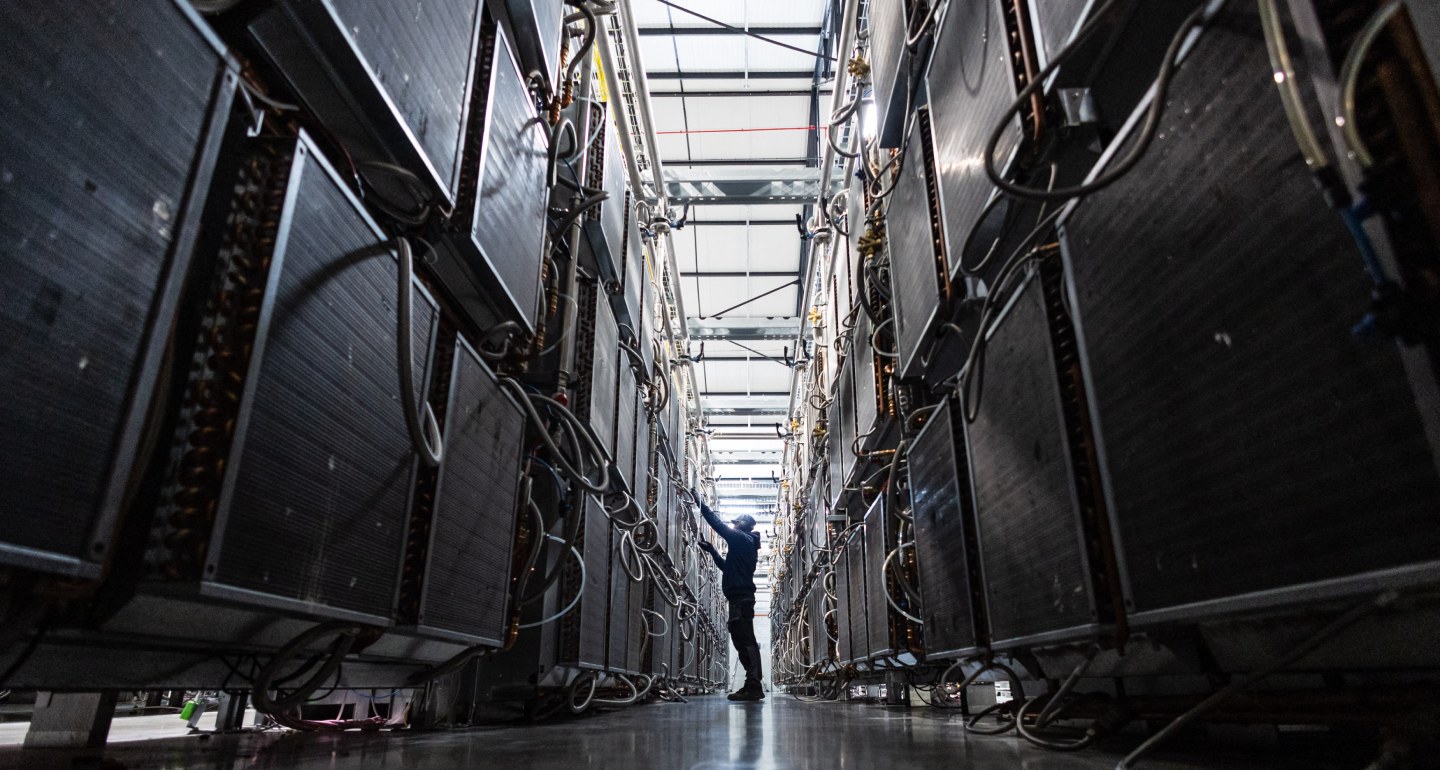
Russia spent years building a “sovereign internet,” concentrating web infrastructure exclusively within Russian territory. Ukrainian drone attacks have shown how vulnerable that approach has left the Russian internet.

Maria Kolomychenko

Putin’s conservative staffing policies and search for ever greater control have cemented parliament’s transformation into a bureaucratic appendage of the executive branch.

Andrey Pertsev

Russia’s AI-driven propaganda campaigns operate in a fragmented, chaotic, and often illogical manner. That’s not necessarily a problem for the Kremlin, though: It’s much easier to mimic genuine public debate that way.

Ilya Klishin