

Article
C. Raja Mohan, Darshana M. Baruah
{
  "authors": [
    "C. Raja Mohan"
  ],
  "type": "legacyinthemedia",
  "centerAffiliationAll": "dc",
  "centers": [
    "Carnegie Endowment for International Peace",
    "Carnegie India"
  ],
  "collections": [],
  "englishNewsletterAll": "ctw",
  "nonEnglishNewsletterAll": "",
  "primaryCenter": "Carnegie India",
  "programAffiliation": "SAP",
  "programs": [
    "South Asia"
  ],
  "projects": [],
  "regions": [
    "South Asia",
    "India",
    "East Asia",
    "China",
    "Japan"
  ],
  "topics": [
    "Political Reform",
    "Security",
    "Military",
    "Foreign Policy"
  ]
}
Source: Getty
In the view of India and Japan, China’s parade commemorating victory in World War Two signaled as much about Asia’s geopolitical future as it did about the past.
Source: Indian Express
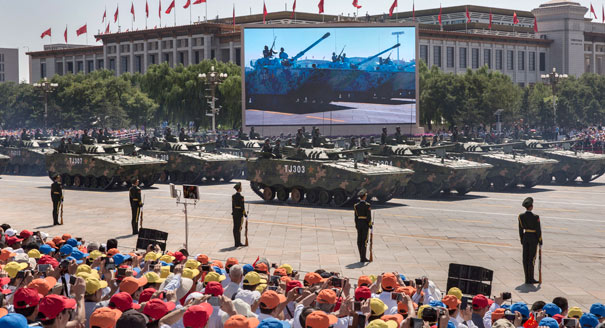
The spectacular military parade in Beijing on Thursday was ostensibly about Beijing’s commemoration of the Second World War and the successful resistance against Japan’s imperial occupation of China during 1937-45. That China organised such a military parade for the first time, however, suggests that this very special event was as much about the past as it was about the present and the future.
China’s neighbours did not need the parade to get a sense of China’s very impressive military modernisation. Three decades of double digit economic growth has made China the second largest spender on defence after the United States.
Many of them — especially India, Vietnam, the Philippines, and Japan — have felt the heat from China’s new military capabilities in recent years, from the long and disputed Himalayan frontier to the contested waters of the East and South China Seas.Thursday’s military parade was about Beijing’s political will to build a new order in Asia centred on China. Building a Sino-centric order in Asia will not happen overnight; nor can it emerge without Beijing overcoming significant political resistance.
China, however, is unapologetic about its great power aspirations, and is unlikely to back away. Growing military capabilities have emboldened it to challenge America’s forward military presence in the Pacific and test the political resilience of its Asian alliances.
India’s instinctive response to the unfolding tension between America and China is to reach for the comforting blanket of non-alignment. But the fact that China is a neighbour with which it has many outstanding disputes makes traditional non-alignment nearly impossible.
While the rise of a great power at its doorstep is a new strategic experience for India, it has had problems in the past dealing with the conflict among Asian powers. As China and Japan become rivals again in Asia, the military parade in Beijing connects the past, present and future in very interesting ways.
In most societies, the past is never really past. It is continually put to political use by governments in pursuit of a current political objective. China is no exception. President Xi Jinping’s decision to celebrate the anniversary of the war against Japan in an ostentatious manner was indeed politically driven.
Mao Zedong, the founder of the People’s Republic, used to dismiss Japanese expression of contrition for its aggression against China. Mao had the extraordinary self-confidence to proclaim that Japan’s occupation actually helped the Chinese Communist Party to prevail over the nationalists and gain power.
Unsurprisingly, Mao’s successors, thrice removed, do not have the kind of political standing to take a relaxed view of Japan. Mobilising nationalism, through controlled stimulation of anti-Japanese sentiment, has become very much a part of the new political narrative in China.
But as it pushes Japan to the wall, China might have triggered Tokyo’s political reorientation that could have huge political consequences for Asia. Prime Minister Shinzo Abe is determined to make Japan a normal country and seek its rightful place in Asia. His refusal to accept China’s dominance over Asia may have set the stage for a prolonged Sino-Japanese rivalry within Asia.
The Indian national movement had to deal with the conflict between China and Japan in the 1930s and 1940s at the very height of the romance about Asian unity. But it did not do too well.
The Congress refused to support the British war effort against Japan despite fervent appeals from China’s nationalist leader Chiang Kai-shek; Subhas Chandra Bose aligned with Japan to oust the British from India. And the communists were the only ones who supported the Raj after Germany attacked Russia in June 1941.
Despite the confusion within the national movement, India’s resources were critical in defeating Japan. Nearly 750,000 Indian troops participated in the gigantic effort to liberate South East Asia from Japanese occupation. The big gap between India’s extraordinary contribution to the Second World War, and the collective political amnesia in New Delhi about it, underlines the difficulties New Delhi will have in dealing with renewed Sino-Japanese rivalry.
India’s ambivalence was apparent in its low key appearance at China’s military parade. The NDA government had sent President Pranab Mukherjee to the Russian commemoration of the Second World War in Moscow in May. A small contingent of Indian troops had joined the military parade in the Red Square.
In Beijing, India’s presence was marked by the Minister of State for Exernal Affairs, V K Singh. And despite India’s pivotal role in defeating Japan, there were no Indian troops marching in the heart of Beijing.
It is not difficult to understand why. New Delhi knew Beijing’s commemoration was about a political effort to isolate Japan. India had no reason to endorse that. At the same time, New Delhi could not turn down Beijing’s invitation. New Delhi’s neat compromise reflects India’s genuine desire to have good relations with both China and Japan. But it will soon find that being nice to all is not an adequate strategy to cope with the historic power shift unfolding in Asia.
The Chinese military’s first major parade since 2009 put on show 27 phalanxes of its main battle tank, nearly 200 aircraft, indigenous conventional and nuclear missile systems, and 12,000 troops. For the first time, PLA organised its armaments based on their combat roles. 84% of the 500 pieces of 40 types of equipment were displayed for the first time, Xinhua said.
ZTZ-99A
Missiles
Aircraft
Reduction in troops
This article was originally published in the Indian Express.
Former Nonresident Senior Fellow, Carnegie India
A leading analyst of India’s foreign policy, Mohan is also an expert on South Asian security, great-power relations in Asia, and arms control.
Recent Work

C. Raja Mohan, Darshana M. Baruah


Alexander Gabuev, Paul Haenle, C. Raja Mohan, …
Carnegie does not take institutional positions on public policy issues; the views represented herein are those of the author(s) and do not necessarily reflect the views of Carnegie, its staff, or its trustees.

In the tenth year of his presidency, President Mirziyoyev’s system is becoming even more personalized than that of his predecessor Karimov.

Galiya Ibragimova

With the growth in points of friction between the great powers, organizations like the SCO will continue to play a role in the strategic adaptation of the smaller powers caught between them.

Temur Umarov

The greater threat to Zelensky comes not from Fedorov alone, but from the convergence between the former defense minister’s political campaign and the anti-corruption investigations moving ever closer to the presidential administration.

Balázs Jarábik
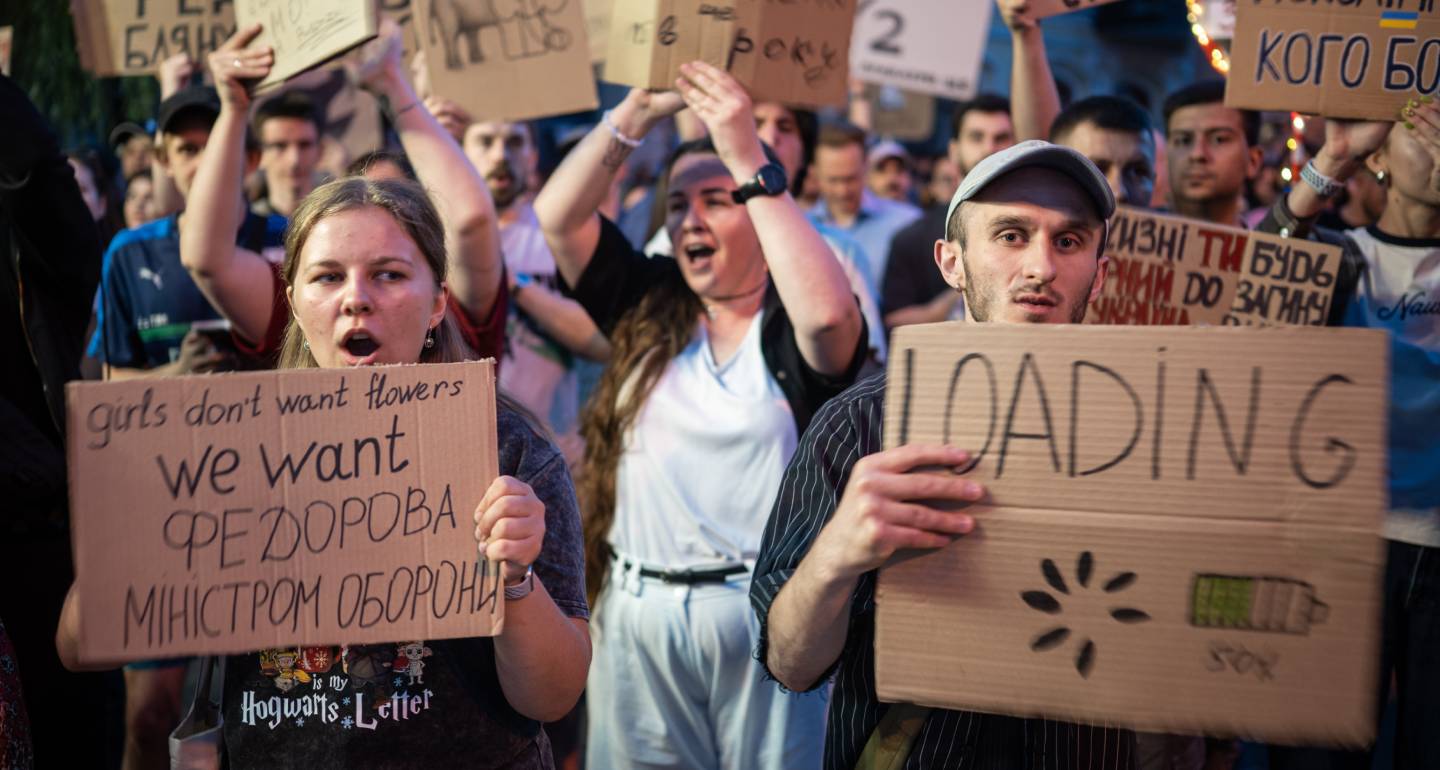
With his public call for new elections in Ukraine, ex-defense minister Mykhailo Fedorov has opened Pandora’s box.

Konstantin Skorkin

In the discussions made possible by the State Duma election campaign, one question is being asked more and more loudly. “What next?”

Andrey Pertsev