

Paper
Douglas H. Paal
{
  "authors": [
    "Douglas H. Paal"
  ],
  "type": "legacyinthemedia",
  "centerAffiliationAll": "dc",
  "centers": [
    "Carnegie Endowment for International Peace"
  ],
  "collections": [],
  "englishNewsletterAll": "asia",
  "nonEnglishNewsletterAll": "",
  "primaryCenter": "Carnegie Endowment for International Peace",
  "programAffiliation": "AP",
  "programs": [
    "Asia"
  ],
  "projects": [],
  "regions": [
    "East Asia",
    "China",
    "Taiwan"
  ],
  "topics": [
    "Foreign Policy"
  ]
}
Source: Getty
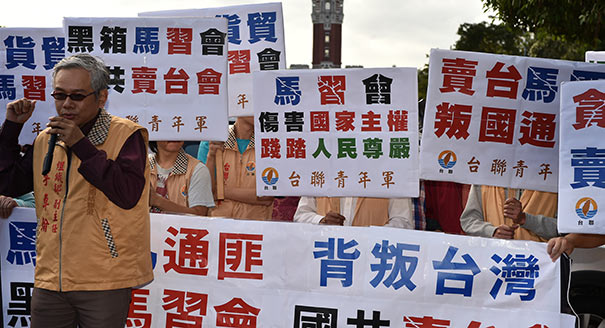
The upcoming summit between China and Taiwan could negatively affect Taiwan’s governing Kuomintang, or Nationalist Party, in next year’s presidential election.
Source: NHK World
Speaking to NHK, Carnegie’s Douglas Paal argued that the upcoming summit between China and Taiwan may negatively affect Taiwan’s governing Kuomintang, or Nationalist Party, in next year’s presidential election.
Paal highlighted how the summit is a high-stakes gamble on the part of the Kuomintang. The opposition Democratic Progressive Party has been accusing Ma of doing things secretly without the consent of the people and the summit will be an occasion to emphasize Chinese President Xi’s support for Taiwan’s President Ma, who has been working to improve ties between Taiwan and China.

Distinguished Fellow, Asia Program
Paal previously served as vice chairman of JPMorgan Chase International and as unofficial U.S. representative to Taiwan as director of the American Institute in Taiwan.
Recent Work
Douglas H. Paal


Douglas H. Paal, Tong Zhao, Chen Qi, …
Carnegie does not take institutional positions on public policy issues; the views represented herein are those of the author(s) and do not necessarily reflect the views of Carnegie, its staff, or its trustees.

Cargo traffic through Russia’s Northern Sea Route has increased because of the disruption caused by the conflict in the Middle East, the Ukraine war, and U.S.-China tensions.

Mikhail Korostikov

Minsk clearly expected the dialogue with Washington to yield more results, in particular the lifting of EU sanctions and permission to export potash.

Artyom Shraibman

With the growth in points of friction between the great powers, organizations like the SCO will continue to play a role in the strategic adaptation of the smaller powers caught between them.

Temur Umarov

When faced with fuel shortages in the past, Central Asian governments could always count on additional supplies from Moscow. That safety net no longer exists.

Galiya Ibragimova
Despite unhappiness on the ground, Moscow is determined to use both carrot and stick to ensure there is record support for United Russia in occupied Ukraine.

Konstantin Skorkin