

Article
C. Raja Mohan, Darshana M. Baruah
{
  "authors": [
    "C. Raja Mohan"
  ],
  "type": "legacyinthemedia",
  "centerAffiliationAll": "dc",
  "centers": [
    "Carnegie Endowment for International Peace",
    "Carnegie India"
  ],
  "collections": [],
  "englishNewsletterAll": "ctw",
  "nonEnglishNewsletterAll": "",
  "primaryCenter": "Carnegie India",
  "programAffiliation": "SAP",
  "programs": [
    "South Asia"
  ],
  "projects": [],
  "regions": [
    "South Asia",
    "Pakistan",
    "India",
    "Middle East"
  ],
  "topics": [
    "Foreign Policy",
    "Security"
  ]
}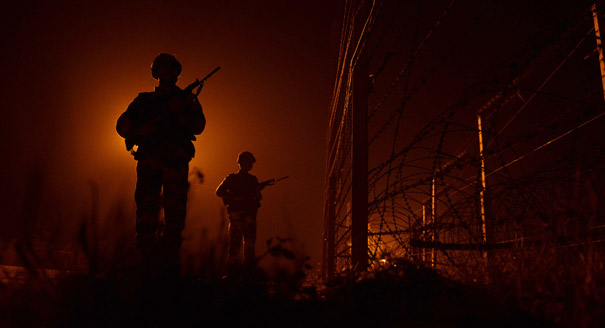
Source: Getty
The deeply fractured Organisation of Islamic Cooperation is more concerned with the situation in the Middle East than the status of Jammu and Kashmir.
Source: Indian Express
The gulf between Pakistan’s obsession with mobilising support from the Muslim world on the Kashmir question and the unfolding geopolitical turmoil in the Middle East is back in view. Following only the South Asian media, you might be tempted to conclude that a summit of the Organisation of Islamic Cooperation (OIC) in Istanbul last week was devoting serious attention to the problem of Jammu and Kashmir.
As the summit concluded, Islamabad put out the word that the rulers of the Islamic world had called on India to implement the “pending UN Security Council resolutions” on Jammu and Kashmir, expressed concern at the “gross violation” of human rights there by the Indian security forces and affirmed support to the Kashmiri struggle for “self-determination”.If that sounded menacing, Delhi was quick to express “utmost regret” at “factually incorrect and misleading references” to Kashmir in the statement issued by the OIC summit and declared that the organisation had no “locus standi” on matters internal to India.
Official Islamabad and Delhi had done their duty. But Jammu and Kashmir was probably the last thing on the mind of a deeply fractured OIC. Anyone familiar with the OIC knows the prosaic routine on Kashmir.
Pakistan’s diplomats go with a standard para on Kashmir to the OIC meetings and others simply approve it without any discussion. Islamabad claims a major diplomatic “triumph”; and Delhi rejects the OIC “intervention”.
But the rest of the world is looking at far more interesting developments at the OIC summit. And they have to with the growing confrontation between Iran and Saudi Arabia. That Iran and Saudi Arabia, two leading nations of the Islamic world, are at each other’s throats is no longer news.
For the last few years, an intense rivalry between Tehran and Riyadh has overwhelmed many of the traditional issues in the region — Palestinian statehood and other Arab-Israeli disputes as well as intervention by great powers. That the rivalry has an additional sectarian dimension — the traditional Shia-Sunni divide — made matters much worse.
The Istanbul summit seemed to push that rivalry upwards by a notch. This is what the OIC communique had to say about Iran: “The conference deplored Iran’s interference in the internal affairs of the states of the region and other member states including Bahrain, Yemen, Syria, and Somalia, and its continued support for terrorism”.
By any measure of diplomacy, this is strong stuff — terms like “deplore”, “interference in the internal affairs” and charges of “supporting terrorism” are not thrown at each other by the members of the OIC.
Although the OIC is quick to extend solidarity to Muslim minorities around the world, it rarely speaks up against oppression of any kind, including sectarian oppression, among its member states. The strong denunciation of Iran’s regional policy by its fellow Muslim states, therefore, is a development that is worth taking note of.
The president of Iran, Hassan Rouhani, who was not in attendance at the summit, had urged leaders not to send out divisive messages the day before. “No message which would fuel division in the Islamic community should come out of the conference”. But the Saudis are in no mood to relent.
Much like international communism, the Non-Aligned Movement and the Arab League, the OIC as a collective has never really been united or effective. If communism could not paper over the cracks between the Soviet Union and China in the 1960s, anti-colonial rhetoric was never a strong enough glue to bind the NAM.
If secular ideology couldn’t overcome competing national interests between states, shared ethnic and religious identities have turned out to be even weaker forces. The Arab League and the OIC have long been mere spectators in the rough and tumble of the Middle East.
It is not that Indian and Pakistani diplomats don’t understand that the OIC is a toothless tiger. It’s now only a matter of sheer habit that they had inherited from the middle of the last century. After Partition and Independence, Pakistan played the Muslim card in the region and India postured on third world solidarity.
This approach has not worked well for Pakistan or India. The fact is neither religion nor anti-colonialism was the only principle shaping the Middle East. Shared religious identity is of no great advantage to Islamabad today as it struggles to navigate the rivalry between Iran and Saudi Arabia and manage its implications for Pakistan’s domestic politics. India’s focus on Southern solidarity against the North is of no consequence as regional rivalries take precedence over great power interventions.
If the undivided subcontinent under the British Raj was a powerful external force in the Middle East, Pakistan and India have neutralised each other over the last seven decades. Many in the Middle East are looking for support from India and Pakistan to secure their national interests.
A reasonable relationship or even a diplomatic ceasefire between India and Pakistan would significantly improve the salience of both Delhi and Islamabad in the Middle East. But, then, it is never easy to put common sense above custom.
Former Nonresident Senior Fellow, Carnegie India
A leading analyst of India’s foreign policy, Mohan is also an expert on South Asian security, great-power relations in Asia, and arms control.
Recent Work

C. Raja Mohan, Darshana M. Baruah


Alexander Gabuev, Paul Haenle, C. Raja Mohan, …
Carnegie does not take institutional positions on public policy issues; the views represented herein are those of the author(s) and do not necessarily reflect the views of Carnegie, its staff, or its trustees.

Japan’s long-term security policy is driven by concerns about China, and there is little appetite for (or interest in) pursuing a confrontation with Moscow.

James D.J. Brown
The truth of the strategic situation is that Europe and Russia are extremely unlikely to be able to “turn the page” on their confrontation within the next two decades.
Arkady Moshes

Russia’s AI-driven propaganda campaigns operate in a fragmented, chaotic, and often illogical manner. That’s not necessarily a problem for the Kremlin, though: It’s much easier to mimic genuine public debate that way.

Ilya Klishin

Without a ceasefire with Ukraine on attacking each other’s energy infrastructure—to which the Kremlin is unlikely to agree—the diesel agreement between Putin and Trump is largely for show, rather than representing a genuine increase in the volumes of Russian diesel on the global market.

Sergey Vakulenko

Russian strikes are weakening the economy sustaining Ukraine’s war effort. Closing the growing funding gap will require more European support and politically contentious reforms in Kyiv.

Balázs Jarábik