

Article
Marc Pierini
{
  "authors": [
    "Marc Pierini"
  ],
  "type": "legacyinthemedia",
  "centerAffiliationAll": "dc",
  "centers": [
    "Carnegie Endowment for International Peace",
    "Carnegie Europe"
  ],
  "collections": [
    "Turkey’s Transformation"
  ],
  "englishNewsletterAll": "ctw",
  "nonEnglishNewsletterAll": "",
  "primaryCenter": "Carnegie Europe",
  "programAffiliation": "EP",
  "programs": [
    "Europe"
  ],
  "projects": [],
  "regions": [
    "Europe",
    "Türkiye",
    "Middle East",
    "Western Europe",
    "Germany",
    "Iran"
  ],
  "topics": [
    "Foreign Policy"
  ]
}
Source: Getty
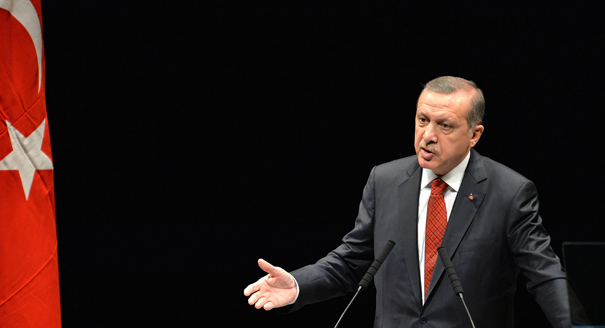
Turkish President Recep Tayyip Erdogan’s goal of unchallenged power is firmly rooted after Prime Minister Ahmet Davutoglu’s resignation. The novelty is that it is happening with Germany’s acquiescence.
Source: Financial Times
With Prime Minister Ahmet Davutoglu forced from office, Turkey has passed a political watershed: Recep Tayyip Erdogan’s goal of unchallenged power at the top of the state is rooted ever more firmly in fact. Given his behaviour since he became president in 2014, this in itself is no great surprise; the novelty is that it is happening with Berlin’s full acquiescence.
While campaigning for the 2014 presidential election, Mr Erdogan had a clear narrative: if elected with direct popular votes, a first for the 91-year-old republic, he would have a mandate from the people. Therefore the constitution that provides for a parliamentary regime would have to be amended to “reflect” the “will of the people”.
This has always been his view of democracy: a majoritarian system in which a president can act unhindered by the usual checks and balances of western democracy. His appointment of Mr Davutoglu did not change this script. Nor will the latter’s presumptive successor, Binali Yıldırım, who is widely regarded as a faithful ally of the president.Soon after taking office, Mr Erdogan moved out of the presidential palace that had hosted all his predecessors since Mustafa Kemal Ataturk. Along with a string of other symbolic measures, he made it clear that a quiet counter-Kemalist revolution was ushering in a “New Turkey”.
His ordeal started in earnest when the June 2015 general election produced a hung parliament. It was the prime minister’s constitutional duty to form a coalition — but the president was not to be constrained by such an arrangement. Snap elections were called in a climate of fear linked to a resurgence in violence by armed separatists of the Kurdistan Worker’s party. Mr Erdogan’s Justice and Development party won a majority in November, though not big enough to usher in a constitutional change.
This is where Berlin came to the rescue. In the face of uncontrolled human trafficking from the Aegean coast, Chancellor Angela Merkel directed EU institutions to craft a deal through which Turkey would receive significant benefits in exchange for holding migrants. With three official visits in six months, Ms Merkel is widely perceived in Turkey as having “voted Erdogan”.
She did, not so much by offering goodies to the Turkish president as by exempting him from the conditions of EU membership requiring rule of law and freedom of expression. By linking progress on accession and on visas with containing migrants, the deal put the EU’s usual strict rules on the backburner.
By letting the president threaten the EU in October with waves of migrants unleashed on Bulgaria if (unrelated) benefits did not rain on Turkey, Ms Merkel gave the impression that he was a welcome authoritarian partner, authorised to dispense with the core principles of the democratic group he aspires to join. Predictably, a key condition for the visa-free arrangement — a revision of Turkey’s anti-terror law — has just been rejected by Ankara, putting the deal in jeopardy.
Turkey has elected Mr Erdogan and given him a parliamentary majority in clean elections; so there is little EU leaders can do to challenge his style or domestic ambitions as long as these remain disconnected from the accession process. The question now is how high a price they will pay to avoid Mr Erdogan’s threats about migrants or their own citizens’ freedom of expression.
Linking these issues was always a deadly trap. It has the potential to become even deadlier as Turkey is likely to become an absolutist regime while still claiming EU membership.
This article was originally published by the Financial Times.

Senior Fellow, Carnegie Europe
Marc Pierini is a senior fellow at Carnegie Europe, where his research focuses on developments in the Middle East and Turkey from a European perspective.
Recent Work
Marc Pierini
Marc Pierini
Carnegie does not take institutional positions on public policy issues; the views represented herein are those of the author(s) and do not necessarily reflect the views of Carnegie, its staff, or its trustees.

With the growth in points of friction between the great powers, organizations like the SCO will continue to play a role in the strategic adaptation of the smaller powers caught between them.

Temur Umarov

When faced with fuel shortages in the past, Central Asian governments could always count on additional supplies from Moscow. That safety net no longer exists.

Galiya Ibragimova

Andrey Melnichenko’s essay offers no answer to the fundamental question of how, under any kind of negotiated settlement, Europe can protect itself from the Russian ressentiment that is inevitable in all scenarios except for an outright victory for Putin.

Leonid Bershidsky
Despite unhappiness on the ground, Moscow is determined to use both carrot and stick to ensure there is record support for United Russia in occupied Ukraine.

Konstantin Skorkin
Whether PAS can refocus on the unfinished business of state-building may ultimately prove more consequential for Moldova’s European future than the pace of its accession negotiations.

Balázs Jarábik