

Commentary
Depleted financial reserves and a shrinking tax base mean it is no longer possible to simultaneously deliver high defense spending, price stability, and economic growth.
Alexandra Prokopenko
{
  "authors": [
    "Shi Zhiqin",
    "Vasilis Trigkas"
  ],
  "type": "legacyinthemedia",
  "centerAffiliationAll": "",
  "centers": [
    "Carnegie Endowment for International Peace",
    "Carnegie China"
  ],
  "collections": [],
  "englishNewsletterAll": "",
  "nonEnglishNewsletterAll": "",
  "primaryCenter": "Carnegie China",
  "programAffiliation": "",
  "programs": [],
  "projects": [],
  "regions": [
    "East Asia",
    "China"
  ],
  "topics": [
    "Economy"
  ]
}
Source: Getty
While Chinese investments could increase the odds of Greece staying within the Eurozone, it will not resolve the structural problems that demand political consensus from within the EU.
Source: Global Times
When Alexis Tsipras, the leader of a country that has experienced the most severe economic recession in peacetime, visits China—the world’s second largest economy—expectations about relief-inducing economic agreements are high.
And rightfully so, for Greece’s magnetism is not merely based on the attraction of post-recession low asset prices and significant investment returns, but also on its geoeconomic potential. The country is an anchor of stability in a turbulent area and is located at a natural gateway of the Maritime Silk Road, connecting Asia and Africa with the enormous European market—China’s most important export destination.
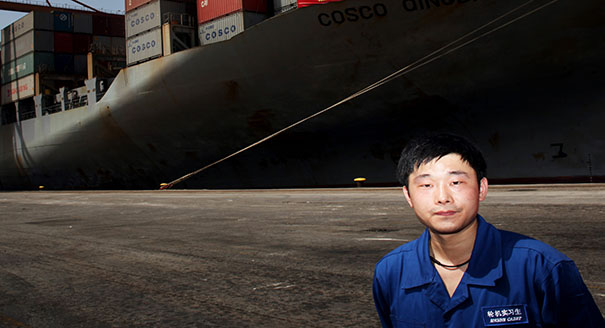
Beijing’s keen strategic foresight has not overlooked the promising location of Greece. COSCO, China’s largest shipping corporation, has for the past 10 years invested in the Piraeus port, transforming a once backwater peripheral port into one of the Mediterranean Sea’s faster growing logistical hubs.
This has produced a beneficial spillover effect for the local economy and the recovery of Greece, and the Greek Prime Minister himself has invited Chinese companies to participate in the Thriasio Logistical Project (one of the largest in Europe).
Most importantly, during his visit to Huawei’s Beijing headquarters, Tsipras called on Chinese technological behemoths to complement COSCO’s logistic infrastructure upgrade with the creation of R&D parks in Greece. Greece has the potential to innovate its way out of the crisis supported by Chinese tech behemoths, as it has a substantial human capital surplus with a plethora of young Greeks educated at some of the world’s top-100 universities.
The investments of China in Greece could also serve as an even stronger geoeconomic pillar in the wider region of the Eastern Mediterranean. The upgraded Suez Canal in Egypt, the investments in the Piraeus port (and potentially at Kasteli Airport in Crete), railway projects in the Balkans, and the EU-commissioned plan for an Eastern Mediterranean European corridor, which would connect the ports of Greece with the heart of the European market, all attest to the significance of the region for Chinese exports and the ambitious goal of OBOR to connect China with Europe and accelerate growth in global trade—the lifeblood of the world economy—by boosting global aggregate demand and investing in connectivity and infrastructure—the veins.
In addition, the Eastern Mediterranean is crucial for security and stability in both Europe and the Middle East. A stable, richer, and economically integrated Eastern Mediterranean would limit the flow of refugees to Europe, thus softening the influence of anti-globalization and anti-EU political forces.
Yet, Chinese investments alone cannot be a panacea for the comprehensive recovery of the Greek economy—they are only a short-term analgesic to facilitate a political solution for restructuring Greek debt in Brussels.
To be sure, Greece has performed the largest fiscal consolidation in the history of the OECD and has paid an enormous price in unemployment and brain drain (the largest in peacetime history). However Greece’s problem, at this moment, is a problem of debt sustainability, deflation, and anemic aggregate demand.
Debt sustainability is an eminently political problem within the Eurozone. While China could exercise diplomatic influence through the IMF and through EU–Beijing dialogues to support a fair debt restructuring and to limit investment uncertainty, it is the EU itself that holds the key. The solution to the “Greek question” does not pass through Beijing but through Brussels and Berlin.
Overall, Chinese win-win investments could increase the odds of Greece staying and flourishing within the Eurozone. This will not, however, suffice to resolve the structural problems of the Eurozone that demand political consensus from within.
Yet the Greeks must also learn from their own mistakes and not repeat them. COSCO’s investments have not come without problems. Even though the Piraeus project has been the most substantial investment of the last decade in Greece and constitutes a model of cooperation between an EU member state and China, the port issue has nonetheless become a hotbed of demagogy, harming the image of Greece as a safe destination for investments.
This should be a didactic case for a constructive reform of the Greek mindset toward investments and the depoliticization of projects that increase the competitiveness and geoeconomic magnetism of the Greek economy, à la Singapore.
Chinese investments, along with a new political culture in Greece and a European New Deal consisting of fiscal, monetary, and debt policies could become the stepping stones for a stronger Greece in the EU and for an essential boost to Europhilia at a time when the European dream has suffered ominous yet reversible shocks.
With Tsipras’ comprehensive agenda for his visit and bilateral agreements, China has shown its trust in the Greek economy. Now it is time for Europe and Greece to deliver with a fair and sustainable program of reform.
Shi Zhiqin is a Professor of International Relations at Tsinghua University and a Resident Scholar at Carnegie-Tsinghua Center for Global Policy, researching China-EU relations.
Vasilis Trigkas is an Onassis Scholar at Tsinghua University and a nonresident Handa Fellow at CSIS-Pacific Forum.
Shi Zhiqin
Former Resident Scholar, Carnegie-Tsinghua Center for Global Policy
Shi Zhiqin was a resident scholar at the Carnegie-Tsinghua Center until June 2020.
Vasilis Trigkas

Depleted financial reserves and a shrinking tax base mean it is no longer possible to simultaneously deliver high defense spending, price stability, and economic growth.

Alexandra Prokopenko

With the growth in points of friction between the great powers, organizations like the SCO will continue to play a role in the strategic adaptation of the smaller powers caught between them.

Temur Umarov

A much-discussed disagreement over internet restrictions in Russia was never an existential threat for Putin: It was about elite groups protecting their interests.
Alexandra Prokopenko

The demands of the Kremlin’s war in Ukraine, demographic problems, and public hostility toward Central Asians mean Russia does not have enough workers.

Salavat Abylkalikov

Minsk’s faith in the future of its larger neighbor’s economy is fading as Belarusian firms in Russia see record losses.

Olga Loiko