

Article
C. Raja Mohan, Darshana M. Baruah
{
  "authors": [
    "C. Raja Mohan"
  ],
  "type": "legacyinthemedia",
  "centerAffiliationAll": "dc",
  "centers": [
    "Carnegie Endowment for International Peace",
    "Carnegie India"
  ],
  "collections": [],
  "englishNewsletterAll": "ctw",
  "nonEnglishNewsletterAll": "",
  "primaryCenter": "Carnegie India",
  "programAffiliation": "SAP",
  "programs": [
    "South Asia"
  ],
  "projects": [],
  "regions": [
    "United States",
    "South Asia",
    "India",
    "North America",
    "Middle East",
    "North Africa",
    "East Asia",
    "Russia",
    "Western Europe"
  ],
  "topics": [
    "Foreign Policy",
    "Economy",
    "Trade"
  ]
}
Source: Getty
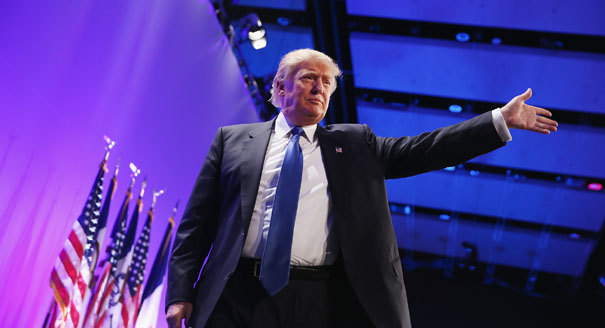
Chancelleries across Eurasia are scrambling to come to terms with the entirely unexpected victory of Trump.
Source: Indian Express
A spectre is haunting Eurasia — the spectre of Donald Trump, who has threatened to overturn the core principles of American strategy towards Europe and Asia since the end of the Second World War. Chancelleries across Eurasia, from Paris to Tokyo, Brussels to Singapore and Berlin to Seoul, are scrambling to come to terms with the entirely unexpected victory of Trump.
Since the Second World War, America the distant power, has been the dominant force shaping Eurasian security with its military alliances in Europe and Asia. After Great Britain withdrew from the East of Suez at the turn of the 1970s, the US also became the principal external power in the Middle East and the Indian Ocean littoral.
During his campaign, Trump had questioned the costs of American alliances and has demanded a redistribution of the defence burdens between the US and its Eurasian partners. He said he would not be too concerned if Asian democracies, Japan and South Korea, developed nuclear weapons in order to defend themselves against threats from neighbours.
Unlike interventionists on both sides of the political spectrum, Trump has criticised George W. Bush’s Iraq war as a huge mistake. Trump insists that America must focus on its self-interest rather than chase the chimera of promoting universal values and undertake costly and unsuccessful nation-building around the world.
Trump has challenged the conventional wisdom in Washington on the “Russian threat” and praised Russian President Vladimir Putin as a strong leader he could make deals with. He has called for partnership with Moscow in defeating the Islamic State in Iraq and Syria. He has called for radical steps to counter the challenge of terror at home and in the Middle East. He has promised to build a wall against immigration from the South and force Mexico to pay for it. Trump has promised to end Beijing’s “economic rape” of America by erecting massive tariff barriers against cheap Chinese imports that have taken away American jobs.
His election has generated panic in Brussels, where the headquarters of NATO and the European Union are located. According to media reports, NATO commanders are working on contingency plans for the worst case: To implement Trump’s orders to withdraw all American forces from Europe.
The leaders of the European Union gathered in an emergency meeting on Sunday to consider the consequences of Trump’s election especially for the climate change convention and the nuclear deal with Iran in the near term and the future of the post-war alliance with America. They are deeply worried about Trump’s bromance with Putin during the campaign. Mainstream European parties are afraid that Trump’s victory will also boost right-wing populism in Europe.
America’s Asian allies are eager to seek reassurances from Trump on the US’s security commitments to them. Japanese Prime Minister Shinzo Abe is meeting Trump in New York this week to get a first- hand sense of where Trump might be taking the post-war alliance with Japan.
China’s leader Xi Jinping in a telephone conversation with Trump over the weekend said bilateral cooperation is the only choice for Beijing and Washington. If Xi was polite, the irrepressible Global Times took the gloves off to proclaim that Beijing is ready to respond with counter measures to any punitive American tariffs from Trump on Chinese goods. In an editorial on Monday, the Global Times warned Trump that he “will be condemned for his recklessness, ignorance and incompetence”, if he embarks on an unwinnable trade war with China.
Not everyone in the world is dreading the arrival of Trump in Washington. While Russia has reasons to keep its fingers crossed on Trump, they see a prospect, however slim it might be, for a reset in US-Russian relations. Some in Japan hope that a rearrangement of the alliance with the US can help legitimise and expand Tokyo’s security role in the region. In the Middle East, Israel, Egypt and Saudi Arabia are happy to see Barack Obama go. If they accuse Obama of abandoning friends in the region, they expect Trump to restore the old partnerships and take a harder line towards Iran.
If you are a big power and decide to change your mind, many countries will have no option but to adapt. Canada, America’s neighbour and biggest trading partner, has already hinted at a readiness to renegotiate the North American Free Trade Agreement that Trump has described as one of the biggest job killers in the US.
Many, however, will hope that Trump’s radical rhetoric will be moderated sooner than later as he begins to govern in Washington. Others point to the multiple contradictions in Trump’s foreign policy assertions during the campaign that are not easy to resolve.
But smart money, in Delhi, however should be on significant change rather than continuity in Washington. While he must find some accommodation with the foreign policy establishment in Washington, Trump can’t simply ignore the strong sentiment among many of his supporters for an “America First” foreign policy. If Trump can engineer even limited change in American foreign policy, the geopolitics of Eurasia will no longer remain the same.
Former Nonresident Senior Fellow, Carnegie India
A leading analyst of India’s foreign policy, Mohan is also an expert on South Asian security, great-power relations in Asia, and arms control.
Recent Work

C. Raja Mohan, Darshana M. Baruah


Alexander Gabuev, Paul Haenle, C. Raja Mohan, …
Carnegie does not take institutional positions on public policy issues; the views represented herein are those of the author(s) and do not necessarily reflect the views of Carnegie, its staff, or its trustees.
Russia spent years building a “sovereign internet,” concentrating web infrastructure exclusively within Russian territory. Ukrainian drone attacks have shown how vulnerable that approach has left the Russian internet.

Maria Kolomychenko

Putin’s conservative staffing policies and search for ever greater control have cemented parliament’s transformation into a bureaucratic appendage of the executive branch.

Andrey Pertsev

Russia’s AI-driven propaganda campaigns operate in a fragmented, chaotic, and often illogical manner. That’s not necessarily a problem for the Kremlin, though: It’s much easier to mimic genuine public debate that way.

Ilya Klishin

Without a ceasefire with Ukraine on attacking each other’s energy infrastructure—to which the Kremlin is unlikely to agree—the diesel agreement between Putin and Trump is largely for show, rather than representing a genuine increase in the volumes of Russian diesel on the global market.

Sergey Vakulenko

Russian strikes are weakening the economy sustaining Ukraine’s war effort. Closing the growing funding gap will require more European support and politically contentious reforms in Kyiv.

Balázs Jarábik