

Paper
Ashley J. Tellis
{
  "authors": [
    "Ashley J. Tellis"
  ],
  "type": "other",
  "centerAffiliationAll": "dc",
  "centers": [
    "Carnegie Endowment for International Peace"
  ],
  "collections": [],
  "englishNewsletterAll": "ctw",
  "nonEnglishNewsletterAll": "",
  "primaryCenter": "Carnegie Endowment for International Peace",
  "programAffiliation": "SAP",
  "programs": [
    "South Asia"
  ],
  "projects": [],
  "regions": [
    "North America",
    "United States",
    "South Asia",
    "India"
  ],
  "topics": [
    "Foreign Policy"
  ]
}
Source: Getty
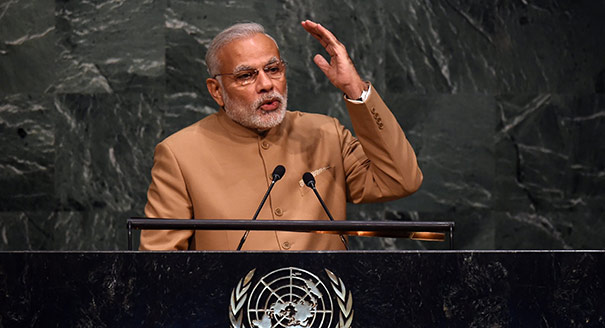
The future of the U.S.-India relationship under Trump and Modi is unclear, but both countries should move beyond irritants that divide them and instead focus on practical cooperation.
Source: Georgetown University
Speaking at Georgetown University, Carnegie’s Ashley J. Tellis discussed U.S.-India ties under Trump and Modi. After arguing that the situation is still unclear, he examined three propositions for how the relationship may take shape.
First, he said, it is possible that the world is facing the end of relations centered on strategic altruism. Tellis argued that, for decades, the United States has focused on transforming relations with India on the presumption that a strong India was in American national interest. This worldview may be coming to an end.
Second, Tellis said that, for necessary geopolitical reasons, the relationship will likely persist, but with more irritants. Disagreements over U.S.-Indian economic ties and domestic problems within India will potentially prevent the United states from being as committed to a strong relationship as India.
Third, whether or not the relationship accelerates depends on President Trump and the executive branch, Tellis said. He added that he hopes Washington and New Delhi can find ways to engage in practical measures, like defense cooperation, to secure a stable Asia.
Former Senior Fellow
Ashley J. Tellis was a senior fellow at the Carnegie Endowment for International Peace.
Recent Work
Ashley J. Tellis
Ashley J. Tellis
Carnegie does not take institutional positions on public policy issues; the views represented herein are those of the author(s) and do not necessarily reflect the views of Carnegie, its staff, or its trustees.

Trump has promised Belarus a massive potash deal. But Minsk is seeking something greater: restored Western transit and greater room for maneuver from Russia.

Balázs Jarábik

Minsk clearly expected the dialogue with Washington to yield more results, in particular the lifting of EU sanctions and permission to export potash.

Artyom Shraibman

With the growth in points of friction between the great powers, organizations like the SCO will continue to play a role in the strategic adaptation of the smaller powers caught between them.

Temur Umarov

When faced with fuel shortages in the past, Central Asian governments could always count on additional supplies from Moscow. That safety net no longer exists.

Galiya Ibragimova

Despite unhappiness on the ground, Moscow is determined to use both carrot and stick to ensure there is record support for United Russia in occupied Ukraine.

Konstantin Skorkin