

Commentary
- +1
Paul Haenle, Xue Gong, Ngeow Chow Bing, …
{
  "authors": [
    "Paul Haenle"
  ],
  "type": "legacyinthemedia",
  "centerAffiliationAll": "",
  "centers": [
    "Carnegie Endowment for International Peace",
    "Carnegie China"
  ],
  "collections": [
    "U.S.-China Relations"
  ],
  "englishNewsletterAll": "",
  "nonEnglishNewsletterAll": "",
  "primaryCenter": "Carnegie China",
  "programAffiliation": "",
  "programs": [],
  "projects": [],
  "regions": [
    "North America",
    "United States",
    "East Asia",
    "China"
  ],
  "topics": [
    "Economy",
    "Trade"
  ]
}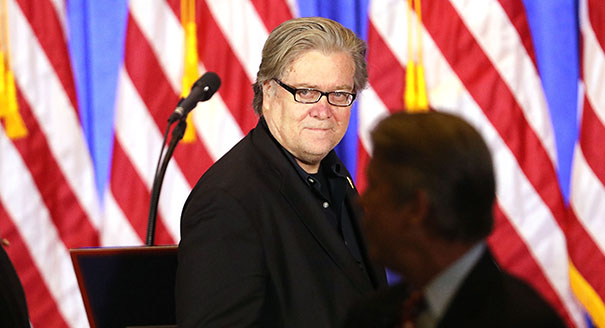
Source: Getty
The United States needs a proactive and smart strategy to address the imbalances and asymmetries in its economic and trade relationships with China.
Source: ChinaFile
ChinaFile: Steve Bannon, whose controversial views on China remain hugely influential in the White House, is visiting Hong Kong this week to speak at a China investment conference. In August, before he left his White House position as chief strategist, Bannon said the United States is “at economic war with China.” He added, “One of us is going to be a hegemon in 25 or 30 years and it’s gonna be them if we go down this path.” Are the United States and China in a state of economic war? If not, is that a likely outcome if tensions between the two nations continue to rise?
Paul Haenle: The United States is not at economic war with China. The benefits that the U.S. economy gains from trade with China are hidden in many cases, but nonetheless significant. Many “made in China” goods, for example, have parts or services that come from other countries, including the United States. While these goods are assembled in China, the larger part of every dollar spent on them goes into the pockets of U.S. companies. China also invests tens of billions of dollars in the United States each year, which is responsible for creating middle class jobs for thousands of Americans. Retaliatory measures against China are likely to reduce such investment—and job creation, and also setback progress on opening Chinese domestic markets to U.S. firms.
Due to the nature of the global economy and supply chains, pursuing retaliatory measures against China to address trade deficits or irritants would likely lead to fewer dollars in the pockets of average Americans and significant U.S. job losses. Tariffs on Chinese goods would be passed on to Americans in the form of higher prices. If Americans were to buy fewer Chinese products, it would hurt China’s economic growth, and in turn reduce Chinese imports of U.S. products. In 2009, the United States placed a 35 percent tariff on Chinese tires in an attempt to level the playing field for U.S. manufacturers. The experiment cost American consumers an additional U.S.$1 billion in higher prices, but only saved 1,200 jobs, or, U.S.$900,000 per job saved.
We do not need to engage in an economic war with China. We would both end up as losers. What we need is a proactive and smart strategy to address the imbalances and asymmetries in our economic and trade relationships with China. We need a well-coordinated approach to ensure China lives up to the bilateral and multilateral commitments it has made on international trade and economic issues. We need to work with allies and partners to make sure that China plays by widely agreed upon rules. A decision to launch economic warfare with China would be a classic case of “cutting off the nose to spite the face.

Former Maurice R. Greenberg Director’s Chair, Carnegie China
Paul Haenle held the Maurice R. Greenberg Director’s Chair at the Carnegie Endowment for International Peace and is a visiting senior research fellow at the East Asian Institute, National University of Singapore. He served as the White House China director on the National Security Council staffs of former presidents George W. Bush and Barack Obama.
Recent Work


Paul Haenle, Xue Gong, Ngeow Chow Bing, …

Paul Haenle, Chong Ja Ian
Carnegie does not take institutional positions on public policy issues; the views represented herein are those of the author(s) and do not necessarily reflect the views of Carnegie, its staff, or its trustees.

With the growth in points of friction between the great powers, organizations like the SCO will continue to play a role in the strategic adaptation of the smaller powers caught between them.

Temur Umarov

When faced with fuel shortages in the past, Central Asian governments could always count on additional supplies from Moscow. That safety net no longer exists.

Galiya Ibragimova
Russia looks set to reap economic benefits from closer ties with Southeast Asian countries that are keen to find reliable energy suppliers and diversify trade ties.

Alexander Gabuev
Ongoing uncertainty in the Middle East allows Moscow to both increase its influence in Tehran and continue to enjoy the financial windfall of higher oil prices.

Nikita Smagin
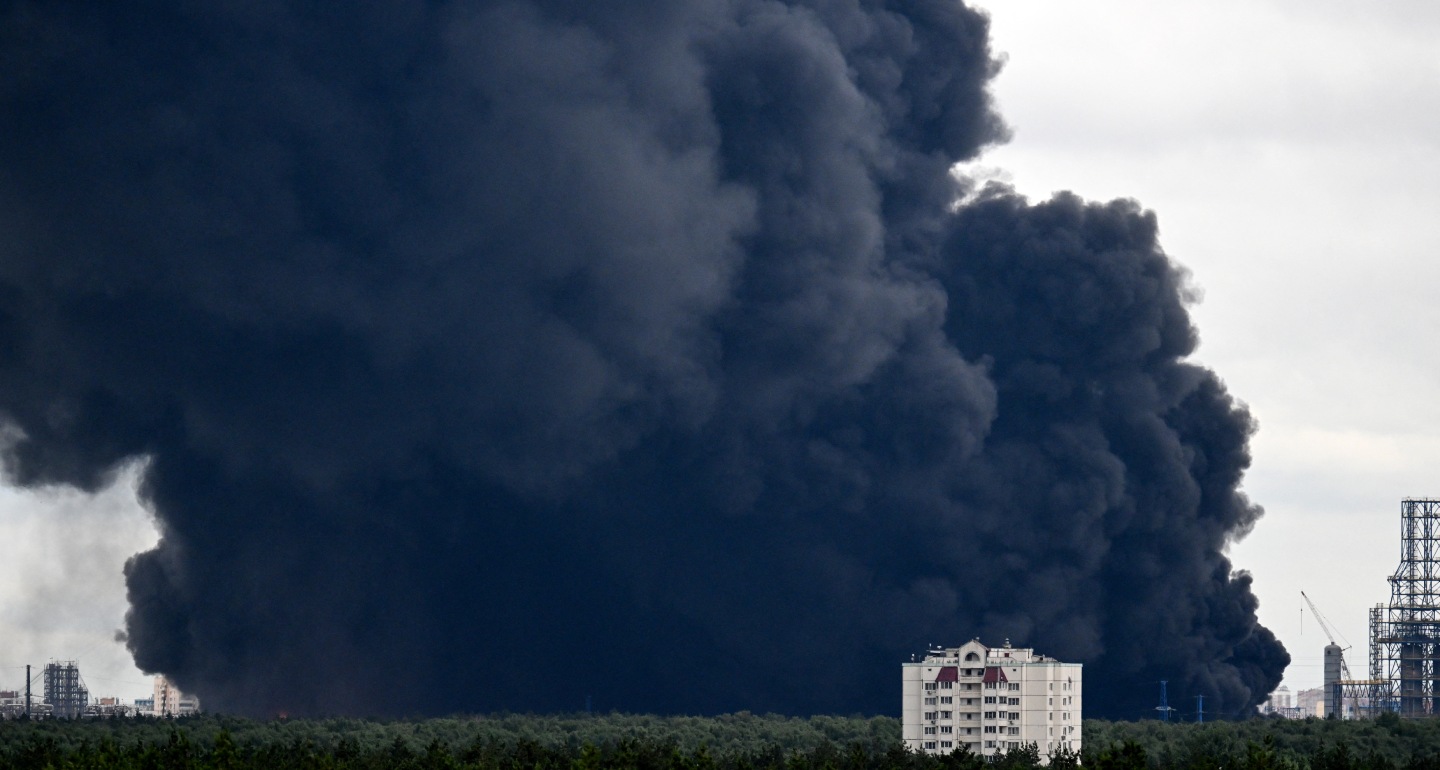
If it proves impossible for the Russian authorities to avoid a gasoline deficit, the question then becomes how they will organize the distribution of a scarce resource.

Sergey Vakulenko