

Commentary
A leak of Russian gas price data helps establish that China is paying Russia far less than Central Asian countries and Gazprom’s former European customers.
Sergey Vakulenko
{
  "authors": [
    "Jarrett Blanc",
    "James M. Acton"
  ],
  "type": "legacyinthemedia",
  "centerAffiliationAll": "dc",
  "centers": [
    "Carnegie Endowment for International Peace",
    "Malcolm H. Kerr Carnegie Middle East Center"
  ],
  "collections": [
    "Iranian Proliferation",
    "U.S. Nuclear Policy"
  ],
  "englishNewsletterAll": "americanStatecraft",
  "nonEnglishNewsletterAll": "",
  "primaryCenter": "Carnegie Endowment for International Peace",
  "programAffiliation": "ASP",
  "programs": [
    "American Statecraft",
    "Nuclear Policy"
  ],
  "projects": [],
  "regions": [
    "North America",
    "United States",
    "Middle East",
    "Iran"
  ],
  "topics": [
    "Political Reform",
    "Foreign Policy",
    "Nuclear Policy",
    "Global Governance"
  ]
}
Source: Getty
Every one of the very real challenges Iran poses in the world would be made more difficult to manage if Iran were freed of the nuclear limits agreed in the JCPOA, and every one of them would be made more difficult if the United States isolates itself from its partners.
Source: Hill
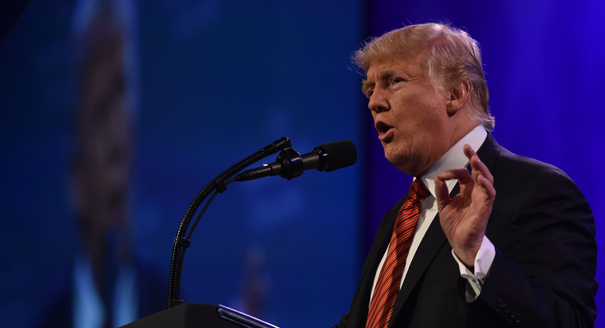
By Sunday, President Trump must decide whether to certify to Congress that Iran is complying with the Joint Comprehensive Plan of Action (JCPOA) and whether this agreement remains vital to U.S. national security interests.
By all accounts, he appears set not to do so. This would be a serious mistake — both on the merits of the decision and because it would undermine the United States’ ability to constrain the long-term proliferation threat from Iran.
The Trump administration appears unable to choose a public line about Iranian compliance. Secretary of State Rex Tillerson, for example, has publicly stated that Iran is in “technical” compliance, and he officially conveyed the same message to the foreign ministers of all other JCPOA participants.
By contrast, U.S. Ambassador to the United Nations Nikki Haley asserted, “Iran has been caught in multiple violations.” So, which is it?
To help answer this question, on Thursday morning, the Carnegie Endowment for International Peace unveiled a new tracker that presents each allegation of noncompliance made by the Trump administration and assesses them. This exercise leaves little doubt: Iran is in compliance.
Indeed, various senior U.S. military officers relaying the conclusions of the U.S. intelligence community (which monitors Iran’s nuclear program as closely as any issue on Earth) and American allies have all reached the same conclusion.
Data from the International Atomic Energy Agency also shows that Iran has constrained its nuclear program as required under the deal.
Affirming that Iran is complying with the JCPOA does not mean that the United States and its partners should not prepare for the possibility of future problems. Iran may violate its commitments. In fact, even with good faith on all sides, implementing the JCPOA will be a challenge given its numerous complexities and innovations.
Moreover, as some key provisions of the agreement gradually expire between 2026 and 2041, Iran could ramp up its nuclear activities without violating the deal. This final concern especially is relevant to the question of whether the JCPOA is in U.S. national interests.
Yet, if Trump fails to provide requisite certifications to Congress on Sunday, he will severely weaken the United States’ ability to address these potential problems.
In the event of non-certification, Congress would be permitted to use an expedited procedure to reinstate sanctions on Iran. Doing so would place the United States in non-compliance with the JCPOA and spark the deal’s inevitable collapse.
The White House appears to recognize that this outcome would be a disaster since Iran’s nuclear program would be left entirely unconstrained and subject to less stringent verification.
As a result, Trump appears set to accompany non-certification with a plea for the legislative branch to show restraint and not reinstate sanctions against a country that both he and Republican congressional leaders have long argued deserves to be punished.
This strategy is as bizarre and risky as it sounds. Congress has already imposed sanctions — on Russia over its electoral interference — against Trump’s wishes. There is a very real chance that it would do so again. We should not want the United States’ ability to deal with Iran’s nuclear program to become hostage to fickle domestic politics and arcane congressional procedures.
Even if Congress does not reinstate sanctions, however, it is far from clear what the Trump administration intends to do to next. Perhaps it hopes to coerce Iran into accepting a “better deal” by inducements, or more likely, threats. Perhaps, more cynically, it hopes Iran will respond to noncertification by blatantly violating the JCPOA and provoking international opprobrium.
Yet, if these are the administration’s hopes, they are likely to be dashed. The economic pressure that forced Iran to the negotiating table and led to the JCPOA was the result of sanctions imposed by a broad-based international coalition.
Members of this coalition were willing to impose sanctions — and damage their own economies in the process —because they believed the Obama administration was willing to negotiate with Iran in good faith.
If Trump fails to certify Iran’s compliance with a deal that is almost universally seen as working, it is the United States— and not Iran — that will be seen as acting in bad faith.
Even the United States’ closest friends in Europe, let alone Russia and China, will question whether the Trump administration would ever accept any deal, however stringent its provisions, and if it did, whether it would be actually willing to follow through.
As a result, international efforts to pressure Iran into accepting a better deal — or even to comply with the JCPOA —are likely to be half-hearted at best.
The U.S. could try to coerce cooperation by imposing “secondary sanctions” on foreign companies that do business in Iran. This approach would do significant damage to Iran’s economy, but it would be highly unlikely to recreate the degree of pressure that led to the JCPOA.
The U.S. cannot, for example, force other countries to impose primary sanctions on Iran. It would also be extremely difficult to significantly reduce Iranian exports of crude oil without the active cooperation of key importers, which include China, Europe, India, Japan and South Korea.
After all, if these buyers simply ignore the U.S. and keep importing Iranian crude, Washington will have no choice but to acquiesce or fight an exceptionally damaging trade war on multiple fronts.
All of these realities matter. It is very difficult to build a persuasive case for the United States to withdraw from the deal so long as Iran is meetings its commitments.
Every one of the very real challenges Iran poses in the world would be made more difficult to manage if Iran were freed of the nuclear limits agreed in the JCPOA, and every one of them would be made more difficult if the U.S. isolates itself from its partners.
Perhaps that is why opponents of the deal seem to muddy the waters with misleading claims of non-compliance and with unrealistic plans of improving the deal by killing it.
Former Senior Fellow, Geoeconomics and Strategy Program
Jarrett Blanc was a senior fellow in the Geoeconomics and Strategy Program at the Carnegie Endowment for International Peace.

Jessica T. Mathews Chair, Co-director, Nuclear Policy Program
Acton holds the Jessica T. Mathews Chair and is co-director of the Nuclear Policy Program at the Carnegie Endowment for International Peace.
Carnegie does not take institutional positions on public policy issues; the views represented herein are those of the author(s) and do not necessarily reflect the views of Carnegie, its staff, or its trustees.
A leak of Russian gas price data helps establish that China is paying Russia far less than Central Asian countries and Gazprom’s former European customers.

Sergey Vakulenko

Japan’s long-term security policy is driven by concerns about China, and there is little appetite for (or interest in) pursuing a confrontation with Moscow.

James D.J. Brown

Putin’s conservative staffing policies and search for ever greater control have cemented parliament’s transformation into a bureaucratic appendage of the executive branch.

Andrey Pertsev

Russia’s AI-driven propaganda campaigns operate in a fragmented, chaotic, and often illogical manner. That’s not necessarily a problem for the Kremlin, though: It’s much easier to mimic genuine public debate that way.

Ilya Klishin

Without a ceasefire with Ukraine on attacking each other’s energy infrastructure—to which the Kremlin is unlikely to agree—the diesel agreement between Putin and Trump is largely for show, rather than representing a genuine increase in the volumes of Russian diesel on the global market.
Sergey Vakulenko