

Commentary
Trump has promised Belarus a massive potash deal. But Minsk is seeking something greater: restored Western transit and greater room for maneuver from Russia.
Balázs Jarábik
{
  "authors": [
    "Richard Sokolsky",
    "Aaron David Miller"
  ],
  "type": "legacyinthemedia",
  "centerAffiliationAll": "",
  "centers": [
    "Carnegie Endowment for International Peace",
    "Malcolm H. Kerr Carnegie Middle East Center"
  ],
  "collections": [],
  "englishNewsletterAll": "",
  "nonEnglishNewsletterAll": "",
  "primaryCenter": "Carnegie Endowment for International Peace",
  "programAffiliation": "",
  "programs": [],
  "projects": [],
  "regions": [
    "North America",
    "United States",
    "Middle East",
    "Türkiye",
    "Syria",
    "Levant"
  ],
  "topics": [
    "Political Reform",
    "Foreign Policy"
  ]
}
Source: Getty
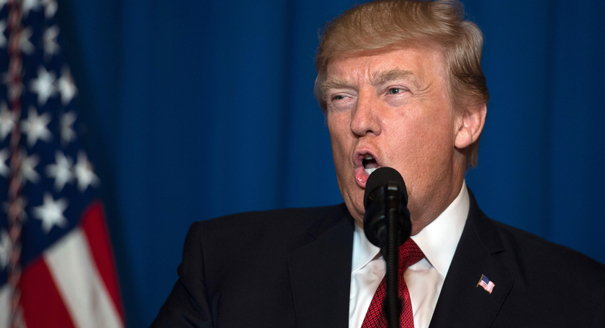
The United States should not commit massive resources to roll back Iranian influence in Syria. President Donald Trump’s call with Turkish President Recep Tayyip Erdogan may have headed that off.
Source: USA Today
President Trump’s phone call last week with Turkish President Recep Tayyip Erdogan is evidence that the Marx Brothers were a better coordinated bunch than Trump and the others running foreign policy in this administration. The stumbles, bumbles and fumbles reflect a team that still lacks a coherent strategy toward Syria.
The president reportedly reassured the Turkish president that the U.S. would cease military support to the Kurdish militias. These were the forces the administration relied on, along with U.S. airpower, to defeat the Islamic State in Iraq and Syria's caliphate, and on which it was pinning its hopes to pressure the Assad regime and contain Iran in Syria...
Nonresident Senior Fellow, Russia and Eurasia Program
Richard Sokolsky is a nonresident senior fellow in Carnegie’s Russia and Eurasia Program. His work focuses on U.S. policy toward Russia in the wake of the Ukraine crisis.

Senior Fellow, American Statecraft Program
Aaron David Miller is a senior fellow at the Carnegie Endowment for International Peace, focusing on U.S. foreign policy.
Carnegie does not take institutional positions on public policy issues; the views represented herein are those of the author(s) and do not necessarily reflect the views of Carnegie, its staff, or its trustees.

Trump has promised Belarus a massive potash deal. But Minsk is seeking something greater: restored Western transit and greater room for maneuver from Russia.

Balázs Jarábik

The European far right might fail to steer EU policy in the direction Russia wants, but they will create enough chaos inside Europe to benefit the Kremlin.

Dimitar Bechev

Minsk clearly expected the dialogue with Washington to yield more results, in particular the lifting of EU sanctions and permission to export potash.

Artyom Shraibman

If the Russian-speaking community in Latvia cannot articulate their interests without being seen as disloyal, they could end up embracing a pro-Kremlin agenda.

Sergejs Potapkins

Russia’s ruling party would have benefited from Putin appearing as its distant patron, but as an active frontman imposing his views on the public, he has done nothing but harm both the party’s election campaign and the ruling system overall.

Andrey Pertsev