

Commentary
With the growth in points of friction between the great powers, organizations like the SCO will continue to play a role in the strategic adaptation of the smaller powers caught between them.
Temur Umarov
{
  "authors": [
    "Salman Ahmed",
    "Jake Sullivan"
  ],
  "type": "legacyinthemedia",
  "centerAffiliationAll": "dc",
  "centers": [
    "Carnegie Endowment for International Peace"
  ],
  "collections": [],
  "englishNewsletterAll": "americanStatecraft",
  "nonEnglishNewsletterAll": "",
  "primaryCenter": "Carnegie Endowment for International Peace",
  "programAffiliation": "ASP",
  "programs": [
    "American Statecraft"
  ],
  "projects": [],
  "regions": [
    "North America",
    "United States"
  ],
  "topics": [
    "Foreign Policy"
  ]
}
Source: Getty
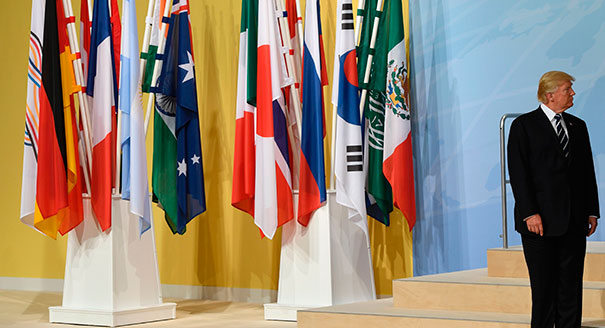
The Trump administration has managed to provide some answers to some outstanding questions in its national security strategy. But it has left even more unanswered.
Source: Foreign Policy
The Trump administration’s recently released national security strategy contains more consistency with predecessors than both its critics and its champions might have expected. It also departs significantly, however, in ways that raise serious questions about the future of U.S. global leadership.
Like the 16 national security strategies that preceded it, this strategy rests on the belief that the United States must defend its homeland first but also contribute to the security of allies and partners; that it must promote American prosperity first but also broader prosperity in an integrated, open economy; and that it must defend America’s way of life but universal values, too. In other words, yes, “America First,” but others’ interests, too.
In reality, every U.S. president has put America’s interests first. But they chose not to lead with that as their rhetorical slogan or conceptual framework for engagement abroad, because the rest of the world does not follow the United States’ lead to advance American interests; they do so to advance their own. That’s why U.S. presidents have taken pains to stress how the United States can work with allies and partners to uphold an international system that advances mutual interests, prevents another Great Depression, and averts a World War III. President Ronald Reagan’s quote on the cover of his first national security strategy captured this well: “Freedom, peace and prosperity…that’s what America is all about…for ourselves, our friends, and those people across the globe struggling for democracy.”
The drafters of Donald Trump’s national security strategy had the unenviable task of keeping faith with that sentiment while employing America First as the organizing principle for this document. They seem to have reconciled the dilemma by putting into their own words much of what others before them were saying and labeling it America First.
That said, this document departs in substance from those preceding it in at least three important ways.
First, it calls out Russia and China as revisionist powers seeking to challenge U.S. primacy. President Barack Obama’s last strategy addressed the challenge posed to U.S. leadership by Russia and China, but it studiously differentiated between them and, especially with respect to China, addressed more subtly how to balance, cooperate, and compete simultaneously. Trump’s strategy lumps Russia and China together, largely dispenses with the subtleties, and elevates geostrategic rivalry with both these countries as a defining feature of U.S. strategy going forward.
The United States, under any president, was going to have to make some strategic adjustments commensurate with the increased competitive challenges it now faces from both countries.
However, the rhetoric Trump’s strategy employs gives the impression of a much more pronounced shift from the previous administration than actually may be the case. It risks pushing Russia and China closer together, which prior Democratic and Republican administrations sought consciously to avoid. This could end up unnecessarily complicating efforts to cooperate with China, in particular, when it’s in U.S. interests to do so. And it does not address how the United States will pay for what could end up becoming a very costly, long-term rivalry while also rebuilding at home, passing a $1.5 trillion tax cut, and managing long-term fiscal challenges.
The strategy places economic competition at the heart of this global strategic rivalry with China. As expected, it signals an intention to respond more forcefully to China’s unfair trading practices, which prior U.S. presidents also decried but arguably did not do enough to push back against. However, in contrast to the Obama administration, which saw the conclusion of the 12-nation Trans-Pacific Partnership (TPP) as an important tool to manage China’s rise and assert American leadership in Asia, Trump’s document offers no regional economic strategy and relies almost exclusively on a bilateral approach that abandons the additional leverage that comes from setting the rules of a club that everyone wants to join.
Second, Trump’s strategy document significantly downgrades the priority it attaches to issues of importance to America’s democratic allies and partners around the world. For example, for many countries and their citizens, climate change poses an existential security threat. Yet Trump’s document does not mention it among the security challenges, treats it largely as an economic issue, and doubles down on his decision to withdraw from the Paris accords.
Trump’s strategy chooses not to reaffirm Obama’s commitment for the United States to pursue a world free of nuclear weapons. Obama believed in effective nuclear deterrence and made clear this goal would not be achieved in his lifetime. But he urged working toward that long-term aspiration, recognizing that, as far as many of America’s allies are concerned, this is the basic bargain of the Nuclear Nonproliferation Treaty: The world will work with the United States to check the nuclear ambitions of scofflaw states such as Iran and North Korea if it does its part to reduce its nuclear arsenal. Another more traditional Republican administration might have made the same decision as Trump on this point but without the added diplomatic baggage of America First.
Third, whereas previous presidents’ national security strategies hewed closely to what they repeatedly stated elsewhere, it is hard to reconcile Trump’s tweets and speeches, including the very speech he delivered touting this strategy document’s release.
The document explains forcefully, and at some length, how Russia is undermining American and European security, yet Trump’s rollout speech mentioned it only in passing, and he has studiously avoided criticism of Russia in his statements dating back to the campaign.
The document recounts the myriad ways in which the United States benefits from strong ties with its democratic allies, yet Trump’s speech emphasized far more how they were free-riding off American security assistance and that he would pursue “partnerships based on cooperation and reciprocity.”
The document differentiates between the grievances the United States has with unfair Chinese trading practices and the trade deficits accrued with U.S. allies due to fair competition. Yet Trump’s public remarks frequently appear to be lumping together all countries that have trade surpluses with the United States, from Canada and China to Japan, Germany, and Mexico.
The document suggests an interpretation of “principled realism” that prizes strong ties with countries that share U.S. values, whereas Trump’s words and actions often imply a greater natural affinity for dictators and strongmen than democratic allies.
The document praises the importance of American diplomacy and the role of its professional diplomats, yet the president’s budget proposed drastic cuts in their resources and his secretary of state is hollowing out the diplomatic corps.
The document does its best to balance an America First rubric of competition with more traditional concepts of U.S. global leadership. When Trump says “America First,” he appears to mean it in a much narrower sense — where the United States is fundamentally transactional in its relations with other nations and no longer takes on what he essentially portrays as a sucker’s bet to underwrite global security.
Trump’s national security document and rollout speech therefore leave a lot of important questions unanswered. Does his administration believe it can get the rest of the world to adopt an undifferentiated strategy toward China and Russia as revisionist powers? Does it expect the full support of its partners to push back against Chinese mercantilist practices after it has walked away from the TPP, threatened to blow up the North American Free Trade Agreement, and repudiated multilateral trade arrangements in general? Does it expect to build a broad coalition of nations to shoulder more of the burden in fighting terrorists, stemming North Korea’s nuclear weapons proliferation, and countering Iran’s destabilizing behaviors in the Middle East as it distances itself from the security challenges and values that matter most to them? Does it believe that American diplomacy, dealt this difficult hand, will be more successful by marginalizing and weakening its professional diplomats at the State Department? And most basically, how much stock should be put in the words written in this strategy document, when the president’s words still don’t match it?
The Trump administration has managed to provide some answers to some outstanding questions in its national security strategy. But it has left even more unanswered.

Former Nonresident Senior Fellow, Geoeconomics and Strategy Program
Salman Ahmed served as a senior fellow at the Carnegie Endowment for International Peace, where he directed research and led a task force dedicated to making U.S. foreign policy work better for the middle class.
Former U.S. National Security Advisor to Former President Joe Biden
Jake Sullivan, a senior fellow at the University of New Hampshire's Carsey School of Public Policy, served as the United States national security advisor to former President Joe Biden from 2021 to 2025. Sullivan previously served as deputy assistant to former President Barack Obama, national security advisor to former Vice President Biden, director of policy planning in the State Department, and as deputy chief of staff to former U.S. Secretary of State Hillary Clinton.
Carnegie does not take institutional positions on public policy issues; the views represented herein are those of the author(s) and do not necessarily reflect the views of Carnegie, its staff, or its trustees.

With the growth in points of friction between the great powers, organizations like the SCO will continue to play a role in the strategic adaptation of the smaller powers caught between them.

Temur Umarov

When faced with fuel shortages in the past, Central Asian governments could always count on additional supplies from Moscow. That safety net no longer exists.

Galiya Ibragimova

Despite unhappiness on the ground, Moscow is determined to use both carrot and stick to ensure there is record support for United Russia in occupied Ukraine.

Konstantin Skorkin
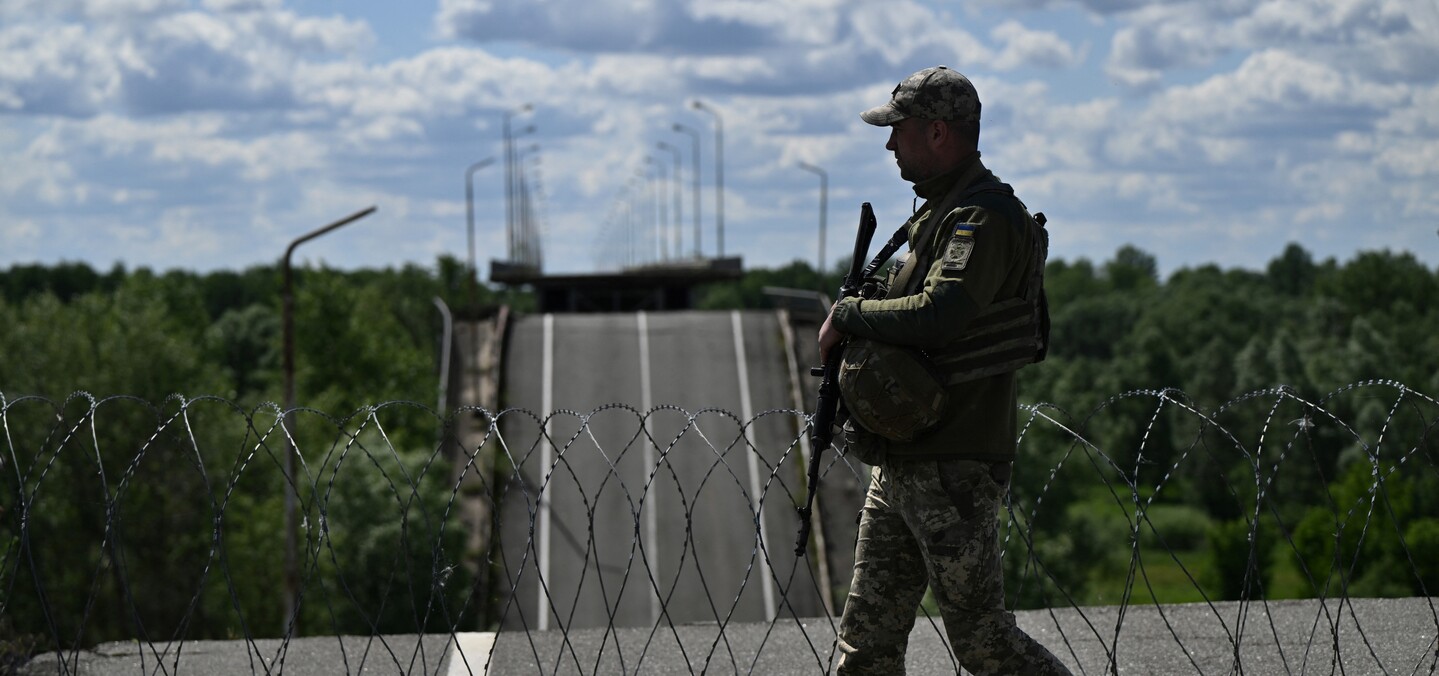
The recent damage inflicted by Ukrainian drones and missiles on Russia has made Belarus aware of its own vulnerabilities—and surprisingly amenable to Kyiv’s demands.

Artyom Shraibman
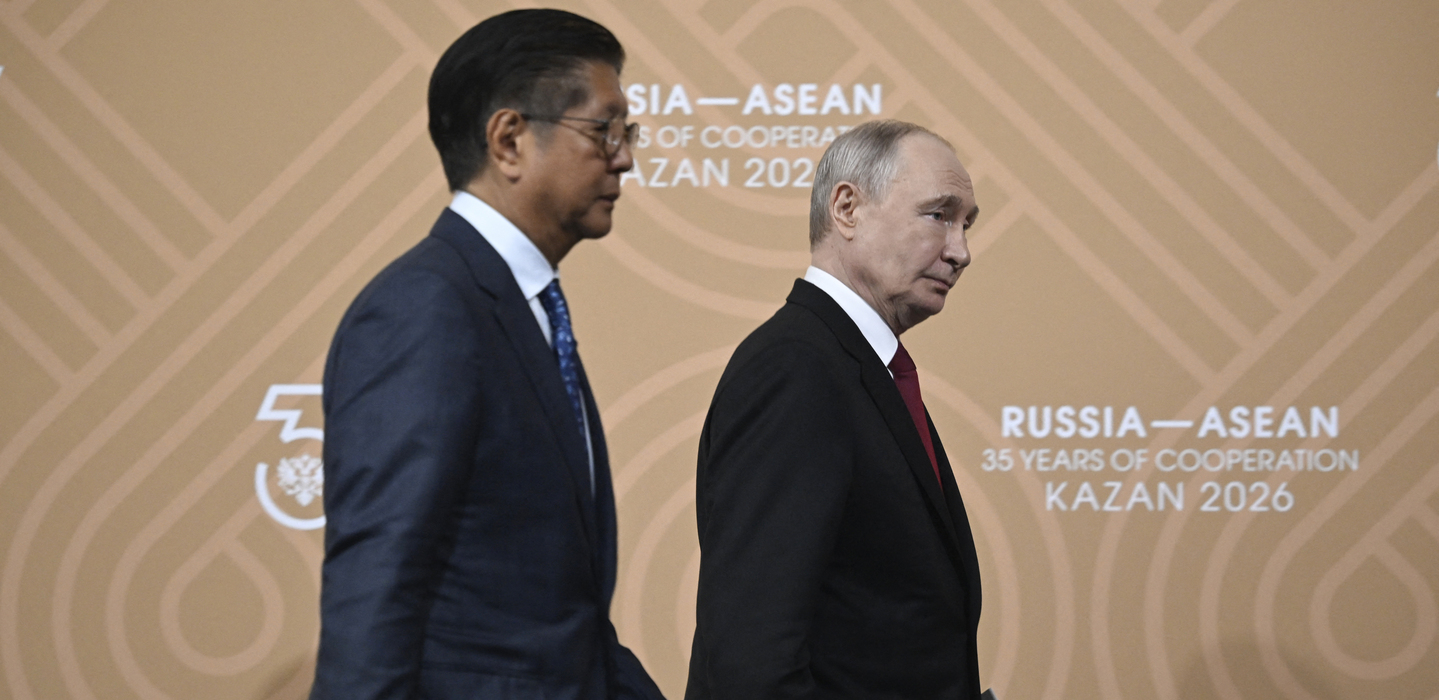
Russia looks set to reap economic benefits from closer ties with Southeast Asian countries that are keen to find reliable energy suppliers and diversify trade ties.

Alexander Gabuev