

Q&A
Eugene Rumer
{
  "authors": [
    "Eugene Rumer"
  ],
  "type": "other",
  "centerAffiliationAll": "dc",
  "centers": [
    "Carnegie Endowment for International Peace"
  ],
  "collections": [],
  "englishNewsletterAll": "ctw",
  "nonEnglishNewsletterAll": "",
  "primaryCenter": "Carnegie Endowment for International Peace",
  "programAffiliation": "russia",
  "programs": [
    "Russia and Eurasia"
  ],
  "projects": [],
  "regions": [
    "Russia"
  ],
  "topics": [
    "Political Reform",
    "Foreign Policy"
  ]
}
Source: Getty
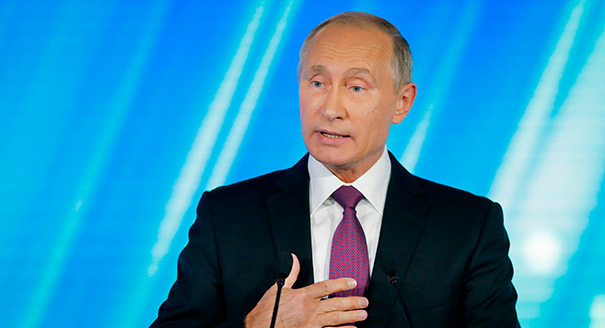
A discussion of expectations for Putin’s fourth term within the context of an increasingly fraught U.S.-Russia relationship.
Source: Center for Strategic and International Studies
The Center for Strategic and International Studies (CSIS) hosted a discussion in advance of Russia’s 2018 presidential election with Carnegie’s Eugene Rumer, RAND’s Samuel Charap, George Washington University’s Henry Hale, CSIS’s Olga Oliker, Georgetown University’s Angela Stent, and moderated by Susan Glasser of Politico. The experts unpacked Russian attitudes, politics, and interests on the eve of the March elections. Rumer discussed possible U.S. responses to the attack against former Russian double agent Sergei Skripal in the United Kingdom, efforts to get out the vote ahead of the election, and Putin’s fourth term agenda. He also emphasized Putin’s dichotomous goals for Russia to be a major global power and simultaneously isolated from the rest of the world.
This event was hosted by the Center for Strategic and International Studies.
Director and Senior Fellow, Russia and Eurasia Program
Rumer, a former national intelligence officer for Russia and Eurasia at the U.S. National Intelligence Council, is a senior fellow and the director of Carnegie’s Russia and Eurasia Program.
Recent Work
Eugene Rumer
Eugene Rumer
Carnegie does not take institutional positions on public policy issues; the views represented herein are those of the author(s) and do not necessarily reflect the views of Carnegie, its staff, or its trustees.

The European far right might fail to steer EU policy in the direction Russia wants, but they will create enough chaos inside Europe to benefit the Kremlin.

Dimitar Bechev

Minsk clearly expected the dialogue with Washington to yield more results, in particular the lifting of EU sanctions and permission to export potash.

Artyom Shraibman

If the Russian-speaking community in Latvia cannot articulate their interests without being seen as disloyal, they could end up embracing a pro-Kremlin agenda.

Sergejs Potapkins

Russia’s ruling party would have benefited from Putin appearing as its distant patron, but as an active frontman imposing his views on the public, he has done nothing but harm both the party’s election campaign and the ruling system overall.

Andrey Pertsev

Depleted financial reserves and a shrinking tax base mean it is no longer possible to simultaneously deliver high defense spending, price stability, and economic growth.

Alexandra Prokopenko