

Q&A
Eugene Rumer
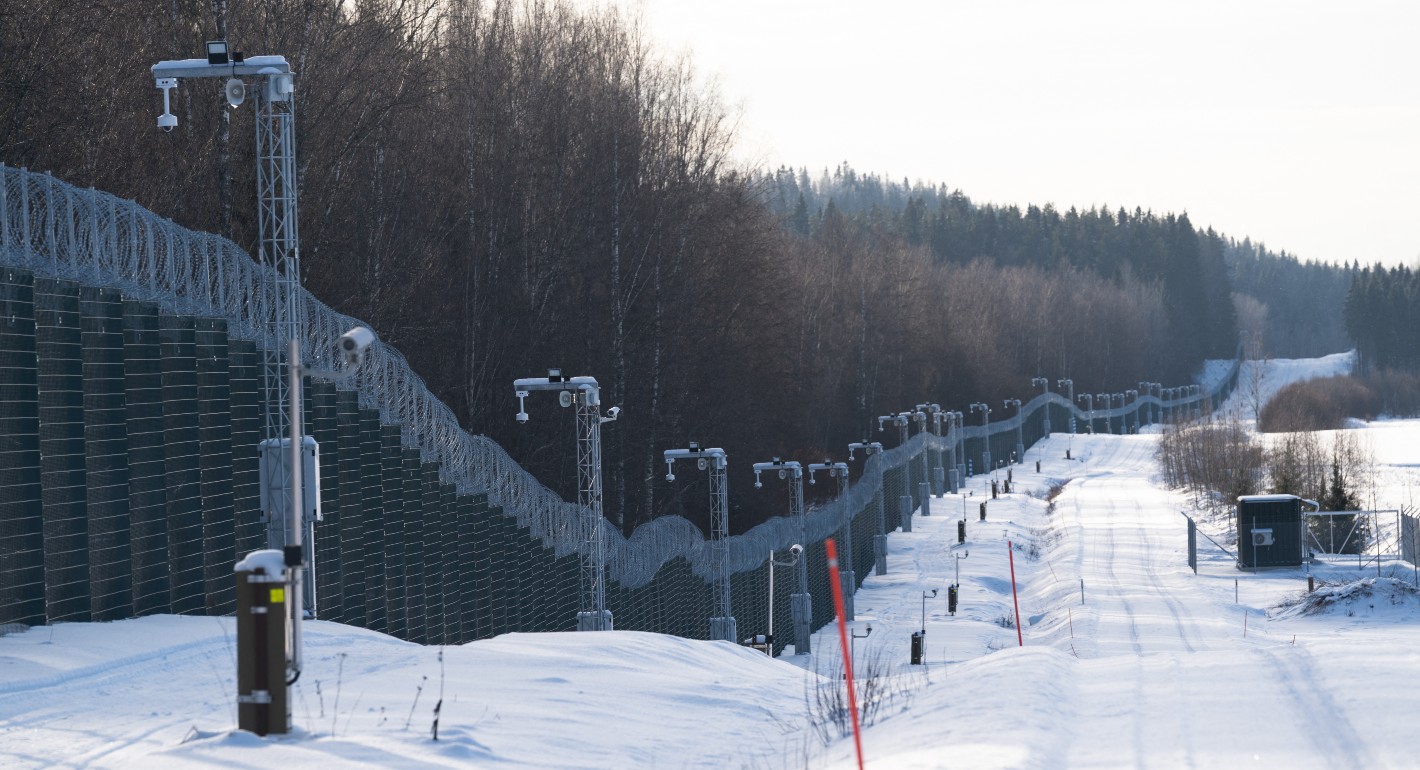
The recently built fence at the border between Finland and Russia. (Photo by Alessandro RAMPAZZO / AFP via Getty Images)
No matter how its war against Ukraine ends, Russia will emerge less secure, more aggrieved, and posing a greater threat to Europe than it did when it started this war.
Having invaded Ukraine under the false pretext of needing to secure its western flank, Russia is poised to emerge from the war less secure, more resentful, and more threatening to Europe than before the war. Its threat perceptions will cast a long shadow over Europe. They will be shaped by three converging circumstances: the geography of the standoff between Russia and the North Atlantic Treaty Organization (NATO), the development of advanced weapons based on new technologies, and changes in transatlantic relations that are forcing Europe to rethink its security policy.
Russian insecurity is rooted in a long history of confrontation with the rest of Europe and a strategic culture that prizes strategic depth as a cornerstone of national security. With the Cold War–era buffer separating it from NATO gone and ties with Ukraine broken beyond repair, Russia will face an array of hostile countries on its doorstep from the Kola Peninsula to the Black Sea.
In addition to the new geography of Russia’s confrontation with Europe, its threat perceptions will be heightened by new weapons already deployed and being acquired by the frontline states and other major European powers. These weapons can hold at risk targets deep inside the Russian heartland.
The Kremlin no doubt welcomes growing strains in transatlantic relations during the Donald Trump administration. However, Russian threat perceptions are bound to increase if, spurred by the United States’ retreat from its security commitments to Europe, the allies mobilize their resources to deter and if necessary defend against Russia on their own. The prospect of Europe as a whole or individual European countries—in addition to France and the United Kingdom—acquiring their own nuclear deterrents will add to Russia’s already heightened sense of insecurity.
As long as its war with Ukraine continues, Russia is unlikely to attack another European country. Support for Ukraine is in Europe’s interest as a hedge against Russian aggression against another European state. But an unexpected crisis or a miscalculation—the full-scale invasion of Ukraine was certainly one—could result in Russia attacking one of its neighbors to prove that NATO’s Article 5 guarantee is but a dead letter. A transatlantic divorce before Europe has built up its conventional defenses and solved the problem of deterring nuclear threats from Russia without the U.S. nuclear umbrella over it would create a window of opportunity for Vladimir Putin to pursue his ambitions, while hiding behind Russia’s nuclear shield. His record of nuclear blackmail against a non-nuclear state shows that it is a realistic possibility.
A transatlantic divorce before Europe has built up its conventional defenses and solved the problem of deterring nuclear threats from Russia without the U.S. nuclear umbrella over it would create a window of opportunity for Vladimir Putin to pursue his ambitions, while hiding behind Russia’s nuclear shield.
Russian nuclear saber-rattling during the war with Ukraine has also demonstrated that nuclear weapons remain the ultimate deterrent. In the event of a transatlantic divorce, Europe would be left without the U.S. nuclear umbrella. While France and Great Britain would maintain their national nuclear forces, the rest of the continent could find itself in limbo, without clear options for deterring Russia with its vast nuclear arsenal. No task is more difficult and more urgent for NATO’s European members than to come up with options for dealing with this threat.
In the near term, the biggest threats to Europe come from Russian activities in the gray zone. So far, at least in public, European responses to these threats have been mostly successful. Building on the lessons of counterterrorism work, strong law enforcement and intelligence capabilities have helped bolster resilience, attribution, public information, and prevention. But that is still not enough. A credible deterrent to Russian hybrid warfare has to include a robust offensive component.
Europe does not have to meet the Russia challenge alone. The United States, with its global ambitions, will remain a threat to Russian interests, as seen from Moscow. U.S. plans for the Golden Dome missile defense system, a naval buildup, and a host of advanced technologies driving the development of new weapons will fuel a sense of profound insecurity and deep-seated hostility in Moscow. No matter how U.S.-European relations develop, a shared understanding and coordinated efforts to limit Russia’s malign global reach would be in the interests of both Washington and Brussels.
Russia will emerge from the war weakened, with an exhausted general population, badly depleted conventional forces, and a stagnant economy. This situation has parallels to the 1980s, when the Soviet Union was locked in a tense standoff with NATO, the Soviet economy was stagnating, Soviet defense industries were having a hard time competing with the United States, and the Soviet army was mired in Afghanistan. The Soviet Union was then desperately in need of peredyshka—a breather—which came with Gorbachev’s perestroika.
It would be tempting to hope that the burdens of the war will force the Kremlin to adopt a more accommodating posture toward the United States and Europe. Presently, that is an unlikely or even improbable prospect. Nonetheless it is possible, even likely, that a Putin successor will undertake such an opening to the United States and Europe.
When that happens, it is vital for the United States and Europe not to be carried away with wishful thinking and premature conclusions about the scale and scope of change in Russia. Their traditional views on the nature of international relations are fundamentally at odds with Russian views. The former are enshrined in the 1990 Charter of Paris, with its embrace of democracy, human rights, and cooperative international relations. The latter are reminiscent of the 1815 Congress of Vienna, at which major European empires carved up the continent into spheres of influence in the interest of establishing a balance of power.
It would be unrealistic to ask Europe to give up its core values and accede to Russia’s demand for a sphere of influence. For Russia, to accept the vision of a “Europe whole and free” would amount to a rejection of its historical worldview, legacy as a European power, and one of the core tenets of its strategic culture. No country has done that voluntarily.
Four years ago, Russian President Vladimir Putin launched a full-scale invasion of Ukraine to secure Russia’s western frontier. He has failed at that. No matter how the war ends, Russia will emerge from the war deeply dissatisfied with its outcome, embittered against Europe, less secure, and more dangerous. The source of the Kremlin’s self-inflicted insecurity and desire for revenge is a product of three converging factors: geography, technology, and the disappearance of the long-established European security order.
The postwar geography of Moscow’s standoff with the North Atlantic Treaty Organization (NATO) and Ukraine strips it of a core national security requirement deeply rooted in Russian strategic culture—strategic depth. For centuries, the Kremlin relied heavily on geographical buffers to shield it from other major European powers. Strategic depth saved Russia when Napoleon invaded in 1812, and again in 1941 when Hitler did. Who knows what the fate of Russia would have been without the territorial buffer to absorb the shock of those invasions?
When the Cold War ended and NATO and the European Union (EU) opened their doors to former Soviet colonies and satellites, that buffer disappeared.1 While such thinking strikes many U.S. and European observers as profoundly anachronistic, its importance and durability for Russia should not be dismissed. Indeed, the emerging postwar landscape—specifically, a Ukraine that will hold a deep grievance against Russia and a rearming Europe that views Russia as the primary threat—will mean that Russia will face hostile countries threatened by it along its entire western border.
At the same time, the second driver of Russian insecurity—rapid technological progress and the development of advanced lethal weapons that are ever-longer-range and more accurate—is accelerating, rendering Russia’s heartland more vulnerable to perceived threats from its west regardless of whether the Kremlin’s desire for strategic depth is satisfied.
Lastly, the transatlantic security relationship is changing. U.S. President Donald Trump’s administration has threatened to break security ties with Europe, leaving Brussels with no choice other than to provide for its own defense, including—if necessary—to replace the U.S. guarantee of extended deterrence.
Taken together, these developments will force Moscow to see the landscape in Europe as far more perilous. In this paper, I first examine the impacts of geography, and the consequences of the Russia-Ukraine war, on Russian threat perceptions. Then I turn to the role of technological change as a driver of Russian insecurity. Next, I focus on the transformation of the European security landscape and Russian responses to it. In conclusion, I examine the implications of these trends for the United States and Europe.
The standoff between Russia and NATO along the entire length of Russia’s western frontier has become the defining feature of the European security landscape. This confrontation has deeper roots than the war between Russia and Ukraine. Almost since the end of the Cold War, Russia has resented the outcome that freed Eastern Europe from Russian domination. At the heart of that refusal were enduring Russian views on national security and relations with the rest of Europe, rooted in the country’s geography and history.
Russia is a European power above all. Geographically, historically, and culturally Russians see themselves as European, in Europe even if not of Europe. Europe is where the Russian state was founded, where Russian armies fought their most important battles, where they suffered their biggest defeats and won their biggest victories, and where the efforts of Russian diplomacy have been focused for centuries. The defeats of Napoleon and Hitler would not have been possible without Russia. Russia played a critical role in the European settlement after both defeats and claimed a seat among a handful of great powers deciding the fate of the continent.
The country’s Asian territories, even though they account for more than half of it geographically, have always been subordinate to European Russia. The parts of Russia east of the Ural Mountains have been a colony that supplied resources to support state policies directed from Moscow or St. Petersburg for centuries. Siberian furs in the era of Ivan the Terrible and oil and gas during Putin’s rule have paid for Russia’s wars in Europe.2
Europe is where the Russian state has found itself at its least secure and has suffered near-fatal defeats at the hands of Poland in the seventeenth century, France in the nineteenth century, and Germany in the twentieth century. Russian military and diplomatic history is a record of a seemingly endless tug-of-war with other major powers, in which strategic depth or pursuit of more territory—considered necessary to protect the Russian heartland—became the major objective of Russian security policy.
The importance of strategic depth as, arguably, the essential element of national security is ingrained in Russian strategic culture as a legacy of Napoleon’s invasion in 1812 and Hitler’s in 1941. In 1812, French forces were exhausted by the long march to and retreat from Moscow.3 In 1941, strategic depth made it possible for the Soviet government to mobilize the resources to halt the German offensive in the outskirts of Moscow and begin to turn the tide of the war.4
However, territorial expansion in pursuit of strategic depth creates its own problems. New acquisitions must be secured from threats foreign and domestic, real and perceived. The suppression of Ukrainian national identity and of repeated Polish uprisings during the nineteenth century were integral to the domestic and national security policies of the Russian Empire.5 Intended to solve a core security problem, steady expansion under both the czars and the Soviets instead created a permanent state of insecurity on its western edge. That has never been recognized, let alone acted upon, in Moscow.
The collapse of Russia’s European empire at the end of the Cold War and the subsequent eastward expansion of NATO and the EU, in the eyes of the Russian security establishment, was both a diplomatic and a military defeat (see figures 1 and 2). It meant losing strategic depth and a seat at the table of major powers deciding the fate of Europe. In just a few years following the end of the Cold War, Russia went from being one of the two most influential powers in its most important strategic theater to being marginalized in it. It was not what Western powers had intended, but that is how Russians saw it.
Figure 1. The Soviet Union and the Warsaw Pact
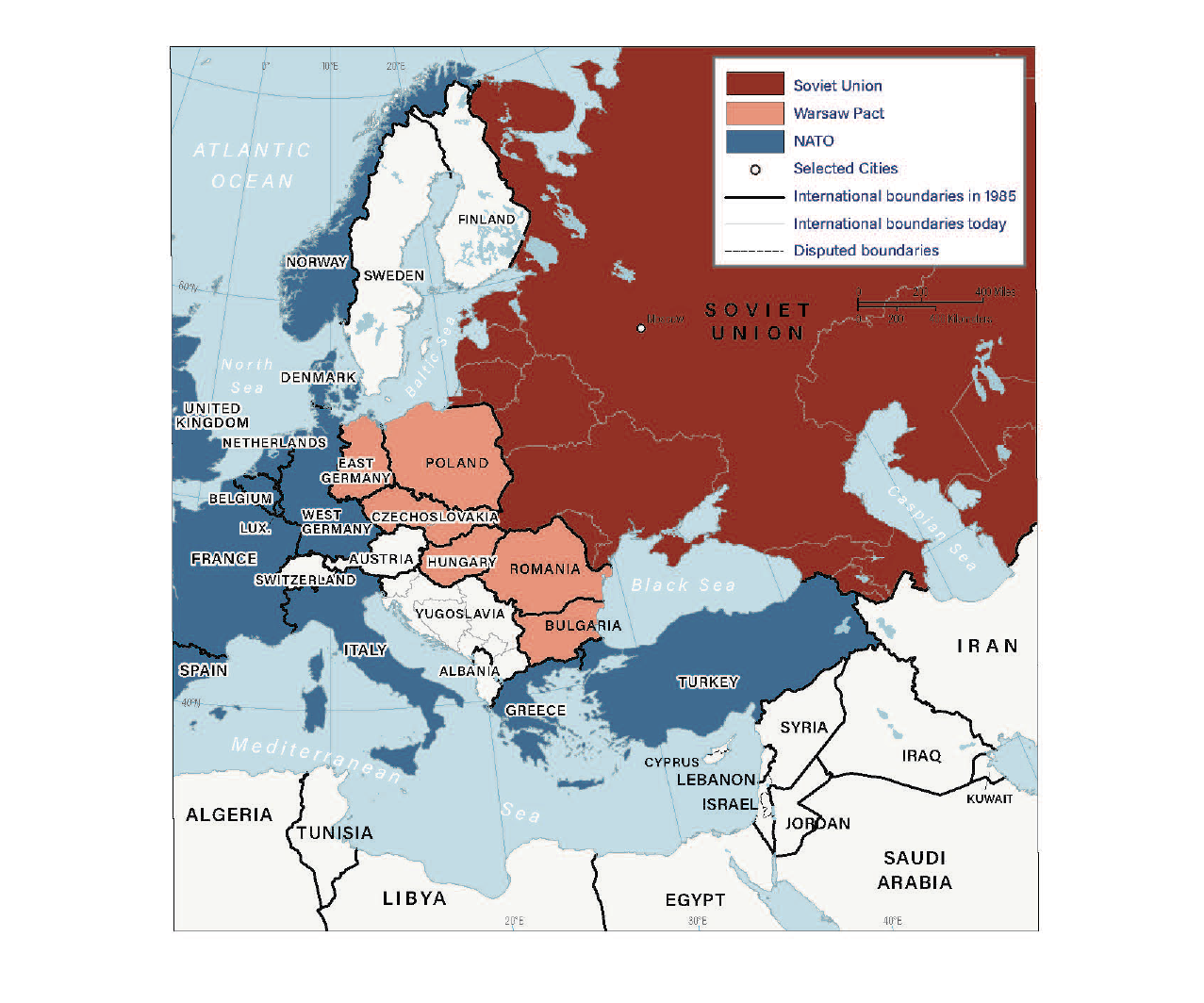
Figure 1. The Soviet Union and the Warsaw Pact
Figure 2. Russia’s Western Border in 2026
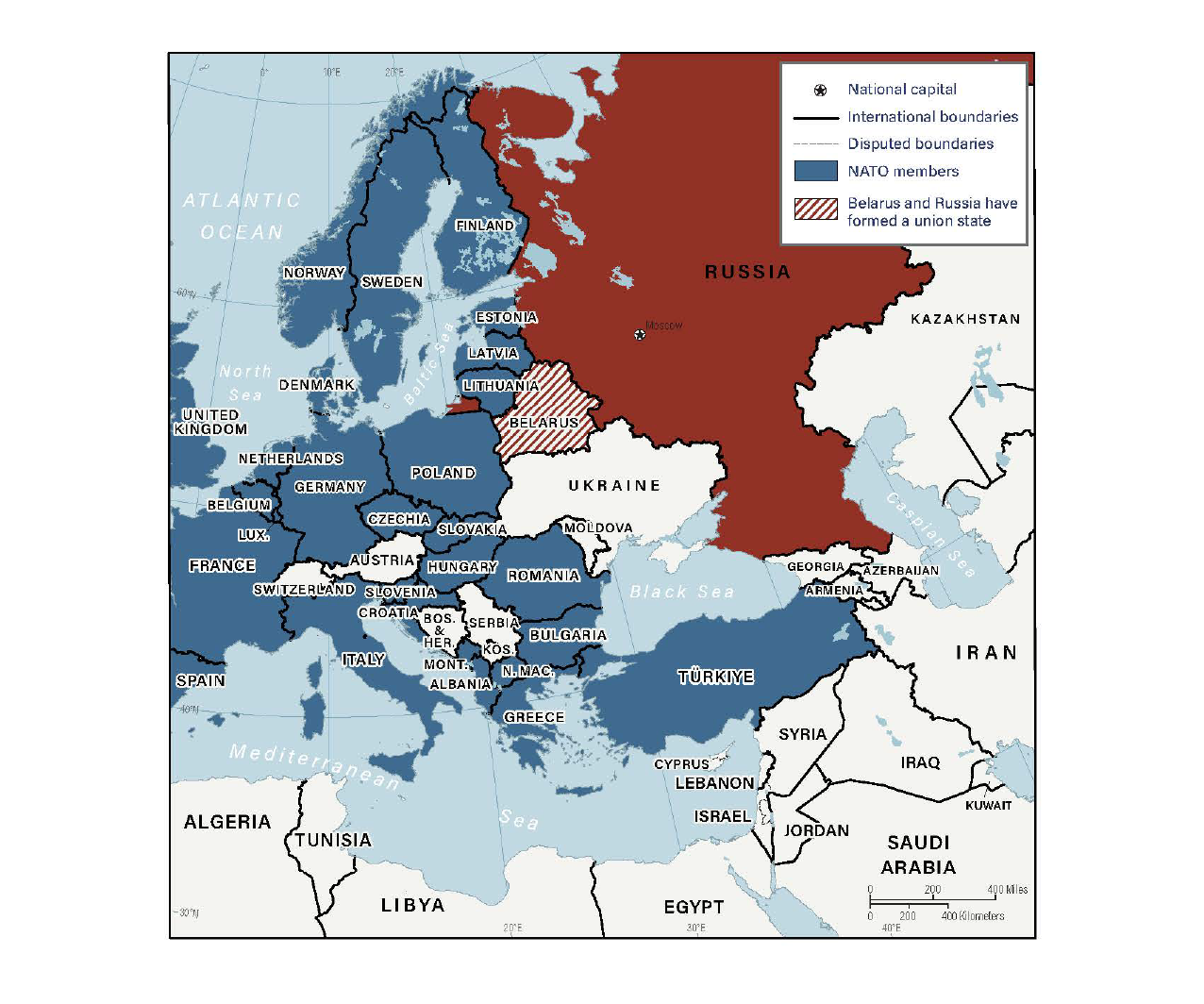
Figure 2. Russia’s Western Border in 2026
There is nothing in the Russian foreign policy record to suggest that the Kremlin will abandon its legacy of confrontation with the rest of Europe and adopt a different approach to national security. Putin and senior Russian officials insist that a core goal of the current war is to remove a purportedly illegal regime in Kyiv that is inimically hostile to Russia. Yet four years of war have revealed that such goals are beyond Moscow’s actual grasp. Instead of securing Russia’s western flank and proving that Russians and Ukrainians are “one people,” as Putin regularly insists,6 the full-scale invasion of Ukraine has unified Ukraine. Ukraine has been transformed into a country that will be permanently hostile to Russia, aggrieved, and intent on joining the European Union and NATO.
Two periods of Russian retrenchment in the twentieth century were both forced by catastrophic domestic weakness rather than deliberate foreign policy choices. The first period of retrenchment followed the collapse of the Russian empire in 1917. The new Bolshevik government signed the Brest-Litovsk Treaty ceding vast territories that became independent, including the Baltic states, Finland, Poland, and Ukraine.7 By 1919, Russia had occupied most of Ukraine, and the empire was mostly reconstituted as the Soviet Union by the end of 1922.
Two periods of Russian retrenchment in the twentieth century were both forced by catastrophic domestic weakness rather than deliberate foreign policy choices.
The second period of Russian retrenchment occurred at the end of the Cold War. With its economy in tatters and domestic politics in turmoil, the Soviet Union retreated from Eastern Europe and in 1991 dissolved outright. It did not take long for Russia’s imperial instinct to reemerge. Throughout the 1990s, even while struggling to contain multiple domestic crises, the Russian government meddled aggressively in the internal politics of its neighbors while fueling a series of regional conflicts. It tried to destabilize Ukraine by challenging its independence, territorial integrity, and sovereignty.8 The leaders of the new Russian state made no secret of their ambitions to restore the old empire, which they considered a prerequisite for regaining the status of a great power.9
The main goal of Russian policy in Europe since the early 1990s has been to reverse the losses of 1989 and 1991. This goal manifested itself with increasing clarity and vehemence in speeches of Russian politicians, in their opposition to NATO’s decision to admit new members formerly part of the Warsaw Pact, and in Putin’s landmark speech at the Munich Security Conference in 2007.10
The brief Russia-Georgia war in 2008 was meant to assert, in the words of then Russian president Dmitry Medvedev, a “privileged” sphere of influence that would be off limits to NATO.11 It marked a major turning point in Russia’s efforts to put an end to its post–Cold War losses. The seizure of Crimea and the undeclared war in eastern Ukraine in 2014 were intended to halt Ukraine’s drive toward membership in the EU and NATO. Yet over the course of the years that followed, the Kremlin saw that even these acts of aggression had been insufficient.
That seemingly insoluble problem helps explain why three decades’ worth of Russian attempts to change the post–Cold War European security order came to a head in 2021 when Moscow twice amassed forces for war with Ukraine. In December 2021 Russian diplomats formally presented an ultimatum to U.S. and European counterparts, outlining what the Kremlin deemed necessary to avoid a full-scale invasion of Ukraine. In draft treaties, Moscow called for the rollback of NATO’s forward military deployments since 1997, when the first invitations to new allies were issued; an end to the expansion of the alliance; the cessation of NATO military activity of any kind on the territory of Ukraine and other parts of the former Soviet Union; a pledge not to deploy weapons that could target Russia’s territory without its approval; and a total ban on the deployment of nuclear weapons beyond national boundaries, in other words calling on the United States to withdraw its nuclear weapons from Europe.12 More recently, these demands have been encapsulated in frequent Kremlin calls to eliminate “the root causes” of instability and insecurity in Europe.13
However, as a result of its full-scale invasion of Ukraine, those root causes have multiplied. For decades to come, a battle-tested, well-equipped Ukrainian army will sit on the doorstep of the Russian heartland. Ukraine is developing its own missile with a reported range of up to 3,000 kilometers and has been a leader in the development and manufacture of drones.14
For decades to come, a battle-tested, well-equipped Ukrainian army will sit on the doorstep of the Russian heartland.
The line of contact with Ukraine will remain Russia’s most vulnerable frontier. Hundreds of thousands of Ukrainian soldiers returning from the war, people displaced by it from parts of Ukraine captured and held by Russia, and Ukrainians who lived through Russian bombing raids and lost family members and friends will not settle quietly for the new status quo with the aggressor.
The state of mutual insecurity and hostility between Russia and Ukraine will exist even when the war is over. The two unreconciled neighbors are virtually certain to engage in a shadow war against each other. Ukraine’s vast “people’s drone” industry15 can provide a virtually endless supply of weapons that in the hands of civilians, let alone experienced drone operators, can and most likely will serve as weapons of revenge. Geographic proximity, language skills, and cultural familiarity will make the task of defending against acts of sabotage, assassinations, and other forms of hybrid warfare very challenging for both countries’ security establishments.
Far from eliminating the root causes of instability, the Kremlin’s actions have convinced Finland and Sweden to join NATO and placed deterrence of Russia at the forefront of NATO’s raison d’être. Finland’s NATO membership has nearly doubled the length of Russia’s line of contact with the alliance. In addition to the challenge posed by a rearmed and permanently aggrieved Ukraine, Moscow will also face some of the best-equipped and -trained armies in Europe. As seen from Moscow, its neighbors intend to turn the Baltic Sea into a NATO lake.16
At the end of World War II, having defeated Germany and occupied half of Europe, the Soviet army had created an unprecedented margin of security for Russia. Its two great continental adversaries—Austria-Hungary and Germany—were in ruins. A 1,000-kilometer-deep buffer would shield the Russian heartland from threats emanating from the west.
That illusion of security was shattered almost immediately by the American invention of the atomic bomb. The nuclear revolution in military affairs triggered a succession of cycles, continuing to the present day, in which U.S. military-technological innovation has resulted in new threats to Russia, strategic depth notwithstanding.
The nuclear revolution in military affairs triggered a succession of cycles, continuing to the present day, in which U.S. military-technological innovation has resulted in new threats to Russia.
The Soviet Union developed its atomic bomb soon after the United States but still found itself at a disadvantage relative to the United States. It lagged behind the United States in the number of intercontinental ballistic missiles, and in the 1950s, the United States deployed in Europe nuclear-armed medium-range ballistic missiles (MRBMs) targeting the Russian heartland. At least theoretically, the United States could minimize its risk of nuclear annihilation by limiting the nuclear exchange to Europe.
To restore the balance of terror, in 1962, the Soviet Union sent SS-4 MRBMs (2,000-kilometer range) and SS-5 IRBMs (up to 4,500-kilometer range) to Cuba, whence they could target the United States.17 Nikita Khrushchev, the Soviet leader at the time, wrote later in his memoirs:
In addition to protecting Cuba, our missiles would have equalized what the West likes to call “the balance of power.” The Americans had surrounded our country with military bases and threatened us with nuclear weapons, and now they would learn just what it feels like to have enemy missiles pointed at you; we’d be doing nothing more than giving them a little of their own medicine. And it was high time America learned what it feels like to have her own land and her own people threatened. We Russians have suffered three wars of the last half century: World War I, the Civil War, and World War II.18
Khrushchev’s decision led to the Cuban Missile Crisis, the worst crisis of the Cold War. It was resolved when Soviet missiles were removed from Cuba in exchange for the United States removing its missiles from Europe.19
But the underlying Soviet threat perceptions that had triggered the crisis remained. The Soviet Union, determined to close its own so-called missile gap, embarked on a comprehensive military buildup, including conventional and nuclear strategic, theater, and tactical weapons that would establish parity with the United States across the entire spectrum of nuclear capabilities, dispel any notion that the continental United States could be spared in the event of a nuclear war, and compensate for any perceived Soviet conventional inferiority vis à vis NATO.20
But the underlying Soviet threat perceptions that had triggered the crisis remained.
But that was hardly the solution to Russian insecurity. Having removed its MRBMs from Europe, the United States did not replace them with similarly capable systems. But the Soviet Union had kept its SS-4 and SS-5 missiles deployed in Europe with ranges covering most of the continent. As the late Massachusetts Institute of Technology professor Stephen M. Meyer wrote in his seminal analysis of Soviet theater nuclear forces, in due course, the Soviet Union developed a new theater-range missile—the SS-20. It was a product of evolutionary improvements of Soviet capabilities rather than an outright attempt at a strategic breakout.21 Yet, when the new SS-20 missile—which was road mobile (unlike the SS-4 and SS-5) with improved accuracy and armed with three warheads—entered service in 1976, it appeared as a qualitatively new threat to NATO.22
NATO’s response to the SS-20 deployment, from the Soviet perspective, constituted a revolutionary development. After having no theater-range missiles in Europe, the United States would deploy new mobile missiles with improved accuracy and flight times of just four or six minutes that would leave Soviet leaders virtually no time to react.23 The deployment of U.S. Pershing IIs and ground-launched cruise missiles (GLCMs) in Europe would restore the very asymmetry the Soviet leadership had attempted to eliminate by deploying missiles to Cuba.
Compounding the threat picture was the so-called revolution in military affairs identified by senior Soviet military leaders, most notably the chief of the general staff, marshal Nikolai V. Ogarkov. He argued that thanks to the development of new technologies resulting in greater ranges and better precision, mobility, and lethality, a qualitative change was occurring in conventional weapons that would pose new threats to the Soviet homeland. Some Soviet analysts went so far as to argue that these emerging conventional weapons, adopted by the U.S. Army in Europe under the concept of AirLand Battle, would be comparable in their effectiveness to nuclear weapons.24
The Euromissile crisis was resolved in 1987, with the Intermediate-Range Nuclear Forces (INF) Treaty.25 But the Soviet Union was in its final years, consumed by domestic crises, retreating from its European empire, and finally dissolving itself entirely. Against that bleak backdrop, Ogarkov’s ideas continued to fuel the threat perceptions of a beleaguered Russian military that saw his predictions become reality in the First Gulf War and in the Balkans.26
Lest anyone doubt the enduring quality of Russian threat perceptions, the reverberations of Ogarkov’s warnings from nearly half a century ago are easy to spot in a recent article by admiral Igor Kostyukov, the director of the GRU, the Main Intelligence Directorate of the General Staff. Writing in the May 2025 issue of Military Thought, the main journal of the Ministry of Defense, Kostyukov focused on the same perennial problems that have confronted successive generations of Russian military strategists—the threat to Russia from its adversaries’ ever-more-capable weapons systems and how these threats are magnified by the geography of the standoff with NATO:
With Finland joining NATO, the length of Russia’s land border with the bloc’s member-states has nearly doubled (from 1480 km to 2800 km). [Weapons] deployed on the territory of that republic will be able to strike at critically important objects in the northwest part of the Russian Federation. In particular, if Finland gets Operational Tactical Missiles ATACMS with the range of up to 300 km for M270 MLRS, Northern Fleet forces and means, the cities of St. Petersburg, Murmansk, Petrozavodsk, as well as the Leningrad and Kola nuclear power stations will be in their striking range.27
Kostyukov did not need to remind his audience that the Northern Fleet’s order of battle includes eight of the estimated fourteen ballistic missile submarines that constitute Russia’s second-strike capability.28
Since the end of World War II, the goal of securing the homeland has eluded generations of Russian leaders. As a result of the war with Ukraine, Russia is now confronting yet another revolution in warfare and an array of new weapons including short- and long-range, unmanned, autonomous, AI-assisted, and other weapons, many of them built with components that are easily accessible to state and nonstate actors. Russia is facing this new threat landscape at a time of profound changes in European security.
Another key element of the emerging European security landscape is the transformation of NATO. The Trump administration’s National Security Strategy, U.S. senior officials’ harsh rhetoric aimed at European allies, and Washington’s repeatedly stated intentions to annex Greenland, if necessary, by military means make clear that the allies can no longer count on the United States’ pledge to come to their defense.29
Europe is awakening from what Finland’s president called its “holiday from history.”30 When the Cold War ended, European countries, eager to reap the benefits of the so-called peace dividend, reduced their military expenditures and downsized their military establishments. Russia’s illegal annexation of Crimea and the full-scale invasion of Ukraine have prompted the allies to rearm to the point where many capabilities they are acquiring could credibly pose major threats to the Russian homeland.31
Several European countries have plans to acquire capabilities for deep precision strikes with ranges of up to 2,000 kilometers or more.32 During the Cold War, the arms race in long-range strike systems in Europe was primarily a U.S.-Soviet affair. The INF Treaty had eliminated such land-based weapons from the arsenals of the Soviet Union (later Russia), the United States, and effectively the European continent. Russia’s violation of the treaty and the United States’ withdrawal from it in response have paved the way for these weapons’ return and what is becoming another arms race in theater-range missiles in Europe. Considering the new geography of the standoff between Russia and NATO; the capabilities of systems such as the Typhon system, which the United States plans to deploy in Europe in 2026 and Germany plans to buy; and the likely proliferation of participants in this race, the U.S.-Soviet INF Treaty contest of the 1970s and 1980s will look like a simple affair.33
European countries are considering their defense and deterrence options without the United States. The prospect of the United States reducing its conventional military presence in Europe and backing away from its commitment to extend its nuclear umbrella over the allies is prompting European officials and analysts to consider options for a European nuclear deterrent or the possibility of individual countries acquiring their own nuclear deterrents.34
At first, the Kremlin surely could not believe its good fortune. Moscow has tried to break the link between the United States and Europe since the end of World War II. Russian officials have long demanded that the United States withdraw its remaining nuclear weapons from Europe as a precondition for arms control negotiations regarding tactical nuclear weapons.35 However, should the transatlantic security link be severed, the Kremlin may not see this as its good fortune in the longer run.
A break in transatlantic security ties could end up over time as a threat multiplier for the Kremlin, with European nuclear weapons and theater-range missiles filling the vacuum left in the wake of the United States scaling back or entirely severing security ties with Europe. Should that happen, the predictability of the United States’ presence on the continent would be replaced by an unregulated, unpredictable landscape rife with competing national priorities, resurfacing old rivalries, and no single power to act as Europe’s security manager—the part the United States has played since the end of World War II.
A break in transatlantic security ties could end up over time as a threat multiplier for the Kremlin.
Not inclined toward introspection, Russian leaders are unlikely to be nostalgic for the days when Washington extended its ironclad pledge to keep its nuclear umbrella over Europe.36 But the prospect of a nuclear arms race in Europe—with a European,37 Polish,38 German-French,39 or some other national nuclear deterrent in addition to the French and UK nuclear arsenals—is certain to be deeply worrying to the Kremlin, as is the high likelihood of Poland, Germany, and several other European countries acquiring theater-range conventionally armed missiles.40 Such a turn of events would undo decades of Russian efforts to secure the homeland against threats from Europe.
In December 2025, NATO Secretary General Mark Rutte warned the allies to prepare for a war with Russia in five years.41 This is hardly mere rhetoric: No matter how Russia’s war with Ukraine ends, its outcome is unlikely to make Russia more secure. Ukraine is certain to remain the “main threat” to Russia, as Kostyukov wrote in his article.42 But Ukraine is only one part of the challenging threat landscape before Russia. As seen from the Kremlin, the security situation is on track to become worse, not better, in the years to come.
European investment in national defense capabilities for the most part continues to lag far behind the pace of geopolitical developments, and few countries have the fiscal space to generate the kinds of resources that are required. But most European countries are increasing their defense budgets, even if not fast enough, and are acquiring new weapons systems that Russian assessments consider highly threatening.43 It is also true that the prominence of populist parties in France, Great Britain, and Germany—parties known for their dovish views on Russia and skepticism about the EU—raises the possibility of a breakdown in the existing European policy consensus should these parties come to power in the next few years. However, there is a base of support for Ukraine even inside these parties, and strong majorities of populations across Europe have negative views of Russia. Even in Hungary, with its government’s uniquely friendly approach toward the Kremlin, two-thirds of the public has a negative view of Russia.44 And there is little if any prospect that the overwhelmingly negative attitudes toward Russia in the frontline states—from Norway to Ukraine—will change or that they will alter their plans to continue to develop robust deterrence and defense capabilities.
Against the backdrop of increased European outlays for defense and new weapons systems NATO countries have already deployed, Russian assessments are likely to see Russia as increasingly threatened. Such fears are likely aggravated by the shredding of Russian conventional military capabilities in Ukraine and the probability that manpower retention and quality issues will become more acute in the wake of the current war. It would not be a complete surprise if the Russian strategic community comes to portray such a state of affairs in increasingly dire terms, given the obvious bureaucratic and budgetary incentives connected with rearmament.
Potential parallels to the evolution of Russian threat perceptions in the aftermath of the Cold War—when Russian conventional capabilities, in Putin’s words, had “practically collapsed”45—are also worth pondering. In the early 1990s, Western Europe was disarming and trying to engage Russia as a partner. Eastern Europe was undergoing its own difficult transition and hardly posed a threat to Russia. Sweden and Finland had no plans to abandon their neutrality. That is diametrically opposed to the situation that Russia will confront in the years to come.
In the 1990s, following the implosion of its conventional capabilities, Russia turned to its nuclear arsenal to shore up its geopolitical weight and to address its increased vulnerabilities. In 1993, the Russian government abandoned the Soviet-era no-first-use pledge. The new 1993 military doctrine and a succession of strategic documents throughout the 1990s and early 2000s embraced nuclear weapons as both an instrument of deterrence and, failing that, warfighting. As seen from Moscow, this was a necessary change to compensate for its diminished conventional capabilities, NATO’s eastward expansion, and advanced conventional weapons demonstrated in the First Iraq War and in Kosovo.46
In the new European security landscape, nuclear weapons are poised to assume a greater role in Russian military planning. The latest Russian nuclear doctrine published in 2024 leaves little room for doubt about it. It elaborates situations in which Russia would be prepared to escalate, including receiving “reliable data” of launches of nuclear or conventional weapons against Russia or Belarus.47
In the new European security landscape, nuclear weapons are poised to assume a greater role in Russian military planning.
While framed as defensive, the new Russian doctrine has ominous offensive implications. The conventional wisdom holds that as long as Russia is bogged down in Ukraine, it is in no position to undertake another reckless assault on a neighboring country or to risk a direct military confrontation with NATO. However, in 2021, conventional wisdom also held that Russia was unlikely to launch a full-scale war with Ukraine, and even Ukrainian President Volodymyr Zelensky referred to warnings about the impending Russian assault as panic.48
In 2021, the conventional wisdom was that invading Ukraine would be a colossal and tragic mistake for Russia. Yet Putin decided to do otherwise, though the conventional wisdom proved correct. If Putin is truly intent on imposing his vision of European security on the continent, he may decide that time is not on his side, as Europe is racing to rearm, and launch an attack against a Baltic neighbor to demonstrate that NATO’s Article 5 is essentially a dead letter. He may be encouraged by growing tensions between Europe and the United States and by the possibility of Europe no longer being able to count on the U.S. pledge of extended deterrence. A transatlantic divorce before Europe has built up its conventional defenses and solved the problem of deterring Russian nuclear threats without the U.S. nuclear umbrella over it would open a window of opportunity for Putin to pursue his ambitions, while hiding behind Russia’s nuclear shield. Although an attack against the Baltic region is not necessarily a high-probability scenario, Putin’s record of nuclear saber-rattling against a non-nuclear state shows that it is an entirely realistic one.
To supplement its conventional and nuclear arsenal, the Kremlin maintains an extensive hybrid warfare tool kit. Developed and perfected over the course of many decades, these tools include disinformation campaigns, the use of political subversion and agents of influence, industrial sabotage, and the assassinations of political opponents and business leaders. All of these have already been deployed or attempted in Europe and will continue to be relied upon as essential tools in Russia’s arsenal.49
Elections across Europe—in Hungary, Latvia, and Sweden in 2026 and France and Italy in 202750—will certainly be exploited by the Kremlin to sow divisions, inflate narratives about the dangers of confronting Russia, and promote and support friendly political parties and actors as well as merely opportunistic disruptors. The Kremlin’s record of meddling in the domestic politics of European countries has deep roots in the Cold War. Its arsenal has been expanded with the advent of deep political and social cleavages within these countries, social media platforms, artificial intelligence tools, and the proliferation of unscrupulous profit-seeking actors. This part of the Russian toolkit has become a permanent feature of the electoral landscape throughout Europe (and not only Europe) and will remain so in the future.51
Disinformation and meddling in the internal politics of EU and NATO members make up only one part of the Russian toolkit. Air and ground transportation facilities, communication networks, and European defense industries connected to the war in Ukraine have become fair game for Russian physical, cyber, or drone attacks. The toolkit also includes disruption of civilian airports and navigation systems, threats against passenger and cargo aircraft, and kidnapping and assassination attempts.52
From the Kremlin’s perspective, as stated repeatedly by senior Russian officials, Europe is at war with Russia. The Kremlin surely uses such characterizations to help justify its forces’ underperformance to date, but the fact remains that European powers are deeply involved in arming Ukraine, sharing intelligence, and providing all manner of support short of becoming directly involved in the war. While the lion’s share of this support is provided by Washington, the Kremlin sees Europe as a critical enabler of Ukraine’s war with Russia with drone strikes targeting Russian cities, energy infrastructure, and military installations deep inside the country. Thus, the hybrid campaign against Ukraine’s European supporters is merely a response to Europe’s actions against Russia.
The Russia-Ukraine war will produce no clear winners. Russia’s goal of eliminating Ukraine as an independent and sovereign state is more distant after four years of war than it was in February 2022. The price Ukraine is paying for its survival will be etched in the nation’s collective memory as a tragedy comparable to the Holodomor, the Soviet regime-made famine in 1932–1933 that killed millions.
The situation that will emerge from this war will be deeply unsatisfactory and probably unacceptable for all parties involved in it directly and indirectly. Russia and Ukraine will exist in a state of deep mutual hostility, likely preparing for a third round of the war that began in 2014. NATO and the EU and Russia will be waging a new cold war. Geographic proximity, new weapons technologies, and the uncertainty triggered by the prospect of an unruly transatlantic divorce in the security sphere promise to make the new cold war more dangerous than the old one.
As NATO and the EU deal with this new reality, several key considerations come to the fore. First, the adversarial relationship between Russia and the rest of Europe is a long-term, enduring feature of European geopolitics. The quarter century that followed the end of the Cold War was not the new normal. Rather, it was a break from the normal.
Second, Russia’s hostility toward the rest of Europe is a product of structural factors—geography, history, and political culture. They may be moderated due to temporary circumstances but will not disappear.
Third, the ripple effects of this confrontation will not be confined to the European continent. They will be regional and global.
Fourth, regardless of the state of the transatlantic relationship, as long as the United States remains a global power, Russia will consider it a threat to its security and interests. Russia will pursue its policies accordingly. The United States and Europe will have that in common.
Expecting Russia to change is not a realistic proposition for the development of a coherent and sustainable U.S. or European policy. Europe’s and America’s problems with Russia’s external behavior and deep-seated sense of insecurity are unlikely to disappear. In nearly all respects, they cannot be fixed; they can only be managed.
Expecting Russia to change is not a realistic proposition for the development of a coherent and sustainable U.S. or European policy.
The question then is how to manage them. The formula for managing an open-ended period of confrontation with Russia was well known and tested during the Cold War. It combined strategic nuclear deterrence via a strong military alliance with keeping the door open to diplomacy, crisis management mechanisms, and the prospect of détente even without fundamental changes in Soviet domestic political realities.
The best example of this approach is in the experience of NATO during the Euromissile crisis of the 1980s, when the allies proceeded with the deployment of Pershing II and GLCMs, while keeping the door open to negotiations and eventually an agreement with the Soviet Union. As in the 1980s, this path offers no guarantee of success, but so far no one has come up with an alternative to it.
In the near term, the biggest threats to Europe come from Russian activities in the gray zone. So far, at least in public, European responses to these threats have been mostly successful. Based on the lessons of counterterrorism work since the attacks on September 11, 2001, strong law enforcement and intelligence capabilities have helped bolster resilience, attribution, public information, and prevention. As others have suggested, that is still not enough. A credible deterrent to Russian hybrid warfare has to include a robust offensive component capable of “bringing the hybrid war to Russia.”53 That option carries with it multiple risks, including the risk of escalation. Whether or not more direct forms of retaliation against Moscow become part of the European tool kit, it is essential to recognize that hybrid warfare is an integral part of Russia’s tool kit for confronting its adversaries. In the 1980s, only when NATO deployed a credible response to Soviet SS-20 deployments did the Soviet Union agree to negotiate the INF Treaty.
The new geography of the confrontation between NATO and Russia is in itself a source of instability and danger for both sides. Russia, having lost the strategic depth it considers essential for its security, is facing an array of NATO weapons capable of holding at risk some of its most critical assets. NATO is facing an insecure and hostile Russia with some of its advanced weapons forward deployed in Belarus54 and the Russian exclave of Kaliningrad55 surrounded by NATO members Lithuania and Poland. Their proximity, deep mistrust, and peculiar geopolitical terrain could trigger a “perfect storm” whereby in a crisis both sides would be tempted to seek first mover advantage fearing that waiting or going second would risk unacceptable losses.
Russian nuclear saber-rattling during the war with Ukraine has also demonstrated that nuclear weapons remain the ultimate deterrent. Former president Joe Biden’s administration set a red line against putting U.S. combat boots on the ground in Ukraine, sending a powerful message about U.S. reluctance to engage in a direct conflict with a nuclear power.56 In the event of a transatlantic divorce, Europe would be left without the U.S. nuclear umbrella. While France and Great Britain would maintain their national nuclear forces, the rest of the continent could find itself in limbo, without clear options for deterring Russia with its vast nuclear arsenal. Considering Russia’s hostility to the rest of Europe and its record of nuclear blackmail,57 no task is more difficult and more urgent for NATO’s European members than to come up with options for dealing with this threat.
Nonetheless, even in the event of a transatlantic divorce, Europe does not have to meet the Russia challenge alone. The United States, with its global ambitions, will remain a threat to Russian interests, as seen from Moscow. U.S. plans for the Golden Dome missile defense system, a naval buildup, and a host of advanced technologies driving the development of new weapons, underwritten by a proposed $1.5 trillion defense budget for 2027,58 will fuel a sense of profound insecurity and deep-seated hostility in Moscow. Wherever and whenever possible, Russia will pursue policies—for example, supplying China and North Korea with advanced military capabilities and technologies—aimed at undermining the United States and its allies and interests. No matter how U.S.-European relations develop, a shared understanding and coordinated efforts to limit Russia’s malign global reach would be in the interests of both Washington and Brussels.
Their shared adversarial relationship with Russia is all the more reason for the United States to assist Europe as it develops its own capabilities to deter and defend against Russia and to continue to provide the necessary capabilities it currently lacks. A transition of such magnitude is bound to be a long-term undertaking, during which U.S. interests would be well served by knowledge that Europe remains stable, secure, and committed to the transatlantic partnership. The alternative—an insecure and unstable Europe—would jeopardize the most important allied relationship the United States has.
A key consideration for allies and partners on both sides of the Atlantic is that Russia will remain a strategic partner to China. That relationship serves both Beijing’s and Moscow’s strategic interests. Their geopolitical priorities complement each other, with China’s primary focus on the Pacific theater and Russia’s on the European theater. Chinese support enables Russia’s confrontation with Europe and the United States and therefore distracts their resources and attention from their competition with China. Russia has grown heavily dependent on China since 2022, with Chinese technology as a critical enabler of the Russian defense industry.59 With its economic ties to Europe broken and trade with China continuing to grow, the economic relationship with China has become structurally important for Russia.60 Expecting Russia to break with China remains a profoundly unrealistic proposition.
Ukraine has exacted a heavy toll on Russia in this war. It is what Kostyukov called the “main threat” to Russia that has consumed vast resources in blood, iron, and treasure. A long-term, European comprehensive security assistance program for Ukraine can ensure that Ukraine will remain the main threat to Russia and that Russian military resources remain focused on it. Support for Ukraine therefore is the best resource Europe has to deal with the Russian threat to itself.
Russia will emerge from its war with Ukraine weakened, with an exhausted general population, badly depleted conventional forces, and a stagnant economy. These are hardly the ideal conditions for confronting the prospect of a long-term military standoff with NATO amid a new technological revolution in military affairs and Russia’s loss of access to the benefits of decades of integration into the U.S.- and EU-led global economy. It is woefully ill prepared to deal with these challenges.
This situation has parallels to the mid-1980s, when the Soviet Union was locked in a tense standoff with NATO, the Soviet economy was stagnating, Soviet defense industries were having a hard time competing with the United States, and the Soviet army was mired in Afghanistan. The Soviet Union was then desperately in need of peredyshka—a breather—which came with Gorbachev’s perestroika.
It would be tempting to hope, even expect, that the accumulated burdens of the war will force the Kremlin to adopt a more accommodating posture toward the United States and Europe and seek opportunities to shift the relationship into a more cooperative channel, perhaps even launch a process of dialogue and reconciliation regarding the creation of a more manageable security regime in Europe. Presently, that is an unlikely or even improbable prospect, if only because it is impossible to imagine Putin agreeing to resume constructive dialogue with Europe and because he has been indicted for war crimes,61 the evidence of which is in plain view. Nonetheless it is possible, even likely, that a Putin successor will undertake such an opening to the United States and Europe.
It will be essential to remember that traditional U.S. and European views on the nature of international relations are fundamentally at odds with Russian views.
When that happens, it is vital for the United States and Europe not to be carried away with wishful thinking and premature conclusions about the scale and scope of change in Russia. It will be essential to remember that traditional U.S. and European views on the nature of international relations are fundamentally at odds with Russian views. The former are enshrined in the 1990 Charter of Paris, with its embrace of democracy, human rights, and cooperative international relations as its foundational principles.62 The latter are reminiscent of the 1815 Congress of Vienna, at which major European empires carved up the continent into spheres of influence in the interest of establishing a balance of power.63
That is a fundamental difference between Russia and the rest of Europe. It would be unrealistic to ask Europe to give up its core values. For Russia, to accept the vision of a “Europe whole and free”64 would amount to a rejection of its historical worldview, legacy as a European power, and one of the core tenets of its strategic culture. No country has done that voluntarily.
The Carnegie Endowment’s Project on the Future of Russian Power is a multidisciplinary initiative that seeks to frame, assess, and energize debates on the ways in which Russia’s invasion of Ukraine, intensifying domestic repression, and wider geopolitical disruptions have reshaped Moscow’s long-term power and influence. Building on Carnegie’s rich tradition of policy-relevant research on the region, scholars based in Washington, Berlin, Brussels, Kyiv, and beyond will examine the drivers and implications of Russia’s power across the military, diplomatic, trade, energy, cultural, and technological domains over the next five to ten years and will explore options for Western policy.
Director and Senior Fellow, Russia and Eurasia Program
Rumer, a former national intelligence officer for Russia and Eurasia at the U.S. National Intelligence Council, is a senior fellow and the director of Carnegie’s Russia and Eurasia Program.
Recent Work
Eugene Rumer



James M. Acton, Saskia Brechenmacher, Cecily Brewer, …
The continent must act urgently to put Kyiv on a path toward a resilient defense that would eventually force Putin to accept a ceasefire.

Nate Reynolds, Eugene Rumer
Moscow’s distraction and weakening regional grip allowed the peace negotiations to begin. But that may not last.

Zaur Shiriyev
For some Russian regions, the country’s invasion of Ukraine means they face shelling and dwindling export revenues due to sanctions. For others, it means an unprecedented influx of cash as they profit from the flywheel of war and growing domestic consumption.

Ekaterina Kurbangaleeva
Following the long-awaited release of the U.S. aid package for Ukraine, the best-case scenario for Kyiv in 2024 appears to entail minimizing Russia’s gains to incremental advancements, particularly at the height of its defense spending. But what if Russia’s military expenditure has not yet peaked?

Alexandra Prokopenko
The ongoing state of war and uncertain future mean that the Russian elites cannot make long-term plans, which encourages them to flout the old rules, live for today, and undertake power moves to score a win against their rivals.

Andrey Pertsev