

Paper
James M. Acton, Ankit Panda
{
  "authors": [
    "James M. Acton"
  ],
  "type": "legacyinthemedia",
  "centerAffiliationAll": "dc",
  "centers": [
    "Carnegie Endowment for International Peace"
  ],
  "collections": [
    "Korean Peninsula"
  ],
  "englishNewsletterAll": "ctw",
  "nonEnglishNewsletterAll": "",
  "primaryCenter": "Carnegie Endowment for International Peace",
  "programAffiliation": "NPP",
  "programs": [
    "Nuclear Policy"
  ],
  "projects": [],
  "regions": [
    "East Asia",
    "North Korea",
    "South Korea"
  ],
  "topics": [
    "Nuclear Policy",
    "Arms Control"
  ]
}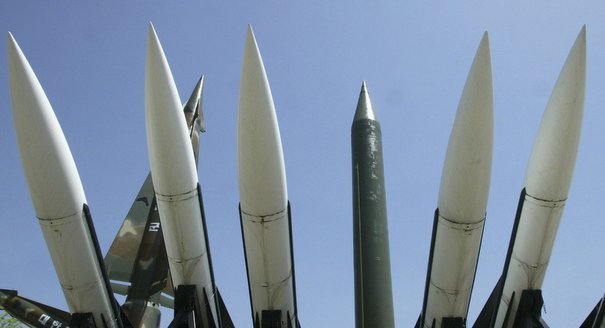
Source: Getty
Unless the United States changes its priorities, Korean diplomacy is probably doomed.
Source: Foreign Policy
I spent my all-too-brief vacation last August trying—and failing—to ignore the rising tensions between U.S. President Donald Trump and North Korean leader Kim Jong Un. Even margaritas and spy fiction could not take my mind off the small but real possibility that their war of words might become a real war that would have the potential to turn nuclear.
Eight months later, following North Korea’s declaration of a moratorium on nuclear and missile tests and a face-to-face meeting between Kim and South Korean President Moon Jae-in, even I am tempted to dismiss my earlier concerns as those of a nuclear neurotic too quick to see the shadow of global cataclysm behind every diplomatic spat. And yet, even if the risk of a conflict in the short term has receded significantly, diplomacy with North Korea is likely to fall apart over the coming months unless either Seoul or Washington significantly redefines its interests—leaving us back with the same fears that haunted my summer.
Americans could be forgiven if, based on news coverage of the Kim-Moon summit, they believe that the joint Panmunjom Declaration is a denuclearization agreement. It isn’t. Its principal goal is to advance the cause of peace on the peninsula. Just one of its 13 action items relates explicitly to the North’s nuclear weapons—and its wording is deliberately vague. What Moon means by confirming “the common goal of realizing, through complete denuclearization, a nuclear-free Korean Peninsula” is clear enough. What Kim means—not so much. Massachusetts Institute of Technology scholar Vipin Narang, for example, points out that one interpretation of this statement (which is consistent with recent North Korean rhetoric about “building of the world free from nuclear weapons”) is that Kim is offering to give up his nuclear weapons as part of a global — i.e., complete—disarmament process.
Moreover, in other forums, especially domestic ones, North Korea sounds like the exact opposite of a state preparing to disarm. In justifying its test moratorium, Pyongyang noted that it had realized the “technology for mounting nuclear warheads on ballistic rockets.” And in a recent speech to the Workers’ Party of Korea, Kim discussed the “miraculous victory of having perfectly accomplished the great historic cause of building the state nuclear force.” That’s a triple superlative if you weren’t counting; those nukes aren’t going anywhere.
Whether Moon really believes what he says about North Korea’s willingness to give up its nuclear weapons is anyone’s guess. But if he is prepared to continue suspending disbelief, the Panmunjom process might even pan out. As a result of his recent success in developing intercontinental ballistic missiles, Kim may feel secure enough to cease provocations and embark on a prolonged diplomatic opening with South Korea. To prevent momentum dissipating, the Koreas have agreed to a series of joint events, culminating in a visit by Moon to Pyongyang in the fall. And, as a critical added inducement to stick with diplomacy, the Panmunjom Declaration raises the possibility of South Korean economic assistance to the North, initially in the form of help to modernize its railways and roads.
It’s not just the two Koreas that matter, though. The United States is also involved through its commitment to defend South Korea. Reducing the risk of a conflict on the Korean Peninsula is, in my opinion, very much in U.S. interests, even if it means living with North Korean nuclear weapons for the time being. Yet the Trump administration—like the three U.S. administrations that preceded it—defines U.S. interests differently. The president and other senior officials have repeatedly made it clear that they seek the complete, verifiable, and irreversible disarmament of North Korea in the near future.
If the United States sticks to this goal, then, sooner or later, diplomacy will likely collapse. When it becomes clear that North Korea is not going to disarm, Washington will probably exert significant pressure on Seoul to disengage from diplomacy. Given that the United States guarantees South Korea’s security, such pressure will be difficult to resist. Moreover, by refusing to lift U.S. sanctions on North Korea and by vetoing any attempt to lift U.N. sanctions, the United States can effectively limit the economic benefits that North Korea hopes to gain through diplomacy, further undermining the sustainability of the process.
The failure of diplomacy would make military action by the United States more likely. Indeed, in March, shortly before becoming national security advisor, John Bolton advocated for a Trump-Kim summit because it would “foreshorten the amount of time that we’re gonna waste in negotiations.” Alternatively, fearing U.S. military action, North Korea might feel obliged to demonstrate it has a credible nuclear deterrent by living up to its explicit threat to fire missiles in the vicinity of Guam or its slightly more ambiguous threat to conduct a nuclear test over the Pacific. Let’s hope we never get to find out whether the United States would be deterred or provoked by such actions.
As I see it, there are just two options to avert the collapse of diplomacy.
One possibility is an overt split between the United States and South Korea. While this is unlikely, it is not completely impossible. If Seoul concludes that Washington is acting against South Korean interests, it could detach itself from the United States’ orbit and attempt to continue peace-building efforts with North Korea bilaterally. This outcome would delight Kim and may be one reason for his current diplomatic charm offensive. It is also a scenario that the United States should want to avoid at all costs.
The other possibility is that the United States concludes that while the denuclearization of North Korea remains a long-term goal, its immediate priority is reducing the risk of a conflict on the Korean Peninsula. This position would align Washington and Seoul and give the Panmunjom process a fighting chance. It would also overturn decades of U.S. policy and months of rhetoric from the Trump administration. It seems unlikely that the United States will take this off-ramp, but millions of lives—and my next vacation—may depend on it.

Jessica T. Mathews Chair, Co-director, Nuclear Policy Program
Acton holds the Jessica T. Mathews Chair and is co-director of the Nuclear Policy Program at the Carnegie Endowment for International Peace.
Recent Work

James M. Acton, Ankit Panda
James M. Acton
Carnegie does not take institutional positions on public policy issues; the views represented herein are those of the author(s) and do not necessarily reflect the views of Carnegie, its staff, or its trustees.
Tokyo would have to surmount a lot of obstacles—not least Western sanctions—if it wanted to return Russian oil imports to even modest pre-2022 volumes.

Vladislav Pashchenko
Troubled by the growing salience of nuclear debates in East Asia, Moscow has responded in its usual way: with condemnation and threats. But by exacerbating insecurity, Russia is forcing South Korea and Japan to consider radical security options.

James D.J. Brown
The Russian leadership wants to avoid a dangerous precedent in which it is squeezed out of Iran by the United States and Israel—and left powerless to respond in any meaningful way.

Nikita Smagin
For Putin, upgrading Russia’s nuclear forces was a secondary goal. The main aim was to gain an advantage over the West, including by strengthening the nuclear threat on all fronts. That made growth in missile arsenals and a new arms race inevitable.

Maxim Starchak
The Kremlin will only be prepared to negotiate strategic arms limitations if it is confident it can secure significant concessions from the United States. Otherwise, meaningful dialogue is unlikely, and the international system of strategic stability will continue to teeter on the brink of total collapse.
Maxim Starchak