

Article
C. Raja Mohan, Darshana M. Baruah
{
  "authors": [
    "C. Raja Mohan"
  ],
  "type": "legacyinthemedia",
  "centerAffiliationAll": "",
  "centers": [
    "Carnegie Endowment for International Peace",
    "Carnegie India"
  ],
  "collections": [],
  "englishNewsletterAll": "",
  "nonEnglishNewsletterAll": "",
  "primaryCenter": "Carnegie India",
  "programAffiliation": "",
  "programs": [],
  "projects": [],
  "regions": [
    "United States",
    "South Asia",
    "Afghanistan",
    "Pakistan"
  ],
  "topics": [
    "Foreign Policy"
  ]
}
Source: Getty
It is the nature of the negotiation between the United States and Pakistan—the most important external players in the Afghan conflict—that will determine the outcome.
Source: Indian Express
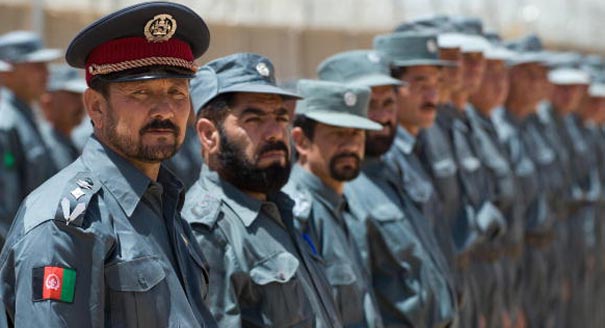
The recent Taliban offensive against Ghazni, a strategically located city in southeastern Afghanistan, with alleged support from the Pakistan army, has underlined all the difficulties of finding a negotiated settlement in a nation torn by four decades of conflict. The bloody siege of Ghazni, coming nearly a year after US President Donald Trump announced a new strategy to win the war, might turn out to be a definitive moment in the evolution of the conflict. As the Taliban gets bolder in its attacks and the intensity of its violence spikes to unprecedented levels, Trump is under some pressure to take a fresh look.
Some fear that Trump might simply pull the plug on the US commitment to Afghanistan. Others hope Trump will consider unconventional strategies to defeat the Taliban and its backers. The choices he makes in the coming weeks could well tip the conflict one way or another. Central to those choices will be the attitude of Pakistan.
Meanwhile the president of Afghanistan, Ashraf Ghani, has offered a ceasefire yet again. This time it is for three months — from the Eid al-adha, this week, to the Prophet’s birthday in November. It is also conditional on Taliban’s acceptance. Meanwhile, both Kabul and the Taliban have agreed to release some prisoners held by them. The Taliban had agreed to a three-day ceasefire during the Eid holidays in June. Since then though, it has dramatically escalated the attacks on government and civilian targets in Afghanistan. Meanwhile the eagerness of Kabul and the international community to engage the Taliban is working well for the group.
As it tempts the US into talks, the Taliban is telling the Afghan people that its victory over the “occupation forces” is at hand. As the Emir of Taliban, Hibatullah Akhundzada, declared over the weekend, “The infidel invading forces have lost all will of combat, their strategy has failed, advanced technology and military equipment rendered useless… and the arrogant American generals have been compelled to bow to the [Jihadi] greatness of the Afghan nation.” Meanwhile, Afghan President Ashraf Ghani’s repeated offers for talks with the Taliban — any time, any place — are being viewed by the Taliban as a reflection of Kabul’s fragile position.
Taliban’s “talk and fight” approach has also begun to undermine the political coalition that took power after the US forces ousted the Taliban at the end of 2001, following the 9/11 attacks on America. An important section of the coalition suspects that talks with Taliban will be a slippery slope towards political surrender. As Kabul gets on the backfoot, desertion and defection becomes an option for many on the government side today. Those familiar with the Taliban’s rise will recall that its race to Kabul in 1996 was not based on big battlefield victories but on breaking the morale of the opposition and engineering defections.
The Taliban’s unabashed triumphalism may not be unrelated to the reports of Pakistan army’s direct intervention in the battle for Ghazni. Until now, Pakistan’s role has been directed towards the Taliban in the sanctuaries on its soil. It may now be emboldened enough to lend substantive operational military support to the Taliban inside Afghanistan.
Afghan sources also claimed that they had arrested some Pakistanis involved in the fighting. They also charged that wounded Taliban combatants were being taken for treatment across the border in Pakistan. President Ghani’s repeated the accusation, in more careful terms, when he visited Ghazni after the siege was repelled with great difficulty.
Pakistan’s Army Chief, General Qamar Jawed Bajwa was quick to deny the charge. “The alleged return of injured/dead terrorists from Ghazni is incorrect,” an official Paksitan army statement quoted the general as saying. He argued that there are scores of Pakistanis, “mostly labourers”, working in the neighbouring country “who periodically fall victim to terrorism acts alongside their Afghan brothers inside Afghanistan.” When you think you are winning, you can afford to have your tongue in the cheek.
The one imponderable is the potential reaction of the Trump Administration. In his speech a year ago, this week, Trump had taken a hardline against Pakistan’s support to terror groups in Afghanistan. Since then, the US has certainly put some pressure on Pakistan, by cutting bilateral economic and military assistance, putting it in the dock for financing terror groups and threatening to block the IMF’s bailout of Pakistan’s economy.
But Rawalpindi may be betting that Trump does not have the stomach for further escalation against Pakistan. If that is the case, the Afghan balance is likely to tilt rapidly away from Kabul. If it turns out that the Pakistan army and the Taliban, like so many others, have underestimated Trump, we might be into a very different dynamic.
Trump, however, is yet to show his hand. Washington continues to expect that the Pakistan army will help nudge the Taliban towards a reasonable political settlement. There is no real evidence so far to suggest that the Taliban is amenable to reason. In his weekend statement, Mullah Akhundzada welcomed the recent contact with US officials but criticised Washington for offering unacceptable proposals that will only prolong the war.
In the end though, it is the nature of the negotiation between US and Pakistan — the most important external players in the Afghan conflict—that will determine the outcome. All others, including Delhi, are watching with keen interest.
This article was originally published in the Indian Express.
Former Nonresident Senior Fellow, Carnegie India
A leading analyst of India’s foreign policy, Mohan is also an expert on South Asian security, great-power relations in Asia, and arms control.
Recent Work

C. Raja Mohan, Darshana M. Baruah


Alexander Gabuev, Paul Haenle, C. Raja Mohan, …
Carnegie does not take institutional positions on public policy issues; the views represented herein are those of the author(s) and do not necessarily reflect the views of Carnegie, its staff, or its trustees.

With the growth in points of friction between the great powers, organizations like the SCO will continue to play a role in the strategic adaptation of the smaller powers caught between them.

Temur Umarov

When faced with fuel shortages in the past, Central Asian governments could always count on additional supplies from Moscow. That safety net no longer exists.

Galiya Ibragimova

Despite unhappiness on the ground, Moscow is determined to use both carrot and stick to ensure there is record support for United Russia in occupied Ukraine.

Konstantin Skorkin
The recent damage inflicted by Ukrainian drones and missiles on Russia has made Belarus aware of its own vulnerabilities—and surprisingly amenable to Kyiv’s demands.

Artyom Shraibman
Russia looks set to reap economic benefits from closer ties with Southeast Asian countries that are keen to find reliable energy suppliers and diversify trade ties.
Alexander Gabuev