

Commentary
Putin’s conservative staffing policies and search for ever greater control have cemented parliament’s transformation into a bureaucratic appendage of the executive branch.
Andrey Pertsev
{
  "authors": [
    "Moisés Naím",
    "Francisco Toro"
  ],
  "type": "legacyinthemedia",
  "centerAffiliationAll": "dc",
  "centers": [
    "Carnegie Endowment for International Peace"
  ],
  "collections": [],
  "englishNewsletterAll": "americanStatecraft",
  "nonEnglishNewsletterAll": "",
  "primaryCenter": "Carnegie Endowment for International Peace",
  "programAffiliation": "ASP",
  "programs": [
    "American Statecraft"
  ],
  "projects": [],
  "regions": [
    "North America",
    "South America"
  ],
  "topics": [
    "Political Reform",
    "Democracy",
    "Civil Society"
  ]
}
Source: Getty
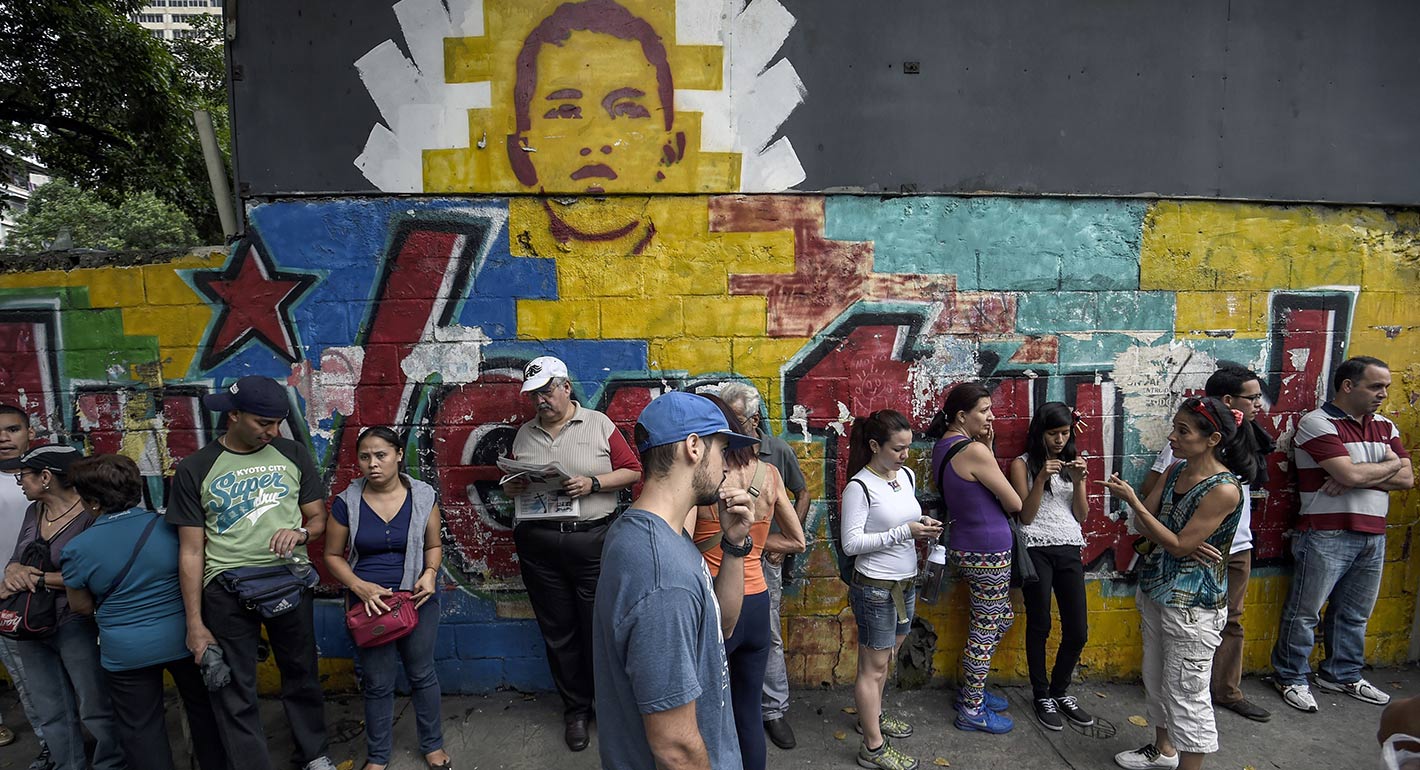
Venezuelans’ best hope is to ensure that the flickering embers of protest and social dissent are not extinguished and that resistance to dictatorship is sustained.
Source: Foreign Affairs
Consider two Latin American countries. The first is one of the region’s oldest and strongest democracies. It boasts a stronger social safety net than any of its neighbors and is making progress on its promise to deliver free health care and higher education to all its citizens. It is a model of social mobility and a magnet for immigrants from across Latin America and Europe. The press is free, and the political system is open; opposing parties compete fiercely in elections and regularly alternate power peacefully. It sidestepped the wave of military juntas that mired some Latin American countries in dictatorship. Thanks to a long political alliance and deep trade and investment ties with the United States, it serves as the Latin American headquarters for a slew of multinational corporations. It has the best infrastructure in South America. It is still unmistakably a developing country, with its share of corruption, injustice, and dysfunction, but it is well ahead of other poor countries by almost any measure.

Distinguished Fellow
Moisés Naím is a distinguished fellow at the Carnegie Endowment for International Peace, a best-selling author, and an internationally syndicated columnist.
Francisco Toro
Francisco Toro is executive editor at CaracasChronicles.com.
Carnegie does not take institutional positions on public policy issues; the views represented herein are those of the author(s) and do not necessarily reflect the views of Carnegie, its staff, or its trustees.

Putin’s conservative staffing policies and search for ever greater control have cemented parliament’s transformation into a bureaucratic appendage of the executive branch.

Andrey Pertsev

Ex-president Gurbanguly Berdimuhamedov remains interested in politics, but his son Serdar, Turkmenistan’s current president, is becoming increasingly independent and willing to break with his father’s legacy. If their covert rivalry goes too far, both risk losing power.

Galiya Ibragimova

Sergei Kiriyenko used Russia’s parliamentary vote to further hone his strategy of corporate mobilization that is designed to maximize votes for United Russia.
Andrey Pertsev

The European far right might fail to steer EU policy in the direction Russia wants, but they will create enough chaos inside Europe to benefit the Kremlin.

Dimitar Bechev

If the Russian-speaking community in Latvia cannot articulate their interests without being seen as disloyal, they could end up embracing a pro-Kremlin agenda.

Sergejs Potapkins