

Q&A
Paul Haenle, Philippe Le Corre
{
  "authors": [
    "Philippe Le Corre"
  ],
  "type": "legacyinthemedia",
  "centerAffiliationAll": "dc",
  "centers": [
    "Carnegie Endowment for International Peace",
    "Carnegie Europe"
  ],
  "collections": [],
  "englishNewsletterAll": "asia",
  "nonEnglishNewsletterAll": "",
  "primaryCenter": "Carnegie Endowment for International Peace",
  "programAffiliation": "AP",
  "programs": [
    "Asia",
    "Europe"
  ],
  "projects": [],
  "regions": [
    "East Asia",
    "China",
    "Western Europe",
    "Asia",
    "Europe",
    "Iran"
  ],
  "topics": [
    "Economy",
    "EU",
    "Global Governance",
    "Foreign Policy"
  ]
}
Source: Getty
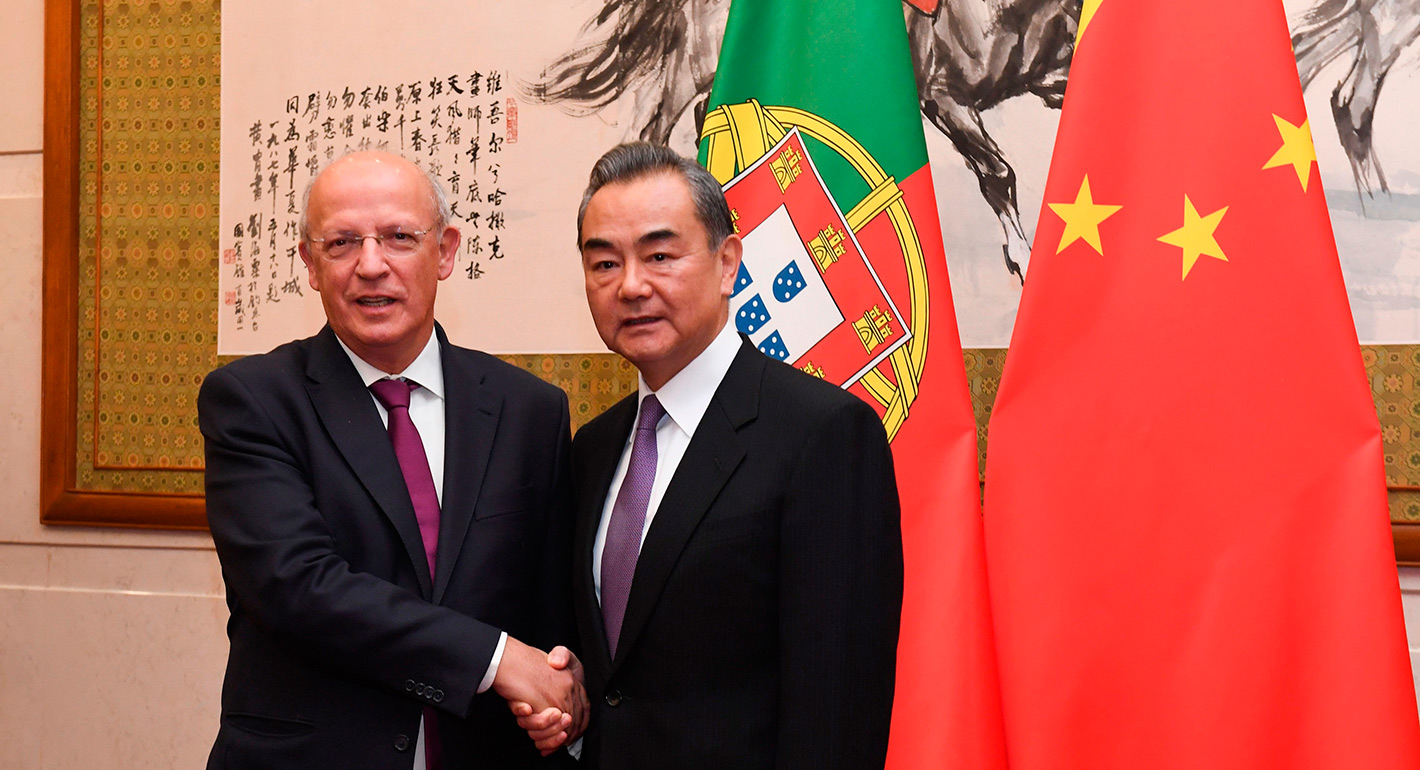
Portugal has found a way to grant China a fast-track lane toward Europe with a little shiny gold, as it now occupies a central role in China’s European geoeconomic strategy.
Source: Diplomat
Unlike Queen Elizabeth II in 2015, the president of Portugal will not be able to provide a ride in a golden carriage to his Chinese counterpart Xi Jinping when he lands on Portuguese soil on December 4 for his state visit. Still, the country has found a way to grant China a fast-track lane toward Europe with a little shiny gold.
The “Golden Visa Scheme,” launched in Portugal in October 2012, grants Residence Authorizations to foreigners who invest 500,000 euros or more in the country. China has been a prime beneficiary of the scheme, with almost 4,000 permanent visas awarded to Chinese citizens. With the Portuguese passport being one of the strongest in the world, as it allows travel to 186 out of 199 world countries (besides being a EU document), the purchase of real estate is the underlying motivation for 95 percent of the requests filed with the Portuguese authorities.
Nonetheless, the scheme, which is also present in other European countries, has caught the attention of several stakeholders, including Transparency International, which has called for the “suspension of the program” until “all impacts are independently assessed and a public debate takes place.” European Commissioner for Justice Vera Jourova has declared that such programs might constitute a “serious risk for European security.”
So far, proposals to cancel the program have always been rejected. The current political landscape has, however, led the leading party in government to consider new measures. The Portuguese Socialist Party recently introduced an amendment to the 2019 State Budget requiring those who file a Golden Visa request to provide their country of origin’s tax identification and residency numbers. The bill will most likely pass – after all, it is a logical, uncontroversial idea. But will that be enough to ensure the so-desired transparency of the mechanism? Perhaps not, as Portugal now occupies a central role in China’s European geoeconomic strategy.
Overall, in Beijing’s eyes, Portugal is not just a medium-sized European country about to host China’s supreme leader for a state visit. Since 2004, it has been engaged in a “strategic partnership” with the People’s Republic of China. The financial crisis, which hit Portugal between 2008 and 2013, served as a catalyst for a Chinese offensive, as Lisbon, under the terms of external creditors, was forced to privatize state-owned assets. Up to today, Chinese foreign direct investment (FDI) amounts to a total of 12 billion euros, ranging from energy (Galp, REN, Energias de Portugal-EDP) to transportation (TAP), along with a significant presence in insurance (Fidelidade), health (Grupo Luz Saúde), financial services, real estate and media – and the speed of such investment does not seem to be decreasing.
A few months ago, a Chinese state-owned company, China Three Gorges, offered to take a majority stake in the capital of EDP, the country’s formerly state-owned top grid company, where it currently holds a 23.3 percent stake, acquired gradually since the 2011 bailout. EDP owns several subsidiaries in the field of renewable energy in Spain, Brazil, and in the United States. In addition, the company still receives subsidies from the Portuguese government. This attempted takeover raised eyebrows in Europe and in the United States. While the Brazilian competition authorities have already granted a green light to the operation, the current U.S. ambassador to Portugal, George Glass, has criticized the deal, warning that “having another country control part of your critical infrastructure” is “a dangerous path to go down.”
Only a few members of the Portuguese elite are discussing the risks of Chinese engagement. Why is it that other countries fear such Chinese initiatives more than Portuguese public opinion or the political elites themselves? Why isn’t there a widespread public debate, similar to what is happening in other European countries such as Greece, the Czech Republic, or Poland?
That’s probably because the partnership with Beijing has constantly been declared as a success in Lisbon. For example, Economy Minister Pedro Siza Vieira said this November that “Chinese investment has been significant for the past few years, and we welcome it,” while referring the healthy growth rate of the Portuguese economy. Moreover, in 2017, the government relaxed an investment rule that previously barred Chinese companies from combining their votes in case of a takeover bid – which, after the introduced change, makes it easier for both China Three Gorges and its Chinese partner CNIC (who hold more than 28 percent of EDP as of now) to vote as shareholders without limitations whenever a takeover bid comes to be decided.
Just recently, as Xi prepares to land in Lisbon, a number of new initiatives have been announced, notably in Matosinhos and Peniche, where a new technological laboratory, STARLab, jointly funded by Portugal and China, will be launched before March 2019 to focus on the construction of microsatellites and the observation of the ocean. Many more projects are expected to be announced during the state visit. Last October, the Portuguese foreign minister referred to the completion of a memorandum of understanding between the two nations containing five new cooperation projects. Among other Portuguese strategic assets, the deepwater port of Sines — one of the many European ports China wants to control — is a clear possibility as Beijing is trying to connect the land and maritime routes of its “Belt and Road Initiative,” which has already received the vocal support of Portuguese ministers.
Does this mean that Portugal is willing to remain an active member of the European Union and NATO while becoming an “aircraft carrier for Chinese investments in Europe?” At a time when the EU needs more consolidation and solidarity (and has just introduced a screening mechanism for Chinese investments in infrastructures and IT), such weighing of priorities is the fundamental dilemma that Portuguese authorities face. According to a recent Carnegie survey, 90 percent of individuals view the EU as the most important institutional link and platform for Portugal today. The same sample nonetheless, indicates that the gap in perceived relative importance of the United States and China narrowed noticeably after 10 years.
Arguing that the two countries have 500 years of mutual knowledge and pointing to the successful handover of Macau in 1999, Portugal’s government believes the partnership with China can continue to flourish, despite international skepticism, all while Portugal remains a member of the Western community. That is the pressing question that lead many to have their eyes on Portugal today. China’s “golden” partnership with Portugal is already well underway – but how will this state visit define the future of the partnership? Hopefully, it won’t chart a path where whoever has the gold makes the rules.
Former Nonresident Senior Fellow, Europe Program
Philippe Le Corre was a nonresident senior fellow in the Europe Program at the Carnegie Endowment for International Peace.
Recent Work

Paul Haenle, Philippe Le Corre

Erik Brattberg, Philippe Le Corre, Paul Stronski, …
Carnegie does not take institutional positions on public policy issues; the views represented herein are those of the author(s) and do not necessarily reflect the views of Carnegie, its staff, or its trustees.

Russian strikes are weakening the economy sustaining Ukraine’s war effort. Closing the growing funding gap will require more European support and politically contentious reforms in Kyiv.

Balázs Jarábik

Despite a new textbook, an influx of Russian teachers and managers, and an end to the teaching of Ukrainian, the Kremlin is unlikely to have “reprogrammed” locals.

Konstantin Skorkin

For every ruble allocated to social policy, health, and education in 2027, double that amount is earmarked for the army, the police, and the security services.

Alexandra Prokopenko

Cargo traffic through Russia’s Northern Sea Route has increased because of the disruption caused by the conflict in the Middle East, the Ukraine war, and U.S.-China tensions.

Mikhail Korostikov

Trump has promised Belarus a massive potash deal. But Minsk is seeking something greater: restored Western transit and greater room for maneuver from Russia.
Balázs Jarábik