

Paper
James L. Schoff, Douglas E. Rake, Joshua Levy
{
  "authors": [
    "James L. Schoff"
  ],
  "type": "other",
  "centerAffiliationAll": "dc",
  "centers": [
    "Carnegie Endowment for International Peace"
  ],
  "collections": [
    "The United States and Japan in Asia"
  ],
  "englishNewsletterAll": "asia",
  "nonEnglishNewsletterAll": "",
  "primaryCenter": "Carnegie Endowment for International Peace",
  "programAffiliation": "AP",
  "programs": [
    "Asia"
  ],
  "projects": [],
  "regions": [],
  "topics": [
    "Foreign Policy",
    "Global Governance"
  ]
}
Source: Getty
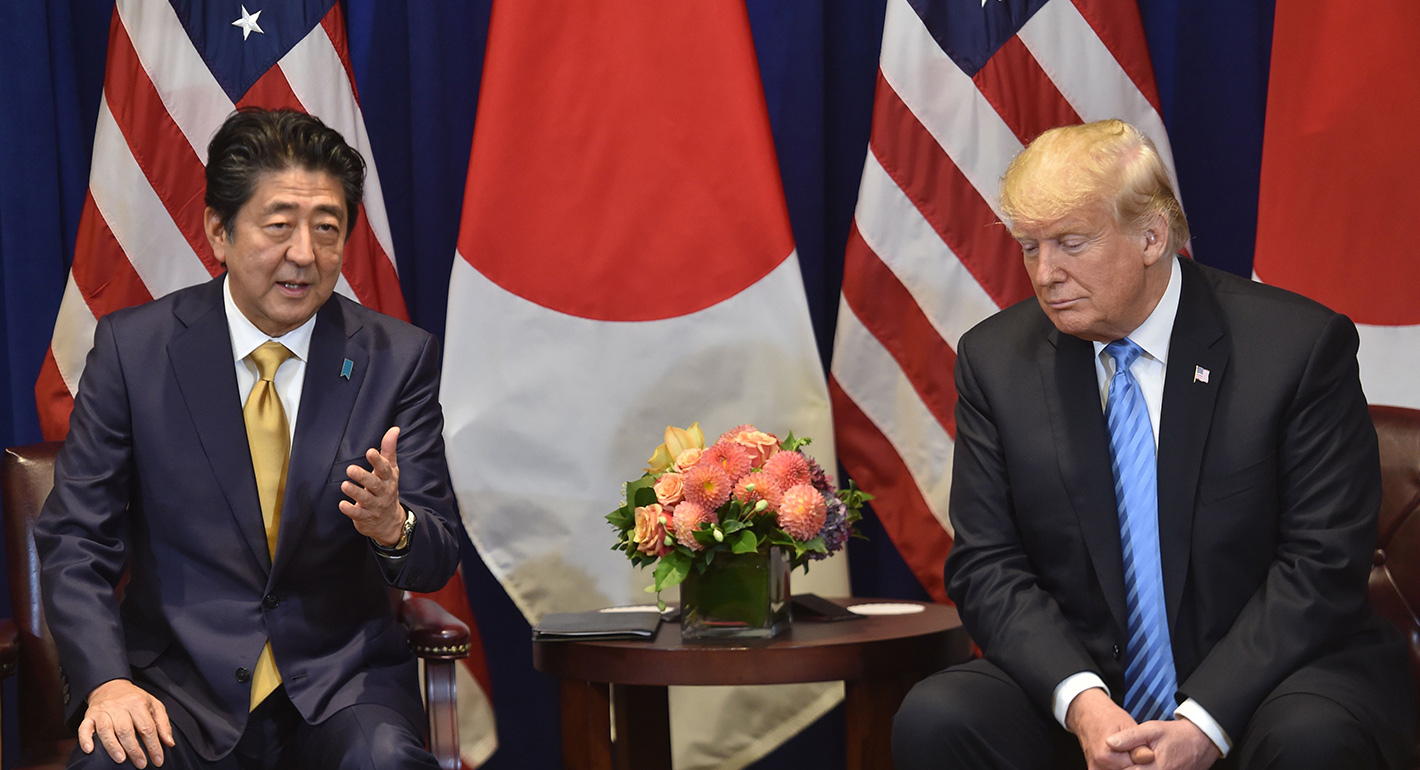
The political base for Trump’s trade protectionism and apparent indifference to allies has roots stretching back into U.S. history.
Source: Asia-Pacific Review
This article examines the domestic political dynamics behind US president Donald Trump’s “America First” approach to trade and foreign policy, to understand better how long this strain of American economic nationalism might last and what it means for Japan’s national security strategy. The political base for Trump’s trade protectionism and apparent indifference to allies has roots stretching back into American history, but this movement has strengthened in recent years due to a combination of growing economic inequality in the United States, demographic changes, and the impact of fast-paced technology development and economic globalization. These political trends are likely to persist beyond Trump’s presidency, although some potential negative effects on Japan and the US-Japan alliance in the medium-to-longer term can be mitigated by Japan’s proactive foreign policy and other steps. The alliance still offers a great deal of value to both countries—now and into the future—but Japan should consider a slightly larger global leadership role in concert with others, even as the allies work to enhance their continued cooperation on shared interests.
This article was originally published by Asia-Pacific Review.

Former Senior Fellow, Asia Program
James L. Schoff was a senior fellow in the Carnegie Asia Program. His research focuses on U.S.-Japan relations and regional engagement, Japanese technology innovation, and regional trade and security dynamics.
Recent Work
James L. Schoff, Douglas E. Rake, Joshua Levy
James L. Schoff
Carnegie does not take institutional positions on public policy issues; the views represented herein are those of the author(s) and do not necessarily reflect the views of Carnegie, its staff, or its trustees.

Despite a new textbook, an influx of Russian teachers and managers, and an end to the teaching of Ukrainian, the Kremlin is unlikely to have “reprogrammed” locals.

Konstantin Skorkin

Cargo traffic through Russia’s Northern Sea Route has increased because of the disruption caused by the conflict in the Middle East, the Ukraine war, and U.S.-China tensions.

Mikhail Korostikov

Trump has promised Belarus a massive potash deal. But Minsk is seeking something greater: restored Western transit and greater room for maneuver from Russia.

Balázs Jarábik

Minsk clearly expected the dialogue with Washington to yield more results, in particular the lifting of EU sanctions and permission to export potash.

Artyom Shraibman

With the growth in points of friction between the great powers, organizations like the SCO will continue to play a role in the strategic adaptation of the smaller powers caught between them.

Temur Umarov