

Commentary
- +11
Cornelius Adebahr, Dan Baer, Rosa Balfour, …
{
  "authors": [
    "Erik Brattberg"
  ],
  "type": "legacyinthemedia",
  "centerAffiliationAll": "dc",
  "centers": [
    "Carnegie Endowment for International Peace"
  ],
  "collections": [],
  "englishNewsletterAll": "ctw",
  "nonEnglishNewsletterAll": "",
  "primaryCenter": "Carnegie Endowment for International Peace",
  "programAffiliation": "EP",
  "programs": [
    "Europe"
  ],
  "projects": [],
  "regions": [
    "North America",
    "United States",
    "Western Europe",
    "United Kingdom",
    "Iran"
  ],
  "topics": [
    "Political Reform",
    "Democracy",
    "Foreign Policy",
    "Global Governance"
  ]
}
Source: Getty
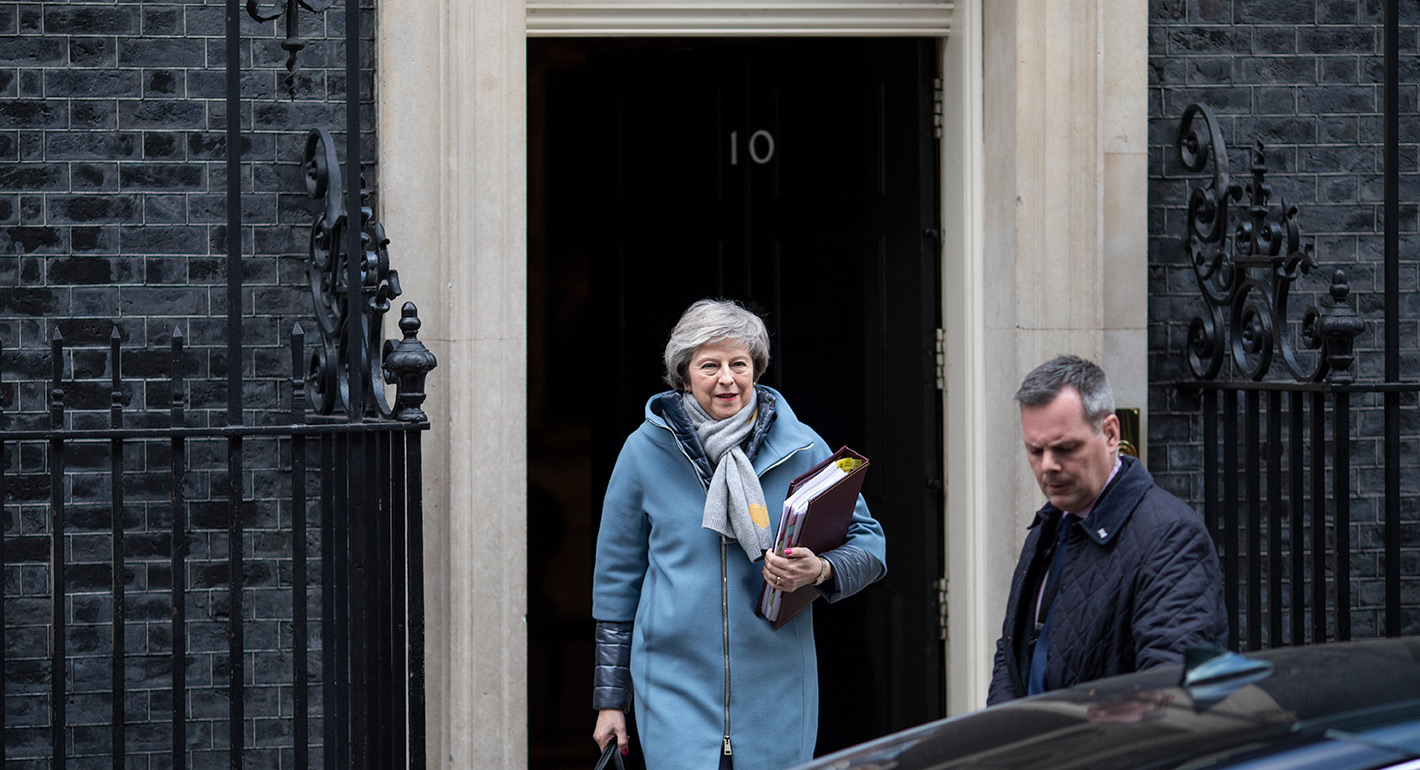
A no-deal Brexit would consume all political and strategic energy in London at a time when Europe is facing rising geopolitical threats from Russia and China.
Source: Axios
The House of Commons will vote on Jan. 15 on Prime Minister Theresa May’s Brexit withdrawal agreement with the EU. If the agreement fails to gain support — a likely outcome — the specter of a no-deal Brexit will loom as the March 29 deadline approaches.
Why it matters: The prospect of a no-deal Brexit is alarming for both economic and geopolitical reasons. It would propel the U.K. out of the EU’s single market, roiling the U.K.’s economy and causing trade chaos with the EU. The Bank of England predicts an immediate 8% drop in British GDP under this scenario.
Moreover, Britain would be in complete political turmoil and its international standing would take a heavy toll. A no-deal Brexit would suck up all political and strategic energy and attention in London at a time when Europe is facing rising geopolitical threats from Russia and China.
Unfortunately for May, Washington is no help here. President Trump has taken the pro-Brexiteers’ side. He believes that a hard Brexit, or even a no-deal Brexit, would be beneficial for U.S. trade with Britain. Trump has on several occasions also undermined May’s efforts.
Yes, but: There might still be some wiggle room for last minute deal-making, though the margin for error is small. The U.K. could, for instance, try to secure an extension of the negotiations from the EU, but this would require unanimity from the 27 EU members. Other possible options include a new last-minute vote in Parliament, new elections or even a second Brexit referendum.
The bottom line: With so much at stake, the U.K. might decide to pull the plug on the entire Brexit enterprise to avoid the costs of exiting the EU. Barring such an outcome, British politicians could at least pursue the deal that May has reached, since it would limit the damage done by ensuring an orderly Brexit and paving the way for the next phase of discussing the future U.K.–EU relationship.

Former Director, Europe Program, Fellow
Erik Brattberg was director of the Europe Program and a fellow at the Carnegie Endowment for International Peace in Washington. He is an expert on European politics and security and transatlantic relations.
Recent Work



Cornelius Adebahr, Dan Baer, Rosa Balfour, …

Erik Brattberg, Philippe Le Corre, Paul Stronski, …
Carnegie does not take institutional positions on public policy issues; the views represented herein are those of the author(s) and do not necessarily reflect the views of Carnegie, its staff, or its trustees.

Sergei Kiriyenko used Russia’s parliamentary vote to further hone his strategy of corporate mobilization that is designed to maximize votes for United Russia.

Andrey Pertsev

Trump has promised Belarus a massive potash deal. But Minsk is seeking something greater: restored Western transit and greater room for maneuver from Russia.

Balázs Jarábik

The European far right might fail to steer EU policy in the direction Russia wants, but they will create enough chaos inside Europe to benefit the Kremlin.

Dimitar Bechev

Minsk clearly expected the dialogue with Washington to yield more results, in particular the lifting of EU sanctions and permission to export potash.

Artyom Shraibman

If the Russian-speaking community in Latvia cannot articulate their interests without being seen as disloyal, they could end up embracing a pro-Kremlin agenda.

Sergejs Potapkins