

Commentary
Cornelius Adebahr
{
  "authors": [
    "Cornelius Adebahr"
  ],
  "type": "legacyinthemedia",
  "centerAffiliationAll": "",
  "centers": [
    "Carnegie Endowment for International Peace",
    "Carnegie Europe"
  ],
  "collections": [
    "Transatlantic Cooperation",
    "Iranian Proliferation"
  ],
  "englishNewsletterAll": "",
  "nonEnglishNewsletterAll": "",
  "primaryCenter": "Carnegie Europe",
  "programAffiliation": "",
  "programs": [],
  "projects": [],
  "regions": [
    "Middle East",
    "Europe",
    "North America"
  ],
  "topics": [
    "Security",
    "Nuclear Policy"
  ]
}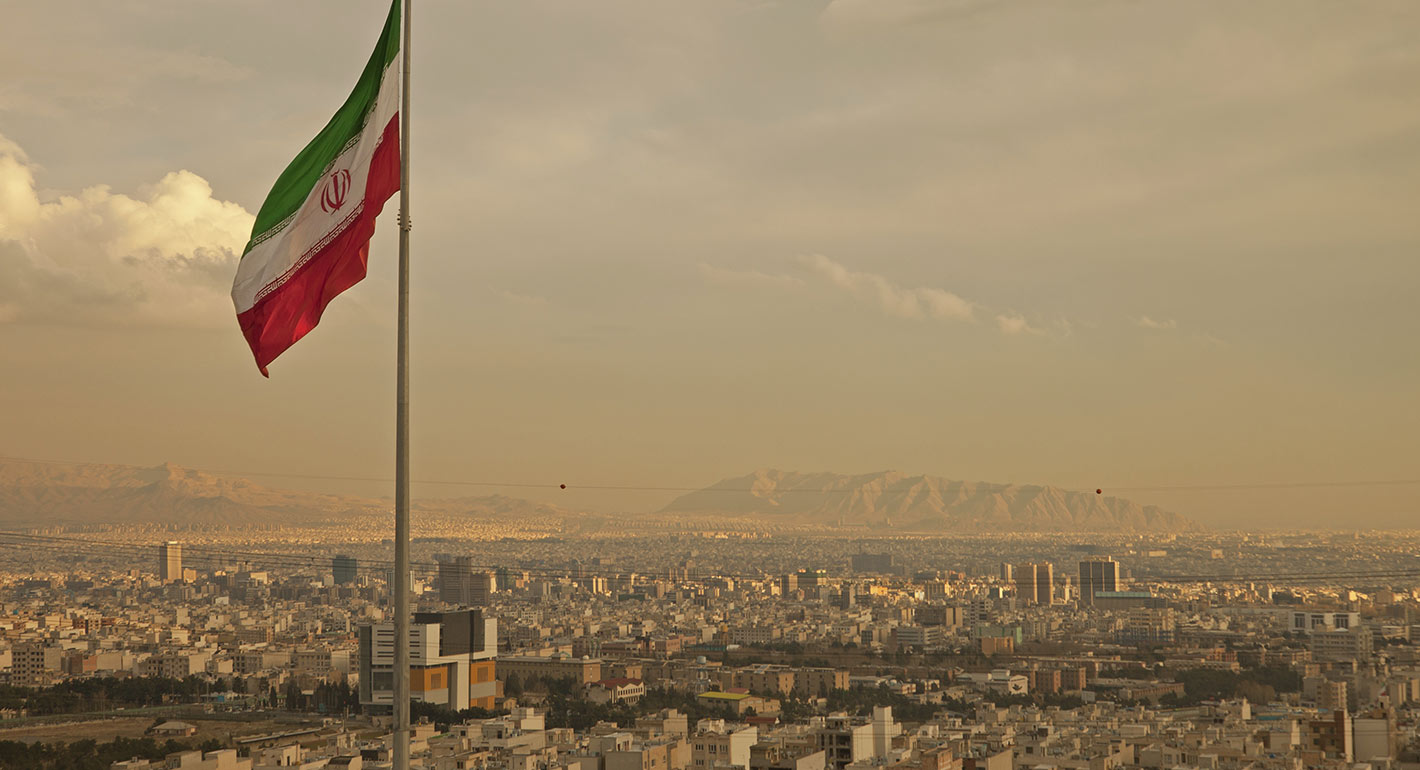
Source: Getty
The EU is right to take a more comprehensive approach to the Middle East and resist attempts to demonize Iran, but it must carefully craft its approach to avoid endangering the security alliance with the US that it depends on.
Source: LSE’s EUROPP blog
An unassuming conference on “Peace in the Middle East”, held in Poland last week, epitomised the split between the EU and the United States over how to address the challenges emanating from Iran. The differences in attendance were glaring: Washington sent its Vice-President and Secretary of State, Israel its Prime Minister, yet most EU member states opted not even to dispatch their foreign ministers, while Federica Mogherini, the EU’s foreign policy chief, said she could not travel altogether due to scheduling conflicts. Given that Israeli leader Benjamin Netanyahu bluntly spoke of an Arab-Israeli gathering “to advance the common interest of war with Iran”, the Europeans may feel vindicated in their decision.
Yet avoiding the embarrassment of being associated with warmongering while trying to save the nuclear deal is one thing for the Europeans. Defining – and executing – an autonomous approach towards Iran that differs from the “maximum pressure campaign” of the Americans without banding up with Russia or China (let alone Iran) on broader geopolitical issues, is quite another. As it happens, among the many issues that the EU and the US currently disagree on, from trade to climate change policies to global order, the Iran file stands out – not least for its urgency, as a miscalculation or bad faith on either side can quickly turn into the war that Netanyahu mentioned.Truth be told, the EU and the US have not seen eye-to-eye on Iran for most of the Islamic Republic’s now 40-year history. Traumatised by the 1979-81 hostage crisis, Washington has consistently opted for a more hard-line approach, using sanctions and threatening military action to bring Tehran to its knees. Today, more than ever, Washington aims at regime change as a matter of principle. The Europeans, in contrast, with variations between countries like Britain and France taking a tougher line than, say, Germany and Italy, have refused to demonise Iran. They too see the country as a challenge, both regionally and to their own security interests, but they want to address these without per se delegitimising the country or its threat perception.
Hence, the transatlantic unity displayed by the “two-track approach” of nuclear diplomacy and economic sanctions leading to the 2015 accord was the exception rather than the rule. Obviously, things took a dramatic turn when the current US administration abandoned the deal in May 2018, but the EU decided to stick to it. Washington has since tried to pressure Europe into compliance with its new policy, while telling major EU-based multinationals outright to end their Iran business – “or else”.
The Europeans latest effort to enable at least a minimum of trade relations with Iran under the obscure name of INSTEX (Instrument in Support of Trade Exchanges) has been the target of particular American disparagement. Never mind the fact that, for the moment, this kind of barter platform is designed for “humanitarian trade” only, i.e. foodstuff, medicine, and the like, which is legal even under the severe US sanctions re-introduced last November. US Vice-President Mike Pence sharply criticised the instrument at the onset of the Warsaw conference as “an ill-advised step that will only strengthen Iran, weaken the EU and create still more distance between Europe and the United States.”
The problem is that it was Washington’s U-turn on the Iran deal that created this distance in the first place. This is one of the reasons why the Europeans do not feel compelled to fully side with their American allies – in addition to the fact that the US administration does not have a plan to deal with the wider challenges Iran poses, besides increasing the pressure and waiting for the regime to crumble, regardless of the consequences. In fact, some believe that demonstrating this cleavage was part of Washington’s intention when it had Secretary Mike Pompeo announce the gathering during his hastily conceived trip to the region in January. Not only did he surprise even the authorities in Warsaw, but the choice of venue was a deliberate attempt to break ranks among EU member states: Poland is a country whose populist right-leaning government is in conflict with Brussels and fellow members over rule of law issues and craves for US protection against Russia, so it is ready to toe Washington’s line on Iran, if needed.
Holding a conference on the Middle East without Iran, Turkey, or Russia (who actually held a summit on Syria on the very same day), and with only limited participation from Europe was never a good start, even without the war rhetoric. The difficulty for the Europeans is to counter this confrontational approach with a strategy of their own, for which they need unity of purpose and the respective means to implement it. Both are hard to muster if at the same time the transatlantic alliance is put into question by Washington. The EU is right to take a more comprehensive approach to the region, resisting the singling out of Iran as its main source of evil. Yet it has to carefully craft its approach without endangering the security alliance it fundamentally depends on.

Former Nonresident Fellow, Carnegie Europe
Cornelius Adebahr was a nonresident fellow at Carnegie Europe. His research focuses on foreign and security policy, in particular regarding Iran and the Persian Gulf, on European and transatlantic affairs, and on citizens’ engagement.
Recent Work
Cornelius Adebahr

Cornelius Adebahr, Barbara Mittelhammer
Carnegie does not take institutional positions on public policy issues; the views represented herein are those of the author(s) and do not necessarily reflect the views of Carnegie, its staff, or its trustees.

If the Russian-speaking community in Latvia cannot articulate their interests without being seen as disloyal, they could end up embracing a pro-Kremlin agenda.

Sergejs Potapkins

With the growth in points of friction between the great powers, organizations like the SCO will continue to play a role in the strategic adaptation of the smaller powers caught between them.

Temur Umarov
Two divergent trends—Putin’s hardline vision of how to prosecute the war in Ukraine, and a growing desire for change in Russia—could tear the regime apart.

Tatiana Stanovaya
Andrey Melnichenko’s essay offers no answer to the fundamental question of how, under any kind of negotiated settlement, Europe can protect itself from the Russian ressentiment that is inevitable in all scenarios except for an outright victory for Putin.

Leonid Bershidsky

Whether PAS can refocus on the unfinished business of state-building may ultimately prove more consequential for Moldova’s European future than the pace of its accession negotiations.

Balázs Jarábik