

Article
- +1
Rudra Chaudhuri, Tejas Bharadwaj, Konark Bhandari, …
{
  "authors": [
    "Rudra Chaudhuri"
  ],
  "type": "other",
  "centerAffiliationAll": "",
  "centers": [
    "Carnegie Endowment for International Peace",
    "Carnegie India"
  ],
  "collections": [],
  "englishNewsletterAll": "",
  "nonEnglishNewsletterAll": "",
  "primaryCenter": "Carnegie India",
  "programAffiliation": "",
  "programs": [],
  "projects": [
    "Security Studies"
  ],
  "regions": [
    "United States",
    "Asia",
    "South Asia",
    "Pakistan",
    "India"
  ],
  "topics": [
    "Foreign Policy"
  ]
}
Source: Getty
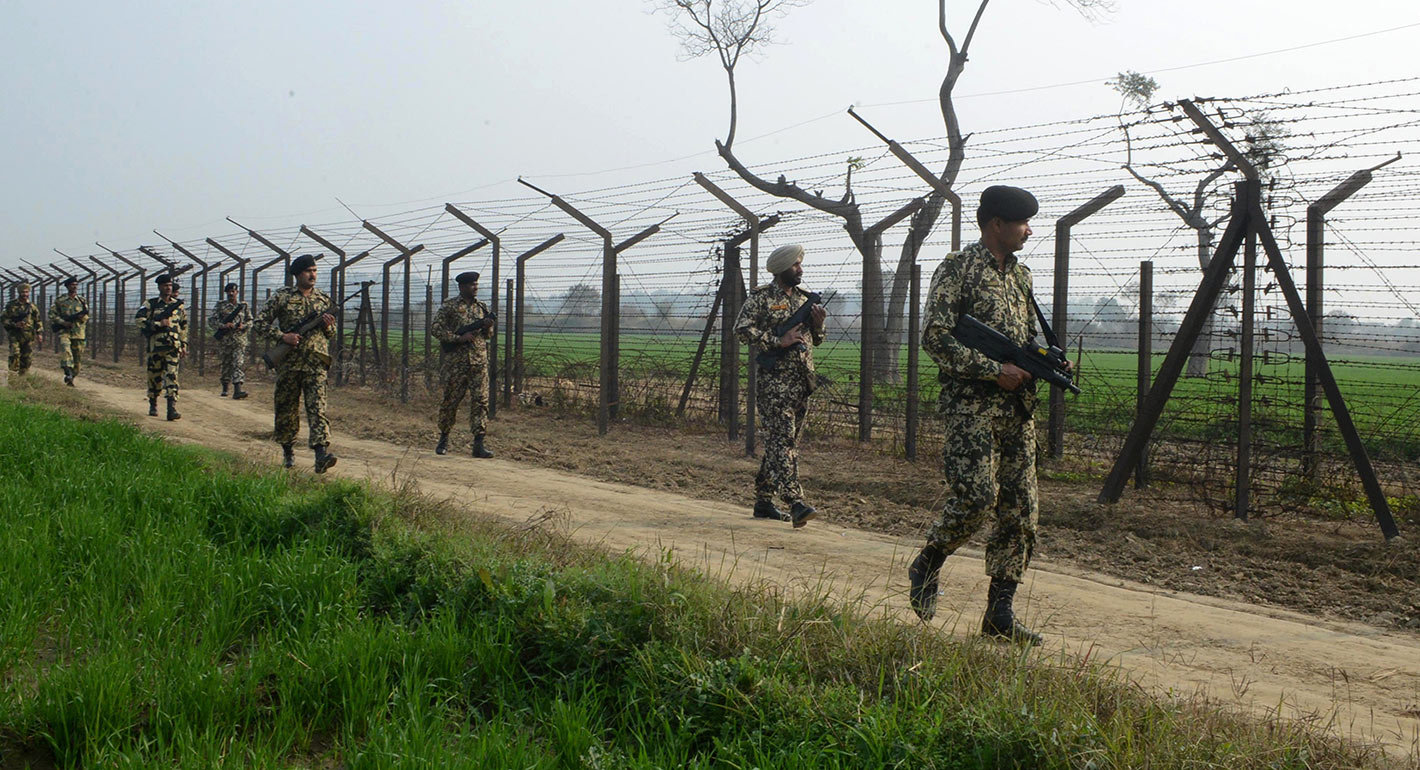
This Special Issue looks at the importance of institutions and the role played by international actors in crucial episodes of India’s strategic history.
Source: Journal of Strategic Studies
Rudra Chaudhuri
This Special Issue looks at the importance of institutions and the role played by international actors in crucial episodes of India’s strategic history. The contributions trace India’s tryst with war and peace from immediately before the foundation of the contemporary Indian state to the last military conflict between India and Pakistan in 1999. The focus of the articles is as much on India as it is on Pakistan and China, its opponents in war. The articles offer a fresh take on the creation of India as a regional military power, and her approach to War and Peace in the post-independence period.
Srinath Raghavan
The rise of India as a major Asian power is a significant geopolitical process of our times. While India’s growing economic heft is undoubtedly true, it is also a partial and an ahistorical reading. On the one hand, it assumes that the institutional sinews of power flow automatically from economic growth. On the other hand, it overlooks the longer trajectory of India's rise going back to the decade preceding independence – an arc of historical evolution that marks out India from many other post-colonial states. This article identifies India’s participation in the second World War as the starting point of its ‘long rise’ as an Asian power. In analyzing the military transformations that India underwent during the war, it focuses on the institutional dimension of these changes and considers the longer-term changes wrought by the war in the composition of the army, the logistical and support infrastructure, and the emergence of an indigenous military industrial base. Taken together, the article argues, these changes positioned India as a potential regional military power even before it emerged as an independent actor in the international system.
Vipul Dutta
The institutionalization of professional military education in India has attracted the attention of policymakers and analysts with a view to understand the factors that shape the generation, consolidation, and delivery of this specialized knowledge. The article focuses on the historical trajectory of the Indian Staff College precisely to highlight the impact of colonial and post-independence regimes on the shaping of military policies on education and administration of these institutions. It investigates the complexities of officer recruitment, socialization, and international institutional collaboration in delivering specialist knowledge to an emerging generation of middle-ranking officers geared for senior roles in the military hierarchy. The article argues about the need to look at the Indian military from an institutional perspective through past decades and offers an evidence-based conclusion on how future military-institution building efforts can draw lessons from past episodes on institutional and intellectual capacity-building efforts in India’s armed forces.
Paul McGarr
In October 1962, the Sino-Indian border war witnessed long-simmering diplomatic tensions between New Delhi and Beijing escalate into armed hostilities. Revisiting the political and military legacy of a conflict that continues to preoccupy contemporary South Asian security debates offers important insights into the utility of external interventions in regional disputes. In the 1960s, disagreements between London and Washington over how to leverage the Sino-Indian enmity resulted in muddled policymaking that destabilized the subcontinent and fractured Western relations with India and China. The border war saw India deliver a salutary lesson to Washington on which current U.S. policymakers, enamored with a transactional approach to global affairs, would do well to reflect. At the time, American pressure on India to prioritize international security concerns over regional threats to national sovereignty proved wholly ineffective. External agency, even of the superpower variety, was exposed as a blunt and ineffective tool when directed at Indian national security policy.
Rudra Chaudhuri
Pakistani President Ayub Khan learnt that military escalation is difficult if not impossible to control during the 1965 India-Pakistan War. Ayub Khan and Zulfikar Ali Bhutto developed a strategy to wrest control of Jammu and Kashmir based on four assumptions. First, that Kashmir was ripe for rebellion. Second, that India did not have an appetite for war following her defeat to China in 1962. Third, a military solution to the Kashmir dispute was time bound, as India’s massive military imports would make conventional conflict redundant by the end of the 1960s. Lastly, and perhaps most importantly, Khan betted that Indian retaliation would be controlled because of what he believed to be the United States' and the UK’s inherent interest in a stable South Asia. He was wrong on all four counts. This article underlines why gambling on external support in matters of military adventurism is a dicey strategy at best, and a disaster at worst.
Christopher Clary
The Pulwama crisis showed that the United States continues to play a major role in crisis diplomacy in South Asia. But what if the United States instead of helping to de-escalate had made the situation much worse? That is exactly the role Washington opted to play in the 1971 South Asia crisis that culminated in war. By concluding that Pakistan was more important to U.S. interests than it truly was, President Nixon and his national security advisor Henry Kissinger gave their Pakistani ally diplomatic space to pursue a course catastrophic for Pakistan and harmful to U.S. interests. This piece explains how Nixon and Kissinger made crucial analytical mistakes and catalogs important psychological biases to which they succumbed. Understanding such biases is not just of historic interest, but relevant to contemporary leaders that seek to address the world as it is not merely as they wish it to be.
John Gill
As evident during the 2019 tensions, the Kargil war of 1999 remains directly relevant to India–Pakistan relations. The first major conflict between the two as nuclear weapons states, it is the benchmark against which subsequent actions are measured. Where Indian forces kept to their side of the Kashmir Line of Control (LOC) in 1999, for instance, New Delhi retaliated for terror attacks by striking across the LOC in 2016 and 2019. Likewise, India sent a significant signal in 2019 by employing the Indian Air Force for the first time since 1999. Kargil also solidified the LOC as a quasi–international border and demonstrated that the international community has no appetite for changing borders by force. Finally, Kargil illustrated the scope for India–Pakistan miscalculation. Despite considerable restraint by both in 1999 and 2019, Kargil highlighted how little the two understand each other and how actions perceived as ‘tactical’ can have negative consequences at the strategic level.
This issue was originally published by the Journal of Strategic Studies.

Former Director, Carnegie India
Rudra Chaudhuri was the director of Carnegie India. His research focuses on the diplomatic history of South Asia, contemporary security issues, and the important role of emerging technologies and digital public infrastructure in diplomacy, statecraft, and development. He and his team at Carnegie India chair and convene the Global Technology Summit, co-hosted with the Ministry of External Affairs, Government of India.
Recent Work


Rudra Chaudhuri, Tejas Bharadwaj, Konark Bhandari, …
Rudra Chaudhuri
Carnegie does not take institutional positions on public policy issues; the views represented herein are those of the author(s) and do not necessarily reflect the views of Carnegie, its staff, or its trustees.

With the growth in points of friction between the great powers, organizations like the SCO will continue to play a role in the strategic adaptation of the smaller powers caught between them.

Temur Umarov

When faced with fuel shortages in the past, Central Asian governments could always count on additional supplies from Moscow. That safety net no longer exists.

Galiya Ibragimova

Despite unhappiness on the ground, Moscow is determined to use both carrot and stick to ensure there is record support for United Russia in occupied Ukraine.

Konstantin Skorkin
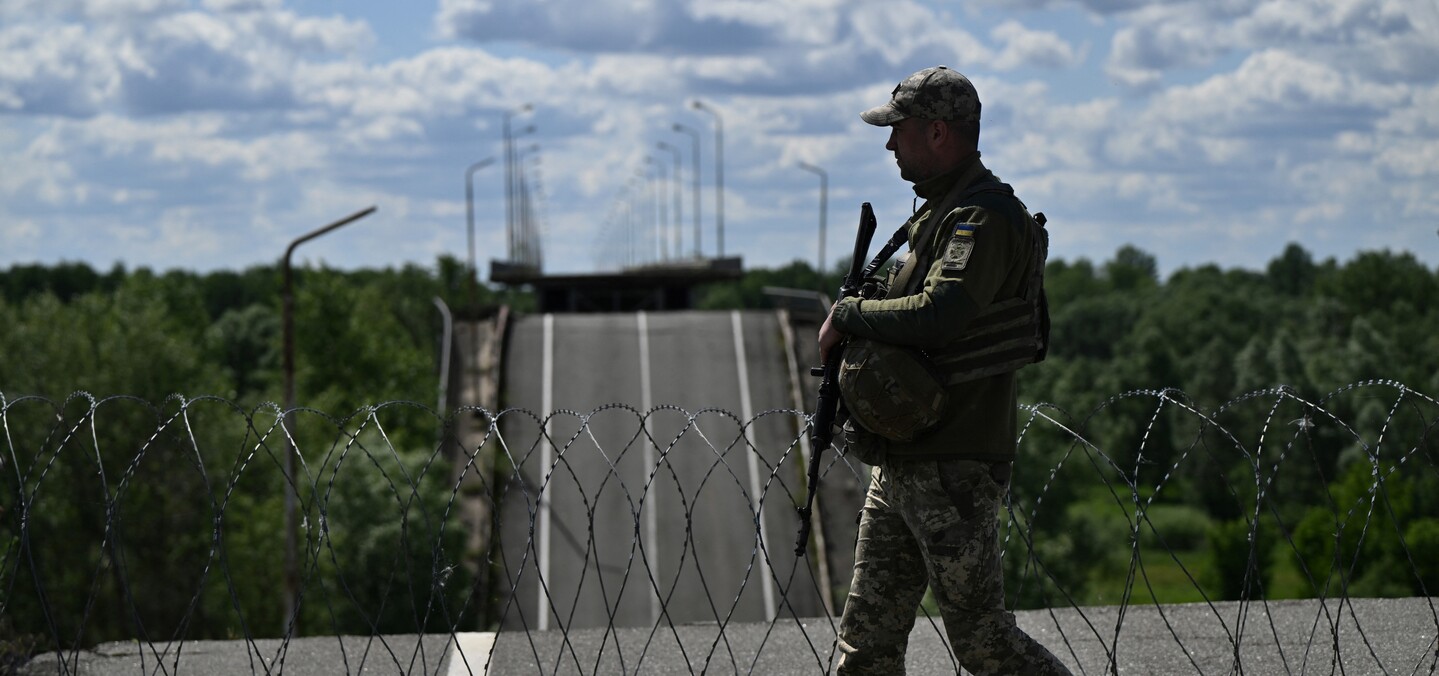
The recent damage inflicted by Ukrainian drones and missiles on Russia has made Belarus aware of its own vulnerabilities—and surprisingly amenable to Kyiv’s demands.

Artyom Shraibman
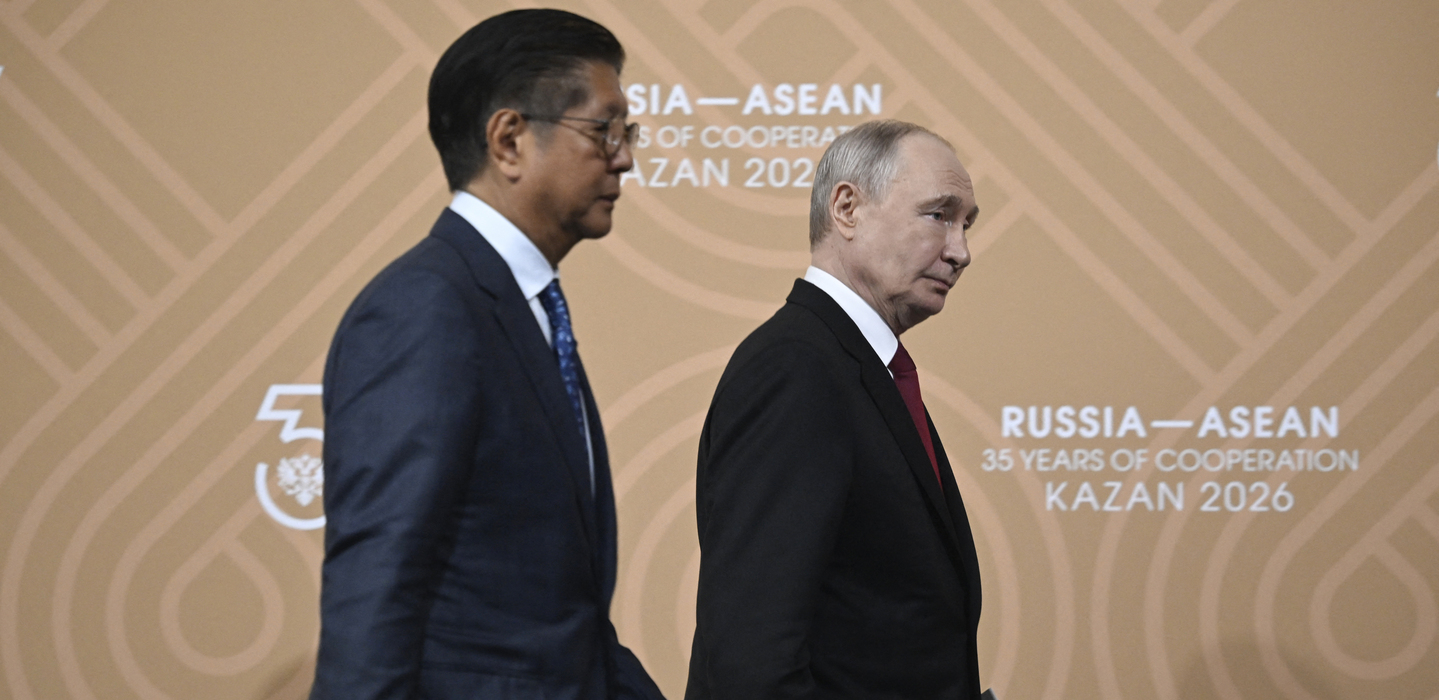
Russia looks set to reap economic benefits from closer ties with Southeast Asian countries that are keen to find reliable energy suppliers and diversify trade ties.

Alexander Gabuev