

Commentary
With the growth in points of friction between the great powers, organizations like the SCO will continue to play a role in the strategic adaptation of the smaller powers caught between them.
Temur Umarov
{
  "authors": [
    "Frederic Wehrey",
    "Wolfram Lacher"
  ],
  "type": "legacyinthemedia",
  "centerAffiliationAll": "dc",
  "centers": [
    "Carnegie Endowment for International Peace",
    "Malcolm H. Kerr Carnegie Middle East Center"
  ],
  "collections": [],
  "englishNewsletterAll": "menaTransitions",
  "nonEnglishNewsletterAll": "",
  "primaryCenter": "Carnegie Endowment for International Peace",
  "programAffiliation": "MEP",
  "programs": [
    "Middle East"
  ],
  "projects": [],
  "regions": [
    "North America",
    "United States",
    "North Africa",
    "Libya"
  ],
  "topics": [
    "Democracy",
    "Security",
    "Foreign Policy"
  ]
}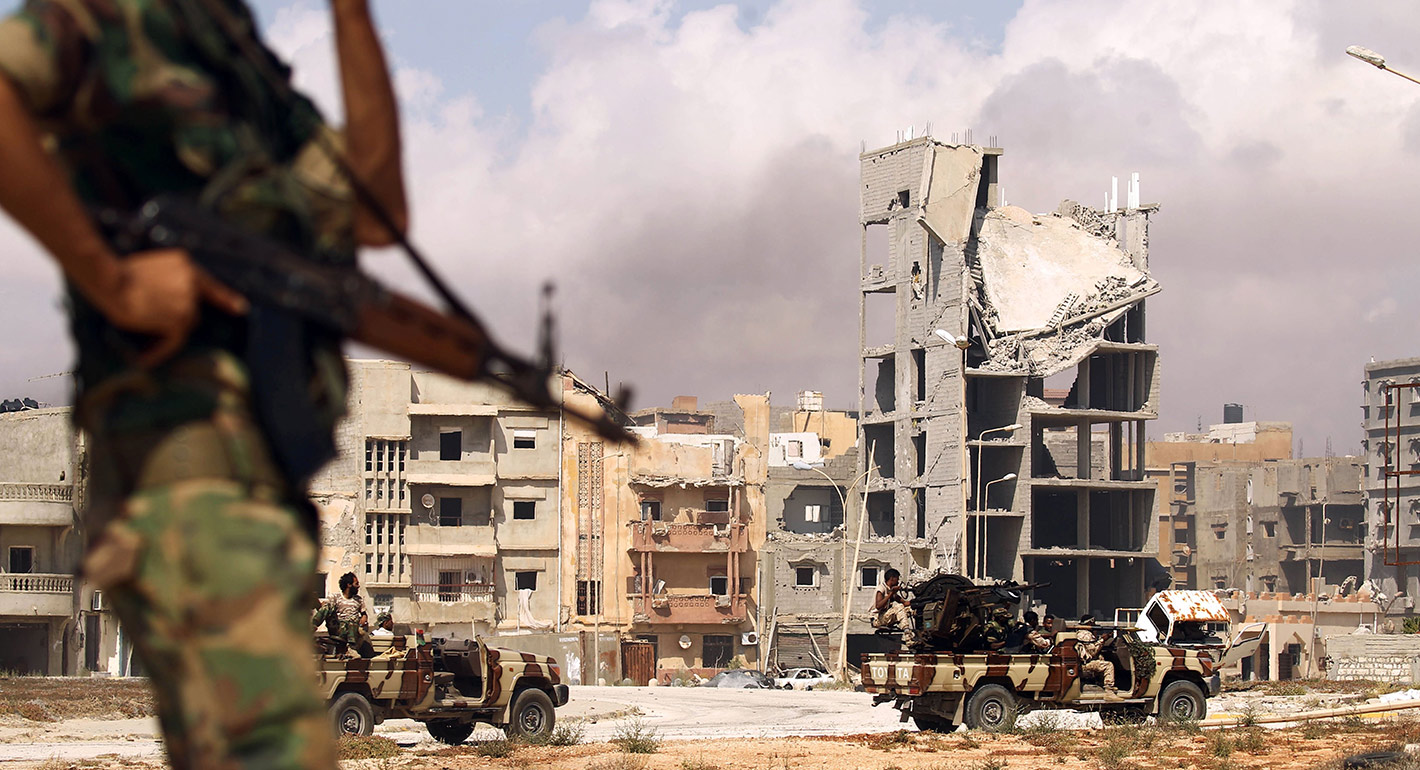
Source: Getty
Washington must get tough on violations of the UN arms embargo and hold Libya’s warring sides accountable for their conduct; it must also pursue a more inclusive governance framework for Libya’s future—one that does not include Haftar.
Source: Foreign Affairs
On April 4, Khalifa Haftar, the militia leader who controls eastern Libya, launched a large-scale offensive to capture the capital, Tripoli. The attack marked the collapse of negotiations to form an interim government between Haftar and key leaders in western Libya and triggered Libya’s third civil war since 2011.
Haftar evidently hoped to rapidly gain a foothold in Tripoli, finally establishing himself as the unrivaled ruler of Libya. What happened instead was that armed groups across western Libya mobilized to counter his power grab. For the past month, Haftar’s forces—a coalition of regular military units and militias calling themselves the Libyan National Army—have been stuck on Tripoli’s outskirts, slowly losing terrain to militias nominally allied with Libya’s internationally recognized Government of National Accord (GNA). More than 500 people have been killed in the fighting and more than 80,000 have been displaced.
International actors, paralyzed by disunity, have made halfhearted calls for a cease-fire and a return to the political process. But Haftar’s offensive has fatally damaged that process. Without a credible new framework for negotiations and a more robust international approach to resolving the conflict, a cease-fire will simply give Haftar and his opponents the opportunity to rearm and regroup. Western powers—especially the United States—should use diplomatic and economic tools to prevent regional powers from fueling the conflict and hasten the emergence of a harmful stalemate between the rival factions in Libya. Doing so will compel Libyans to return to a political process under new terms....
Senior Fellow, Middle East Program
Frederic Wehrey is a senior fellow in the Middle East Program at the Carnegie Endowment for International Peace, where his research focuses on governance, conflict, and security in Libya, North Africa, and the Persian Gulf.
Wolfram Lacher
Carnegie does not take institutional positions on public policy issues; the views represented herein are those of the author(s) and do not necessarily reflect the views of Carnegie, its staff, or its trustees.

With the growth in points of friction between the great powers, organizations like the SCO will continue to play a role in the strategic adaptation of the smaller powers caught between them.

Temur Umarov

When faced with fuel shortages in the past, Central Asian governments could always count on additional supplies from Moscow. That safety net no longer exists.

Galiya Ibragimova

Two divergent trends—Putin’s hardline vision of how to prosecute the war in Ukraine, and a growing desire for change in Russia—could tear the regime apart.

Tatiana Stanovaya
Ultimately, Zelensky sided neither with the reform camp nor with the military establishment as such, but with political control.

Balázs Jarábik

Andrey Melnichenko’s essay offers no answer to the fundamental question of how, under any kind of negotiated settlement, Europe can protect itself from the Russian ressentiment that is inevitable in all scenarios except for an outright victory for Putin.

Leonid Bershidsky