

Article
Dalia Ghanem
{
  "authors": [
    "Dalia Ghanem"
  ],
  "type": "legacyinthemedia",
  "centerAffiliationAll": "dc",
  "centers": [
    "Carnegie Endowment for International Peace",
    "Malcolm H. Kerr Carnegie Middle East Center"
  ],
  "collections": [
    "Arab Spring 2.0"
  ],
  "englishNewsletterAll": "menaTransitions",
  "nonEnglishNewsletterAll": "",
  "primaryCenter": "Malcolm H. Kerr Carnegie Middle East Center",
  "programAffiliation": "MEP",
  "programs": [
    "Middle East"
  ],
  "projects": [],
  "regions": [
    "Maghreb",
    "North Africa",
    "Algeria"
  ],
  "topics": [
    "Political Reform"
  ]
}
Source: Getty
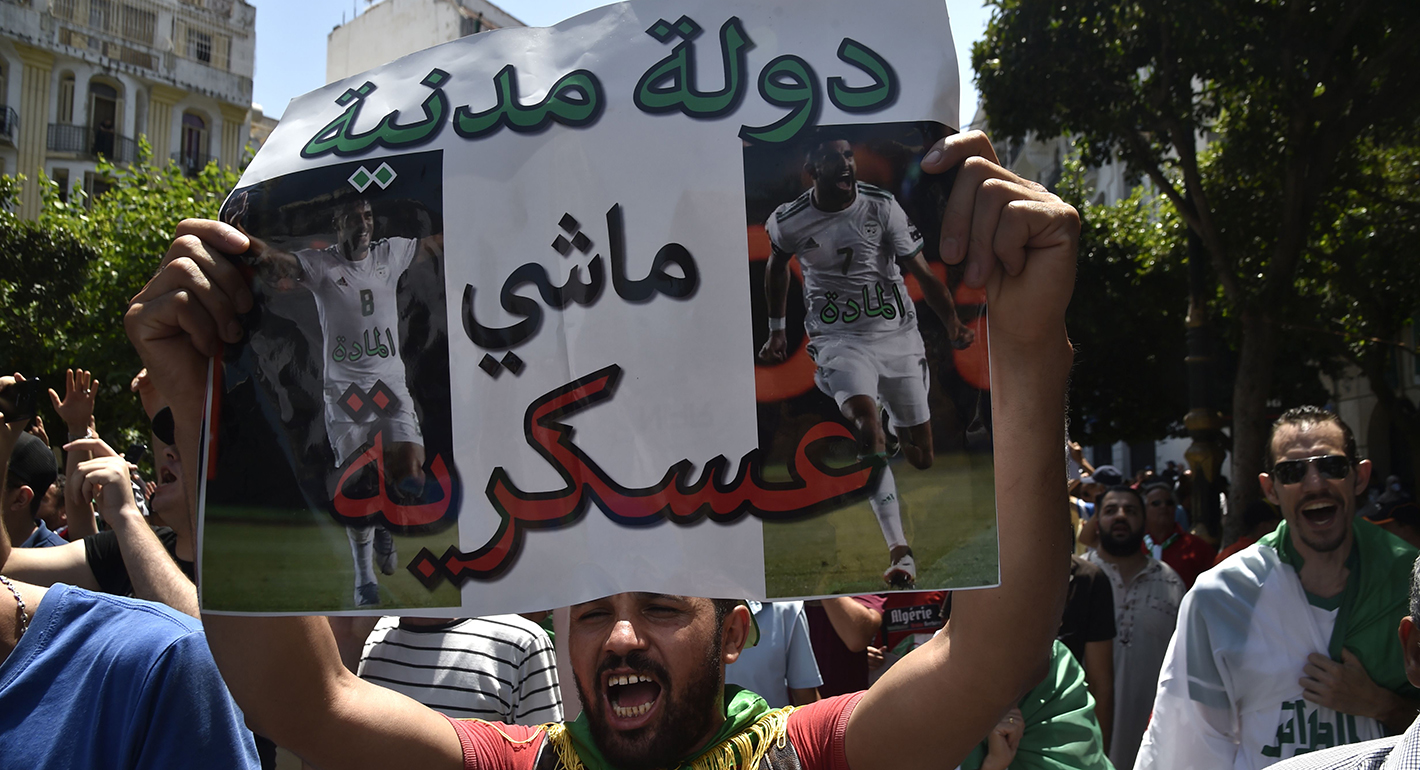
For more than four months now, protesters in Algeria have been urging a clean-up of the country's politics and a new constitution.
Source: Qantara
Algeria, where power has long been firmly consolidated in a deep state, has seen mass peaceful protests since 22 February. What started as student protests against the former President Abdelaziz Bouteflika's bid to run for a fifth term after twenty years in power, grew to a nationwide movement pushing for a clean cut from the past and a new republic with a new constitution.
There is no date scheduled for elections in Algeria after a ballot slated for 4 July was postponed in early June.IAs a result of the extended protests, the military, the real locus of power in Algeria, switched its allegiances and pressured President Bouteflika to renounce his bid to retain his rule. Several political figures, powerful former intelligence chiefs, business tycoons close to the Bouteflika inner circle and the brother of the former president, Saïd, have since been arrested and investigated on corruption charges. In application of article 102 of the constitution, Abdelkader Bensalah, who heads the National People's Assembly (NPA), was appointed as interim president with a caretaker government. In the absence of a date for the next elections, it seems that Bensalah's mandate, which expired on 7 July, will likely be extended until the next presidential election.
Former Senior Resident Scholar, Malcolm H. Kerr Carnegie Middle East Center
Dalia Ghanem was a senior resident scholar at the Malcolm H. Kerr Carnegie Middle East Center in Beirut, where her research focuses on Algeria’s political, economic, social, and security developments. Her research also examines political violence, radicalization, civil-military relationships, transborder dynamics, and gender.
Recent Work
Dalia Ghanem


Frances Z. Brown, Judy Dempsey, Dalia Ghanem, …
Carnegie does not take institutional positions on public policy issues; the views represented herein are those of the author(s) and do not necessarily reflect the views of Carnegie, its staff, or its trustees.

If the Russian-speaking community in Latvia cannot articulate their interests without being seen as disloyal, they could end up embracing a pro-Kremlin agenda.

Sergejs Potapkins

Russia’s ruling party would have benefited from Putin appearing as its distant patron, but as an active frontman imposing his views on the public, he has done nothing but harm both the party’s election campaign and the ruling system overall.

Andrey Pertsev

In the tenth year of his presidency, President Mirziyoyev’s system is becoming even more personalized than that of his predecessor Karimov.

Galiya Ibragimova

The greater threat to Zelensky comes not from Fedorov alone, but from the convergence between the former defense minister’s political campaign and the anti-corruption investigations moving ever closer to the presidential administration.

Balázs Jarábik
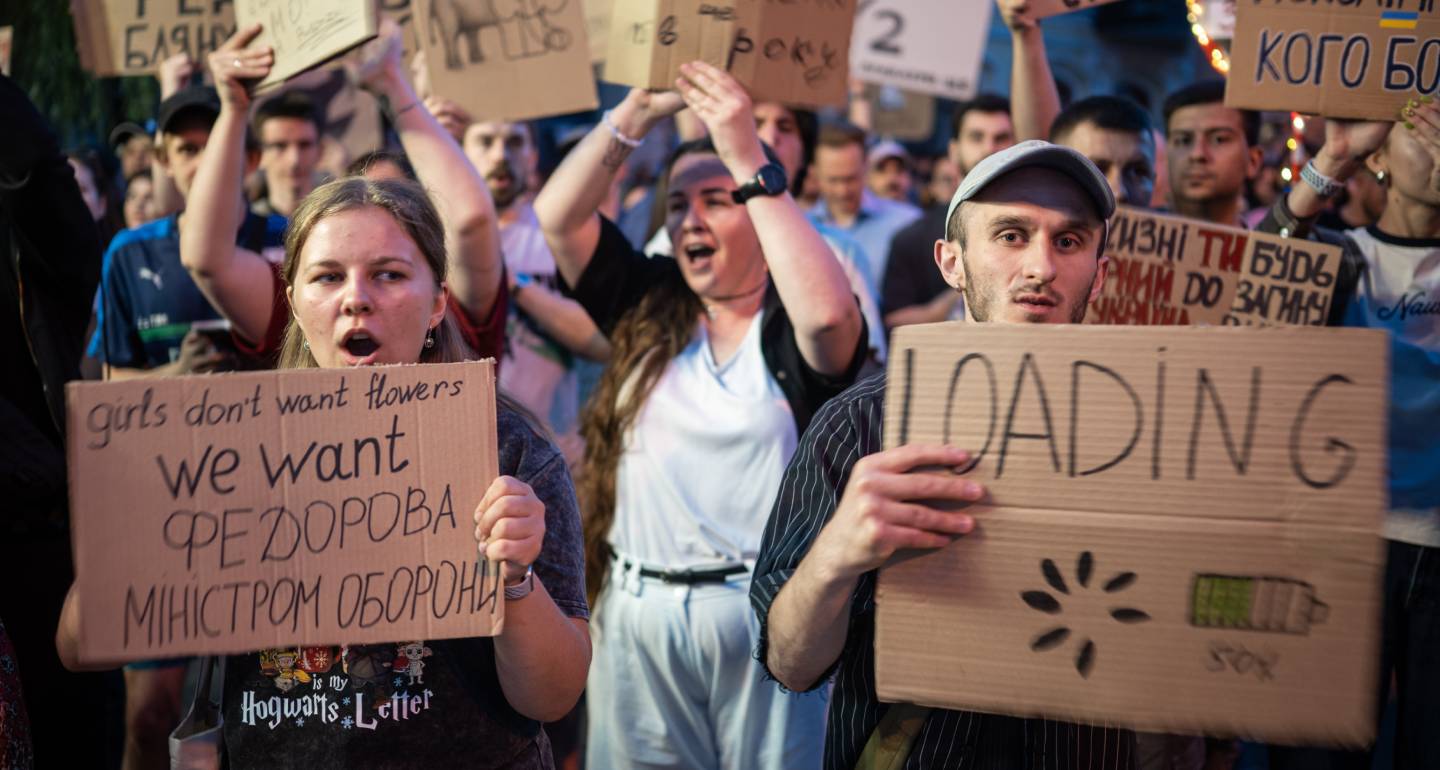
With his public call for new elections in Ukraine, ex-defense minister Mykhailo Fedorov has opened Pandora’s box.

Konstantin Skorkin