

Paper
Sarah Yerkes, Natalie Triche, Amr Hamzawy
{
  "authors": [
    "Sarah Yerkes"
  ],
  "type": "legacyinthemedia",
  "centerAffiliationAll": "dc",
  "centers": [
    "Carnegie Endowment for International Peace"
  ],
  "collections": [],
  "englishNewsletterAll": "menaTransitions",
  "nonEnglishNewsletterAll": "",
  "primaryCenter": "Carnegie Endowment for International Peace",
  "programAffiliation": "MEP",
  "programs": [
    "Middle East"
  ],
  "projects": [],
  "regions": [
    "North Africa",
    "Tunisia"
  ],
  "topics": [
    "Political Reform",
    "Foreign Policy"
  ]
}
Source: Getty
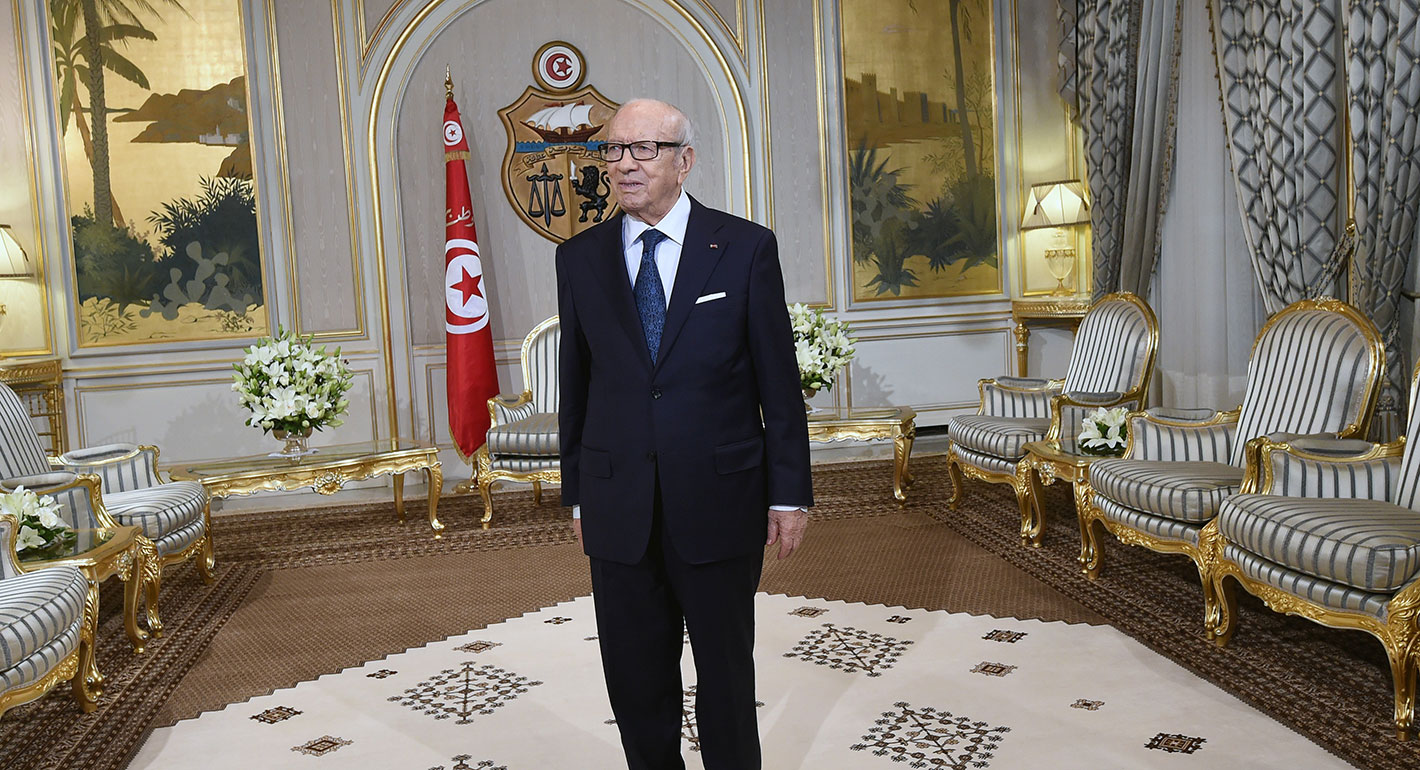
President Beji Caid Essebsi was Tunisia’s first democratically elected president. His death could lead to the unraveling of the Nidaa Tounes party, which in recent years has suffered from in-fighting and lacked a coherent vision
Source: Axios
The death of Tunisian President Beji Caid Essebsi on Thursday will complicate the country's upcoming elections and may spell the end of his increasingly fractious Nidaa Tounes political party.
The big picture: The 92-year-old leader was Tunisia's first democratically elected president. It could now fall to the interim president, 85-year-old Speaker of Parliament Mohammed Ennaceur, to finalize the Constitutional Court — a body whose absence has stunted the democratic transition as parliament has failed to agree on the court's number of members.
Where it stands: Tunisia was already scheduled to hold presidential elections on November 17, yet the ISIE — Tunisia's electoral body —announced it would move the elections up to September 15, to comply with a constitutional requirement that new elections be held within 90 days of the president’s death.
What's happening: The interim president must decide what to do about a controversial electoral law, passed by parliament in June, that would both raise the electoral threshold from 3% to 5% and exclude some popular presidential candidates, including television magnate Nabil Karoui, from the race.
The impact: Essebi's death could lead to the unraveling of the Nidaa Tounes party, which in recent years has suffered from in-fighting and lacked a coherent vision.

Acting Co-Director and Senior Fellow, Middle East Program
Sarah Yerkes is acting co-director and a senior fellow in the Middle East Program at the Carnegie Endowment for International Peace. Her research focuses on democracy and governance, U.S. foreign policy towards the Middle East and North Africa, and political and economic reform in Tunisia.
Recent Work

Sarah Yerkes, Natalie Triche, Amr Hamzawy
Carnegie does not take institutional positions on public policy issues; the views represented herein are those of the author(s) and do not necessarily reflect the views of Carnegie, its staff, or its trustees.

Japan’s long-term security policy is driven by concerns about China, and there is little appetite for (or interest in) pursuing a confrontation with Moscow.

James D.J. Brown

Putin’s conservative staffing policies and search for ever greater control have cemented parliament’s transformation into a bureaucratic appendage of the executive branch.

Andrey Pertsev

Without a ceasefire with Ukraine on attacking each other’s energy infrastructure—to which the Kremlin is unlikely to agree—the diesel agreement between Putin and Trump is largely for show, rather than representing a genuine increase in the volumes of Russian diesel on the global market.

Sergey Vakulenko

Ex-president Gurbanguly Berdimuhamedov remains interested in politics, but his son Serdar, Turkmenistan’s current president, is becoming increasingly independent and willing to break with his father’s legacy. If their covert rivalry goes too far, both risk losing power.

Galiya Ibragimova

Despite a new textbook, an influx of Russian teachers and managers, and an end to the teaching of Ukrainian, the Kremlin is unlikely to have “reprogrammed” locals.

Konstantin Skorkin