

Q&A
Dara Massicot, Aaron David Miller, Andrew S. Weiss
{
  "authors": [
    "Aaron David Miller"
  ],
  "type": "legacyinthemedia",
  "centerAffiliationAll": "",
  "centers": [
    "Carnegie Endowment for International Peace"
  ],
  "collections": [],
  "englishNewsletterAll": "",
  "nonEnglishNewsletterAll": "",
  "primaryCenter": "Carnegie Endowment for International Peace",
  "programAffiliation": "",
  "programs": [],
  "projects": [],
  "regions": [
    "North America",
    "United States",
    "South Asia",
    "Afghanistan"
  ],
  "topics": [
    "Political Reform",
    "Foreign Policy"
  ]
}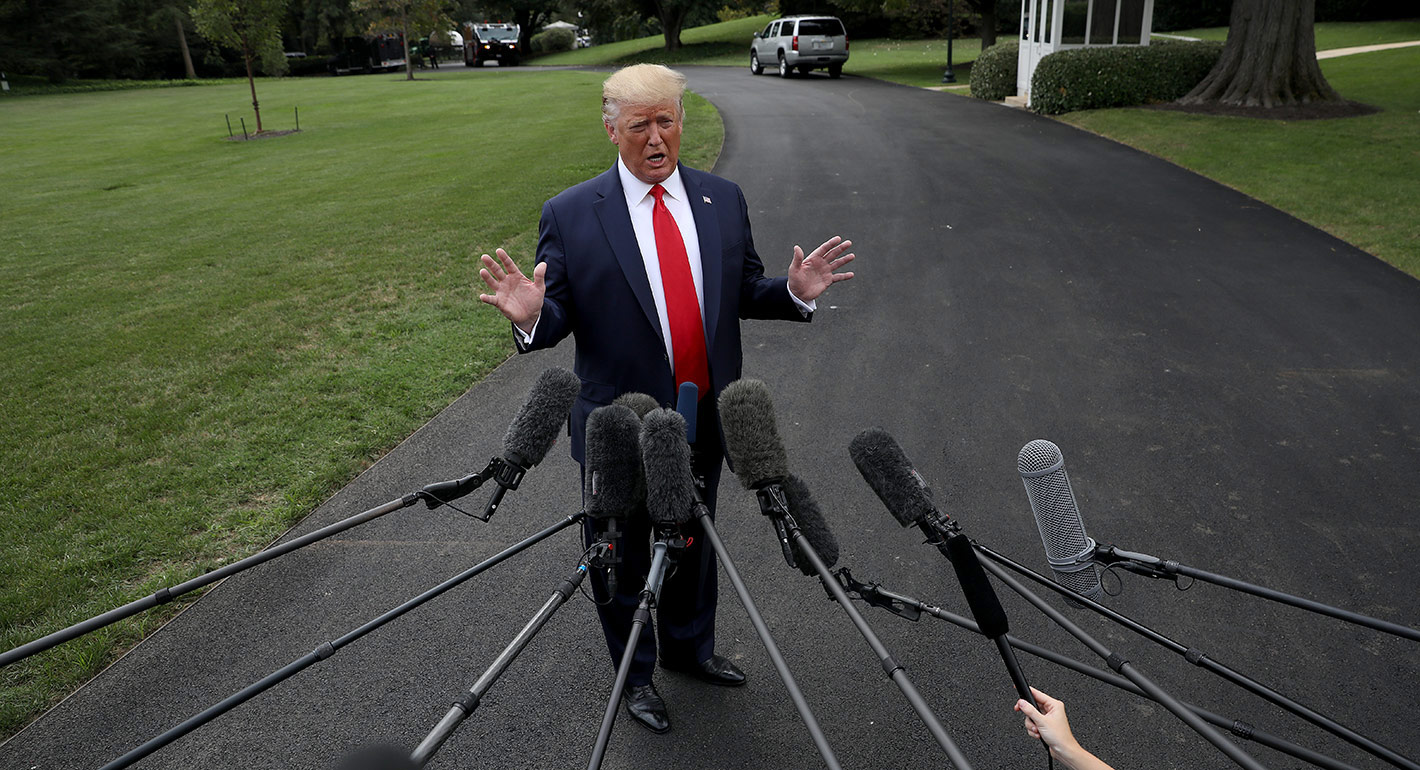
Source: Getty
The standard for victory in Afghanistan was never could the United States win, but when could the United States leave and what would it leave behind.
Source: USA Today
Greeting Palestinian leader Yasser Arafat at Camp David in July 2000, where he had just arrived on the presidential helicopter for a summit with President Bill Clinton and Israeli Prime Minister Ehud Barak, I asked him how he was doing. Smiling broadly, his kafiyyah flapping in the summer breeze, he replied: "I’m at Camp David."
And that’s how amazed and bewildered the Taliban would have been, too, if their meeting with President Donald Trump had come off as planned: legitimized and validated by a president obsessed with being on center stage, who appears to have seriously considered offering up a historic summit without thinking through the consequences.
It’s not that talking to your enemies is a bad thing, and under certain circumstances, it is necessary. Indeed, it was encouraging if stunning that Trump revealed a three-way meeting that would have included representatives of the Taliban and the Afghan government, which don’t recognize one another, That is vitally important for negotiating the best deal Trump is likely to get.
But not at Camp David. Not at the presidential level. And not to ink a withdrawal accord that is, at best, flawed. Here is why:
Symbolism. It’s awful. Sure you negotiate with your enemies. But you don't host Taliban leaders at your historic presidential retreat days after they claimed responsibility for yet another deadly attack in Kabul that killed a U.S. serviceman and 11 others, not to mention the deaths of thousands of their fellow Afghans and U.S. forces over the years.
It’s also very bad negotiating. At least in Arafat’s case, he had recognized Israel, had been negotiating with the Israelis for years before, and while his commitment to forswear violence was pretty empty, Palestinian and Israeli security cooperation was robust and often effective.
Then there’s the 9/11 problem. This summit would have taken place three days before the 18th anniversary of the terror attacks. And while the Taliban aren’t al-Qaida, they hosted and supported the terror group; refused to give up 9/11 mastermind Osama bin Laden; and to this day are likely engage in episodic cooperation with various Jihadi groups.
Substance. Not yet ready for prime time, certainly not presidential time. It might be one thing if the agreement under consideration offered a comprehensive end to the Afghan war. But despite administration insistence that it’s aiming for a withdrawal agreement leading to a peace agreement, the effort underway right now is neither. Imagine the president presiding over an agreement that calls for a reduction in violence but not a comprehensive cease-fire, and can’t even guarantee that an inter-Afghan dialogue with Taliban can be sustained.
Trump would find himself rightly hammered after next U.S. death at Taliban hands, trusting Taliban assurances with nothing credible to back them up. And worse, from his point of view, he would be hearing echoes of his own attacks on President Barack Obama’s nuclear deal with Iran. I can imagine exactly what we'd hear from the self-styled world’s greatest negotiator: "This is the best deal we could get."
Risk. It’s not worth it. No negotiation in human history is guaranteed. The 1978 Camp David Accords between Egyptian President Anwar Sadat and Israeli Prime Minister Menacham Begin, brokered by President Jimmy Carter, didn't come together until the second to last day of a 13-day summit. Secretary of State Mike Pompeo defended Trump's decision on the grounds that it was a political risk worth taking. It wasn’t. There were too many gaps to bring in the president.
Trump may have canceled the Camp David meeting because he began to understand that the United States was making most of the concessions and the Taliban, very few — a legitimate concern. But the way this played out, from revealing a rushed plan to convene high-risk talks at Camp David to now suspending the talks, reveals serious dysfunction and incompetence.
Once again Trump has come up with a solution to a problem we didn’t have and in the process made problem worse He’s now suspended negotiations; climbed up a tree by saying in effect the Taliban must stop their attacks (they won’t) and blown the cover of trilateral talks that could prove useful — but not mediated by him. This is a job for a Secretary of State and a special envoy, not a president.
Talks are likely to resume, but the whole episode highlights the challenges that lie ahead. The standard for victory in Afghanistan was never could we win, but when could we leave and what would we leave behind. It would be nice if America had a choice between a good accord or a bad one. But more likely, because you have a president eager to withdraw U.S. forces and a divided and conflict-ridden Afghanistan where the Taliban have considerable leverage, the options for our exit will be bad or worse.

Senior Fellow, American Statecraft Program
Aaron David Miller is a senior fellow at the Carnegie Endowment for International Peace, focusing on U.S. foreign policy.
Recent Work
Dara Massicot, Aaron David Miller, Andrew S. Weiss


Sophia Besch, Eric Ciaramella, Steve Feldstein, …
Carnegie does not take institutional positions on public policy issues; the views represented herein are those of the author(s) and do not necessarily reflect the views of Carnegie, its staff, or its trustees.

Japan’s long-term security policy is driven by concerns about China, and there is little appetite for (or interest in) pursuing a confrontation with Moscow.

James D.J. Brown

Putin’s conservative staffing policies and search for ever greater control have cemented parliament’s transformation into a bureaucratic appendage of the executive branch.

Andrey Pertsev

Without a ceasefire with Ukraine on attacking each other’s energy infrastructure—to which the Kremlin is unlikely to agree—the diesel agreement between Putin and Trump is largely for show, rather than representing a genuine increase in the volumes of Russian diesel on the global market.

Sergey Vakulenko

Ex-president Gurbanguly Berdimuhamedov remains interested in politics, but his son Serdar, Turkmenistan’s current president, is becoming increasingly independent and willing to break with his father’s legacy. If their covert rivalry goes too far, both risk losing power.

Galiya Ibragimova

Despite a new textbook, an influx of Russian teachers and managers, and an end to the teaching of Ukrainian, the Kremlin is unlikely to have “reprogrammed” locals.

Konstantin Skorkin