

Commentary
Marc Pierini
{
  "authors": [
    "Marc Pierini"
  ],
  "type": "other",
  "centerAffiliationAll": "dc",
  "centers": [
    "Carnegie Endowment for International Peace",
    "Carnegie Europe"
  ],
  "collections": [
    "Europe’s Eastern Neighborhood"
  ],
  "englishNewsletterAll": "ctw",
  "nonEnglishNewsletterAll": "",
  "primaryCenter": "Carnegie Europe",
  "programAffiliation": "EP",
  "programs": [
    "Europe"
  ],
  "projects": [],
  "regions": [
    "Russia",
    "Europe",
    "Iran"
  ],
  "topics": [
    "EU",
    "Economy",
    "Climate Change",
    "Foreign Policy"
  ]
}
Source: Getty
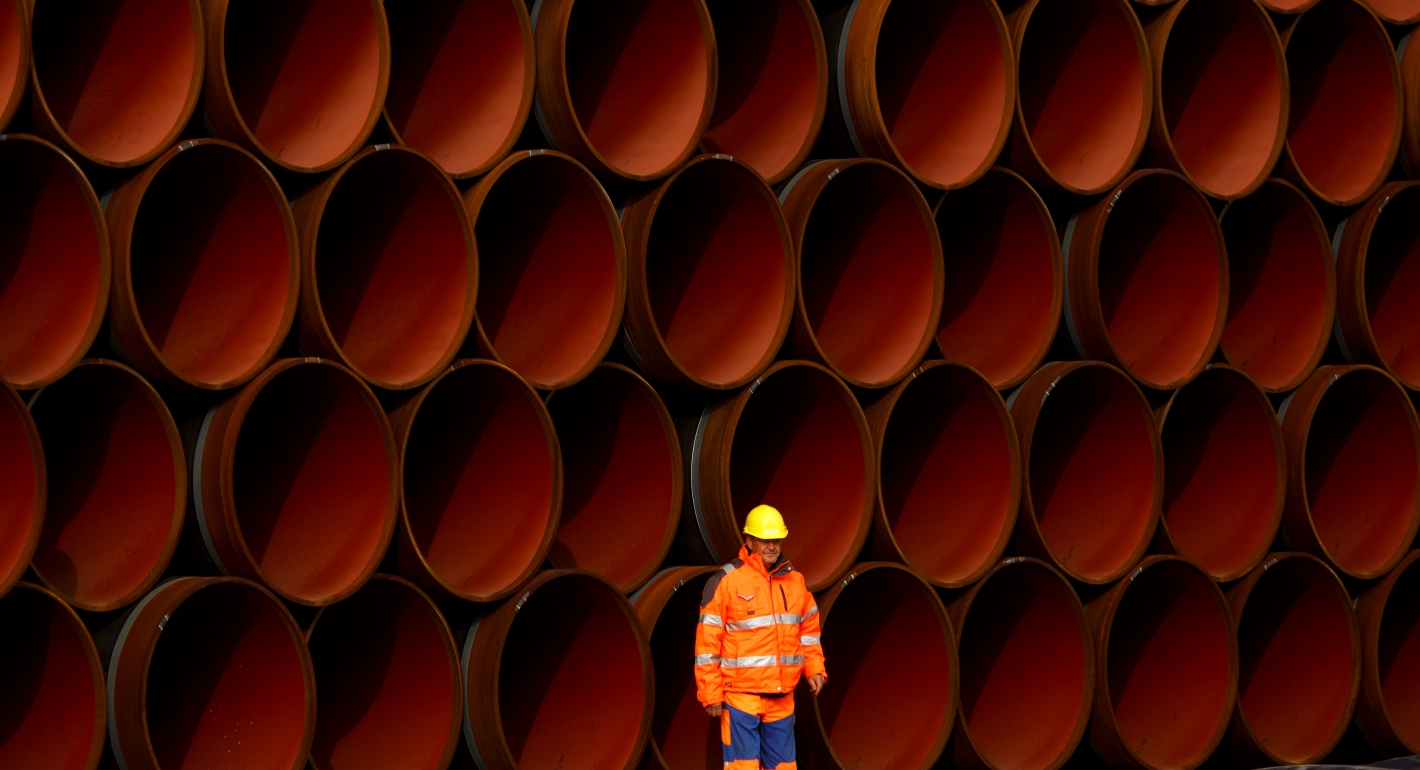
Russia continuously uses energy politics as a foreign policy instrument, thwarting EU diversification efforts, setting foot in the MENA region, and establishing itself as a major supplier of energy to China.
Source: IEMed Mediterranean Yearbook 2019
Since Russian President Vladimir Putin has been in power in Moscow, oil and gas have been an integral part of Russia’s strategy to regain influence on the world stage. Mastering gas supplies to the European Union and thwarting EU diversification efforts have long been key components of this strategy.
Other policy elements have gained importance over the years, such as setting foot in the Middle East and North African (MENA) region and catering for new customers such as China. In addition, in the medium term, the surge of the United States as a major liquefied natural gas (LNG) supplier to the EU will create a new challenge for Moscow.This article was originally published in the IEMed Mediterranean Yearbook 2019.
Senior Fellow, Carnegie Europe
Marc Pierini is a senior fellow at Carnegie Europe, where his research focuses on developments in the Middle East and Turkey from a European perspective.
Recent Work
Marc Pierini
Marc Pierini
Carnegie does not take institutional positions on public policy issues; the views represented herein are those of the author(s) and do not necessarily reflect the views of Carnegie, its staff, or its trustees.
Japan’s long-term security policy is driven by concerns about China, and there is little appetite for (or interest in) pursuing a confrontation with Moscow.

James D.J. Brown
The truth of the strategic situation is that Europe and Russia are extremely unlikely to be able to “turn the page” on their confrontation within the next two decades.
Arkady Moshes
Russia spent years building a “sovereign internet,” concentrating web infrastructure exclusively within Russian territory. Ukrainian drone attacks have shown how vulnerable that approach has left the Russian internet.

Maria Kolomychenko
Putin’s conservative staffing policies and search for ever greater control have cemented parliament’s transformation into a bureaucratic appendage of the executive branch.
Andrey Pertsev

Russia’s AI-driven propaganda campaigns operate in a fragmented, chaotic, and often illogical manner. That’s not necessarily a problem for the Kremlin, though: It’s much easier to mimic genuine public debate that way.

Ilya Klishin