

Commentary
While France and Australia are seeking to establish the legal obligations of messaging apps like Telegram, Russia wants total subordination.
Maria Kolomychenko
{
  "authors": [
    "Rajesh Bansal",
    "Arjun Kang Joseph"
  ],
  "type": "legacyinthemedia",
  "centerAffiliationAll": "",
  "centers": [
    "Carnegie Endowment for International Peace",
    "Carnegie India"
  ],
  "collections": [],
  "englishNewsletterAll": "",
  "nonEnglishNewsletterAll": "",
  "primaryCenter": "Carnegie India",
  "programAffiliation": "",
  "programs": [],
  "projects": [
    "Technology and Society"
  ],
  "regions": [
    "South Asia",
    "India"
  ],
  "topics": [
    "Technology"
  ]
}
Source: Getty
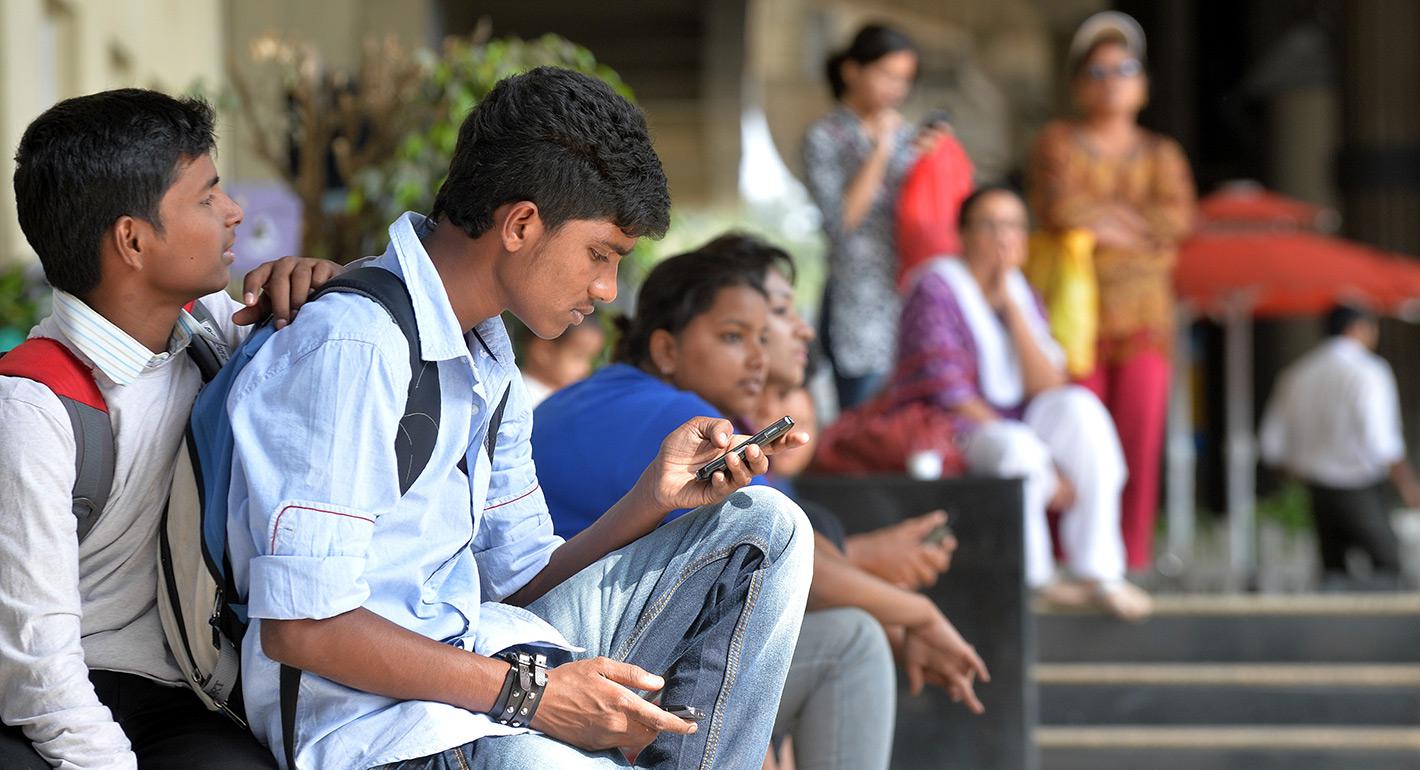
It has been estimated that children and adolescents under the age of 18 account for one in three Internet users around the world.
Source: Hindustan Times
It has been estimated that children and adolescents under the age of 18 account for one in three Internet users around the world. Adolescence is the transitional period during which children mature into young adults, and it is in this time that they acquire knowledge, develop attributes and skills, and, most important, learn to manage emotions and relationships. This also extends to their activity over the Internet and their digital identity. Most children and adolescents tend to use the Internet as a source for entertainment and information, and believe that they have a right to access it. In most cases, they are also aware of the risks of using the Internet, and have a level of consciousness about their right to privacy. However, they seem to be more concerned about their right to privacy being infringed upon by their parents or peers, rather than the State or commercial actors.
This article was originally published by the Hindustan Times.

Former Senior Adviser, Carnegie India
Rajesh Bansal was a senior adviser at Carnegie India. His research focuses on financial technologies, particularly electronic payment systems, electronic cash transfers, and digital financial services to enable inclusive development. He leads the center’s technology and society program.
Former Senior Research Analyst and Co-Convenor, Global Technology Summit, Carnegie India
Arjun Kang Joseph is a senior research analyst with the Technology and Society Program at the Carnegie Endowment for International Peace India. He works primarily on data, privacy, and the intersection of health and technology.
Carnegie does not take institutional positions on public policy issues; the views represented herein are those of the author(s) and do not necessarily reflect the views of Carnegie, its staff, or its trustees.

While France and Australia are seeking to establish the legal obligations of messaging apps like Telegram, Russia wants total subordination.

Maria Kolomychenko

With the growth in points of friction between the great powers, organizations like the SCO will continue to play a role in the strategic adaptation of the smaller powers caught between them.

Temur Umarov

The war in Ukraine and a change in ownership led VK to neglect its commercial ventures in favor of implementing the Kremlin’s online agenda. Now it’s been sanctioned by the EU.
Maria Kolomychenko

When political power is concentrated in the hands of a small circle of people, a country invariably ends up with technological stagnation.

Aleksei Kiselev

With its scattershot approach to enforcing internet censorship, the Russian regime risks losing a battle against the many Russians who have learned to evade online restrictions.
Maria Kolomychenko