

Commentary
This year’s wars have made alternative routes to transit through Russia no less risky for Central Asian countries.
Galiya Ibragimova
{
  "authors": [
    "Firas Abi Nassif",
    "Amer Bisat",
    "Henri Chaoul",
    "Ishac Diwan",
    "Nabil Fahed",
    "Philippe Jabre",
    "Sami Nader",
    "May Nasrallah",
    "Paul Raphael",
    "Jean Riachi",
    "Nasser Saidi",
    "Kamal Shehadi",
    "Maha Yahya"
  ],
  "type": "other",
  "centerAffiliationAll": "dc",
  "centers": [
    "Carnegie Endowment for International Peace",
    "Malcolm H. Kerr Carnegie Middle East Center"
  ],
  "collections": [
    "Arab Spring 2.0",
    "Decoding Lebanon"
  ],
  "englishNewsletterAll": "menaTransitions",
  "nonEnglishNewsletterAll": "",
  "primaryCenter": "Malcolm H. Kerr Carnegie Middle East Center",
  "programAffiliation": "MEP",
  "programs": [
    "Middle East"
  ],
  "projects": [],
  "regions": [
    "Levant",
    "Lebanon",
    "Middle East"
  ],
  "topics": [
    "Economy"
  ]
}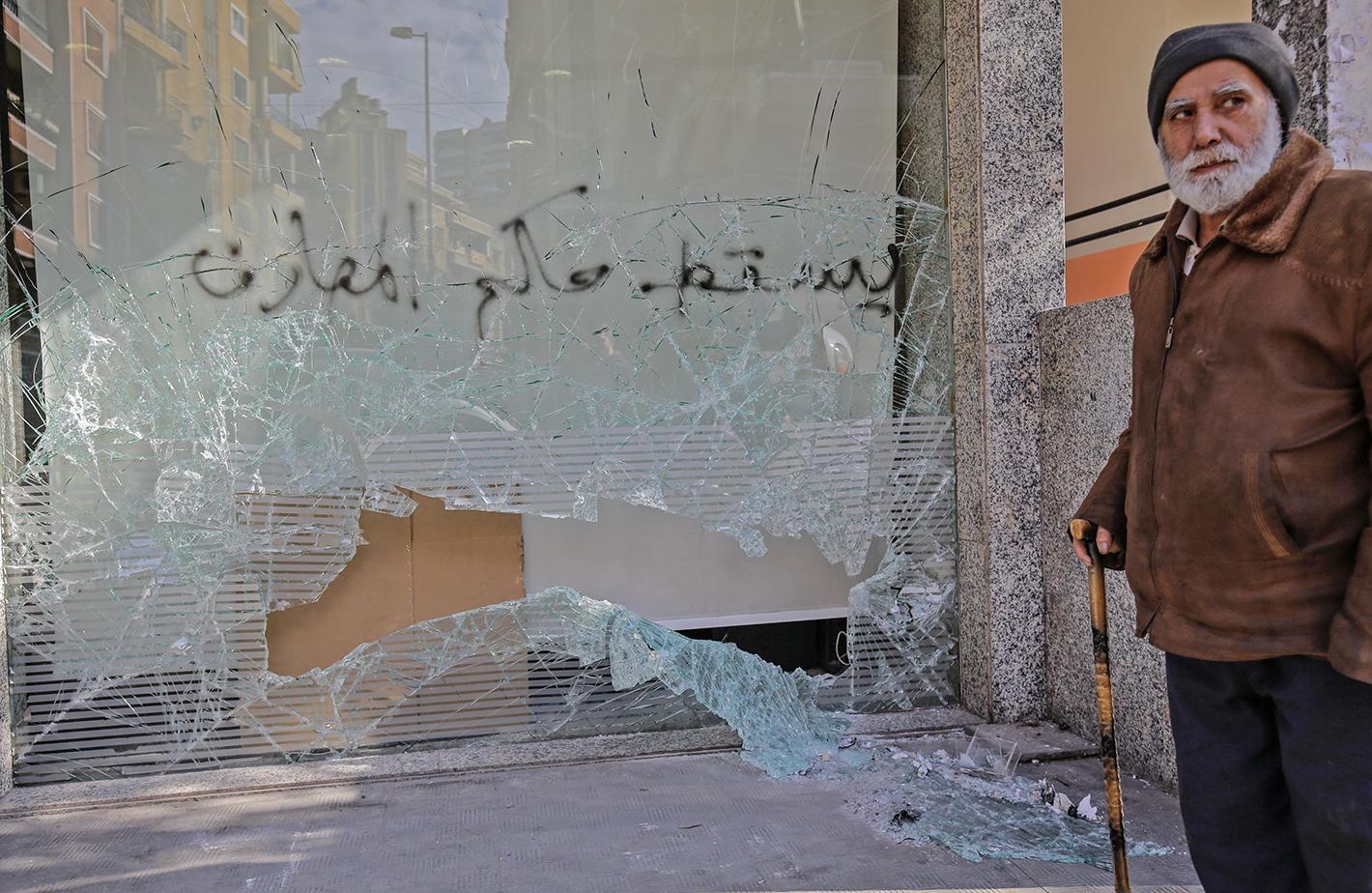
Source: Getty
While appearing to do nothing, policymakers are in fact tacitly responding to the crisis.
Source: A Citizens’ Initiative for Lebanon
This note is the second in a series of analysis by an independent group of citizens who met in their personal capacity in December 2019 to discuss the broad contours of Lebanon's financial crisis and ways forward.
While appearing to do nothing, policymakers are in fact tacitly responding to the crisis. They are doing so by allowing a maxi-devaluation of the LBP, while simultaneously weakening the rights of depositors without imposing pain on bank shareholders, as is legally required. In line with our recently released Ten Point Plan to Avoid a Lost Decade, we call for an immediate stop to these policies, which we argue are socially inequitable and economically inefficient.
The first element of this mix is the steep depreciation of the LBP. The LBP market rate is in free fall, now heading to nearly twice the official rate. While depreciation is necessary to reduce the current account deficit, it has been made much larger than necessary by inaction on the fiscal front. Deteriorating tax collection (down by 40 percent percent already) is generating an additional deficit in the primary balance of about $4 billion. With no other choices available, this will be increasingly financed by the Banque du Liban (BdL) injecting LBP liquidity, thus accelerating inflation and depreciation in the future.
While runaway inflation and devaluation constitute in effect a tax on people's real incomes, the creeping expropriation of deposits extends this effect further to their hard earned savings, even when they had sought protection by saving in dollar accounts, which represent close to 75 percent of deposits.
This started when the BdL left banks to self-manage a soft system of capital controls, which allowed them to sequester small depositors, while some large depositors were able to escape. The BdL also allowed banks to pay for deposit withdrawals from dollar accounts at official LBP rates. The BdL later capped interest on deposits, but not on banks' loans. It also required banks to pay half of the interest on dollar deposits in LBP, again at the official exchange rate.
Given these precedents one would expect "Lirasation" at a discounted exchange rate to continue to expand in the future, first to all the interest, and later to the principal. Indeed, in a recent publicly televised broadcast the Governor of the BdL declared that banks are only obligated to pay depositors in LBP at the official rate, a statement that is not supported by the Code of Commerce or case law.
A rampant "Lirasation" of deposits offers a magic solution to the public debt and banking sector problems. While the value of dollar deposits in banks would be reduced by as much as the LBP, bank assets would be much less affected, because they are largely denominated in dollars (loans to private firms, Eurobonds, and deposits at the BdL). If all deposits are "Lirasised" and the LBP stabilizes at its current rate of 2000LBP/$, we calculate that banks would gain about $50 billion, a massive wealth transfer from depositors to banks' owners.
Devaluation would also wipe out LL denominated sovereign debt, but it would increase the cost of servicing the remaining public debt dominated in dollars (Eurobonds and BDL deposits). However, it will be possible to finance the costs of a necessary restructuring of the remaining debt, held mainly by banks, by using up only part of the massive gain of the banks. At the end, the main burden of debt reduction and banking sector restructuring will be borne by depositors.
The current approach to the debt problem comes at unacceptably high costs:
In the second half of 2001, Argentina went through a similar experience. A sudden stop of inflows led to a bank run. Soon after, deposit withdrawals were sharply curtailed (the “corralito”) and the ARS1/1$ currency peg was abandoned. A law was passed to convert all dollar deposits (which were predominant, as in Lebanon) into pesos at ARS1.4 for $1. The market rate collapsed however to ARS3.9 for $1, reducing the value of dollar deposits by 64 percent. A deep recession followed, with GDP collapsing by 12 percent. But there were two major differences with Lebanon: the banks held little public debt, and the exports improved rapidly. The resulting recession in Lebanon can be expected to be far more destructive, especially that Lebanon's exports are unlikely to rebound as fast as in Argentina.
Creeping Lirasation is also illegal. The Money & Credit Code of 1963 and its various amendments which is the legal framework for money and payments, does not provide a mandate or authority for the Central Bank to force the payment of interest in a different currency than in the deposit contract, let alone to force deposit conversion into LBP at below market rates. Such actions would require the passage of a ‘nationalisation law’ by Parliament and possibly, an amendment of the constitution.
To stop Lirasation, we recommend adopting the market rate as the legal reference for foreign currency deposit repayments. This calls for a mechanism to establish a market rate at all times, similar to the flexible exchange rate regime which characterized Lebanon’s experience from 1949 till 1996 and which allowed it to weather domestic and external shocks.
The 10-point comprehensive plan that we have proposed calls for a quick adjustment in the fiscal accounts to reduce inflationary pressures, especially by curbing corrupt practices. It also calls for an immediate moratorium of debt repayment, and for an orderly reduction of public debt. This would be place the burden on bank equity, and by limiting haircuts to the 0.1 percent of depositors who account for more than 35 percent of all deposits. A well-devised policy package along the lines we recommend will be not only be socially fairer, but it will also lead to a faster recovery.
Firas Abi-Nassif, Amer Bisat, Henri Chaoul, Ishac Diwan, Nabil Fahed, Philippe Jabre, Sami Nader, May Nasrallah, Paul Raphael, Jean Riachi, Nasser Saidi, Kamal Shehadi, Maha Yahya.
Firas Abi Nassif
Amer Bisat
Minister of Economy and Trade of Lebanon
Amer Bisat is the Minister of Economy and Trade of Lebanon.
Henri Chaoul
Ishac Diwan
Research Director at the Finance for Development Lab at the Paris School of Economics, Professor of Practice at the Department of Economics at the American University of Beirut.
Ishac Diwan is the research director at the Finance for Development Lab at the Paris School of Economics, Professor of Practice at the Department of Economics at the American University of Beirut.
Nabil Fahed
CEO, Fahed Group, Vice Chairman/Treasurer of the Chamber of Commerce of Beirut
Nabil Fahed is the CEO of the Fahed Group and serves as the Vice Chairman/Treasurer of the Chamber of Commerce of Beirut.
Philippe Jabre
Sami Nader
Director of the Institute of Political Science at Saint Joseph University.
Sami Nader is the director of the Institute of Political Science at Saint Joseph University.
May Nasrallah
Paul Raphael
Jean Riachi
Nasser Saidi
Nasser Saidi is a former Lebanese Minister of Economy & Trade, Minister of Industry, and First Vice-Governor of Banque du Liban.
Kamal Shehadi
Minister of State for Technology and Artificial Intelligence and Minister of the Displaced of Lebanon
Kamal Shehadi is the Minister of State for Technology and Artificial Intelligence and Minister of the Displaced of Lebanon.

Director, Malcolm H. Kerr Carnegie Middle East Center
Maha Yahya is director of the Malcolm H. Kerr Carnegie Middle East Center, where her research focuses on citizenship, pluralism, and social justice in the aftermath of the Arab uprisings.
Carnegie does not take institutional positions on public policy issues; the views represented herein are those of the author(s) and do not necessarily reflect the views of Carnegie, its staff, or its trustees.

This year’s wars have made alternative routes to transit through Russia no less risky for Central Asian countries.

Galiya Ibragimova

A much-discussed disagreement over internet restrictions in Russia was never an existential threat for Putin: It was about elite groups protecting their interests.

Alexandra Prokopenko

The demands of the Kremlin’s war in Ukraine, demographic problems, and public hostility toward Central Asians mean Russia does not have enough workers.

Salavat Abylkalikov
Minsk’s faith in the future of its larger neighbor’s economy is fading as Belarusian firms in Russia see record losses.

Olga Loiko
The cost of air defense has become an unregistered tax on revenue for businesses. While military rents are consolidated in the federal budget, the costs of defense are being spread across the balance sheets of companies and regional governments.
Alexandra Prokopenko