

Commentary
Yukon Huang, Isaac B. Kardon, Matt Sheehan
{
  "authors": [
    "Yukon Huang"
  ],
  "type": "commentary",
  "centerAffiliationAll": "dc",
  "centers": [
    "Carnegie Endowment for International Peace"
  ],
  "collections": [
    "Coronavirus"
  ],
  "englishNewsletterAll": "asia",
  "nonEnglishNewsletterAll": "",
  "primaryCenter": "Carnegie Endowment for International Peace",
  "programAffiliation": "AP",
  "programs": [
    "Asia"
  ],
  "projects": [],
  "regions": [
    "East Asia",
    "China"
  ],
  "topics": [
    "Economy",
    "Trade"
  ]
}
Source: Getty
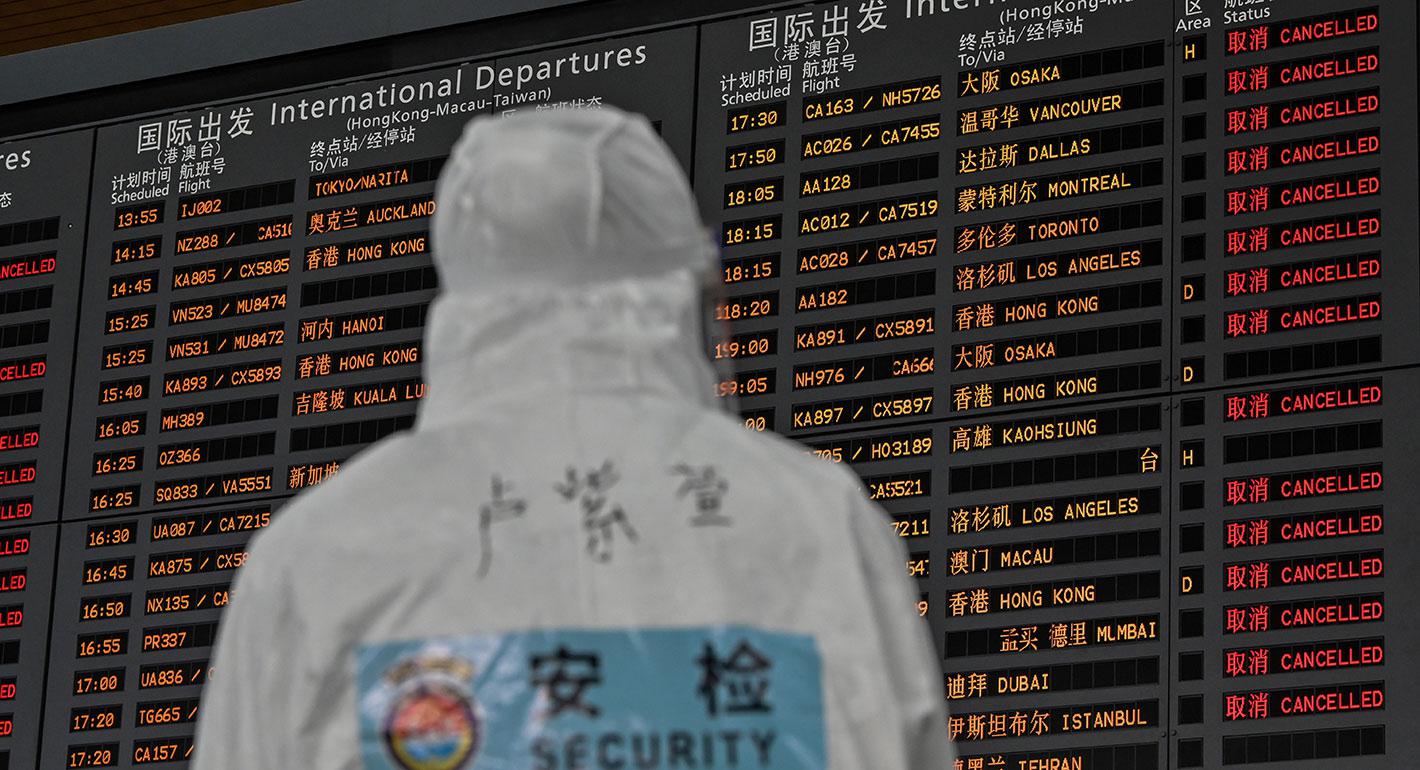
China’s producers hope to restore capacity in the weeks ahead, but sagging demand in export markets could hold back economic recovery.
China’s leadership expected that economic growth in 2020 would be a celebratory event, marking a doubling of the economy’s size over the past decade. The new coronavirus, however, has obliterated those forecasts.
Beijing’s draconian measures brought the epidemic under control sooner than anticipated. Although the extent and speed of the virus’s spread paralyzed Chinese society, the nationwide shutdown led to the epidemic’s slowdown in mid-February. On March 10, Chinese President Xi Jinping took a victory lap by visiting the epicenter of Wuhan, capital of Hubei Province. By March 19, the number of new domestically driven cases fell to zero. All other new cases were recent returnees who found it safer to be in China than in Europe, the epidemic’s new epicenter, or the United States, where the spread of the virus is accelerating.
Yet the economic damage to China is severe, and its prospects for recovery—even with massive financial support—remain uncertain. Sustainably restoring China’s productive capacity in the coming weeks would require an unlikely revival of U.S. demand. China’s recently announced economic indicators for January and February were much weaker than market watchers had forecast. Year over year, retail sales fell by 20.5 percent and industrial production by 13.5 percent—China’s worst numbers on record.
The prolonged containment effort has left hundreds of millions of migrant workers unable to return to work, and factories are now struggling to get back to full capacity given the shortages of labor and essential parts. Analysts have downgraded their outlook for the Chinese economy and consider a historic contraction in the first quarter nearly guaranteed. Even with a major fiscal stimulus and interest rate cuts, estimates for 2020 growth vary from 1 percent to 4 percent against the original target of 6 percent.
By contrast, the 2002–2003 economic recovery from the SARS virus was V-shaped, as China made up the entirety of its short-term losses by quickly tapping strong consumer demand in the West. China was relatively unaffected by the 2008 financial crisis, when global production and supply networks continued to function, enabling it to maintain rapid growth.
While China’s economy is slowly restarting, major European economies are in turmoil and the United States is still in the early stages of ramping up its response with unprecedented fiscal measures. China will likely struggle to find enough customers across the West, and emerging markets elsewhere are simply not large enough to compensate. Affected sectors include automobiles, as major Western companies have closed down production, and communications equipment, as supply chains have been disrupted.
The outbreak will likely force a reexamination of the logic underpinning the U.S. administration’s extensive use of tariffs to pressure China on trade and investment reforms. The phase one trade deal concluded in January is now inoperative, since there is no possibility that China can meet its agreement to purchase vast quantities of American goods this year. More importantly, the U.S. strategy to pair tariffs with trade restrictions is incompatible with new priorities, such as ensuring producers have access to necessary parts. For better and for worse, the global economy is based on connectivity. The revival of world trade and well-functioning supply networks is essential to resuscitating growth in both China and the West.

Senior Fellow, Asia Program
Huang is a senior fellow in the Carnegie Asia Program where his research focuses on China’s economy and its regional and global impact.
Recent Work


Yukon Huang, Isaac B. Kardon, Matt Sheehan
Yukon Huang, Genevieve Slosberg

Depleted financial reserves and a shrinking tax base mean it is no longer possible to simultaneously deliver high defense spending, price stability, and economic growth.

Alexandra Prokopenko

With the growth in points of friction between the great powers, organizations like the SCO will continue to play a role in the strategic adaptation of the smaller powers caught between them.

Temur Umarov

When faced with fuel shortages in the past, Central Asian governments could always count on additional supplies from Moscow. That safety net no longer exists.

Galiya Ibragimova
Russia looks set to reap economic benefits from closer ties with Southeast Asian countries that are keen to find reliable energy suppliers and diversify trade ties.

Alexander Gabuev
If it proves impossible for the Russian authorities to avoid a gasoline deficit, the question then becomes how they will organize the distribution of a scarce resource.

Sergey Vakulenko