

Commentary
H. A. Hellyer
{
  "authors": [
    "H. A. Hellyer"
  ],
  "type": "legacyinthemedia",
  "centerAffiliationAll": "dc",
  "centers": [
    "Carnegie Endowment for International Peace"
  ],
  "collections": [],
  "englishNewsletterAll": "menaTransitions",
  "nonEnglishNewsletterAll": "",
  "primaryCenter": "Carnegie Endowment for International Peace",
  "programAffiliation": "MEP",
  "programs": [
    "Middle East"
  ],
  "projects": [],
  "regions": [
    "North America",
    "Middle East",
    "Eastern Europe",
    "Western Europe"
  ],
  "topics": [
    "Religion"
  ]
}
Source: Getty
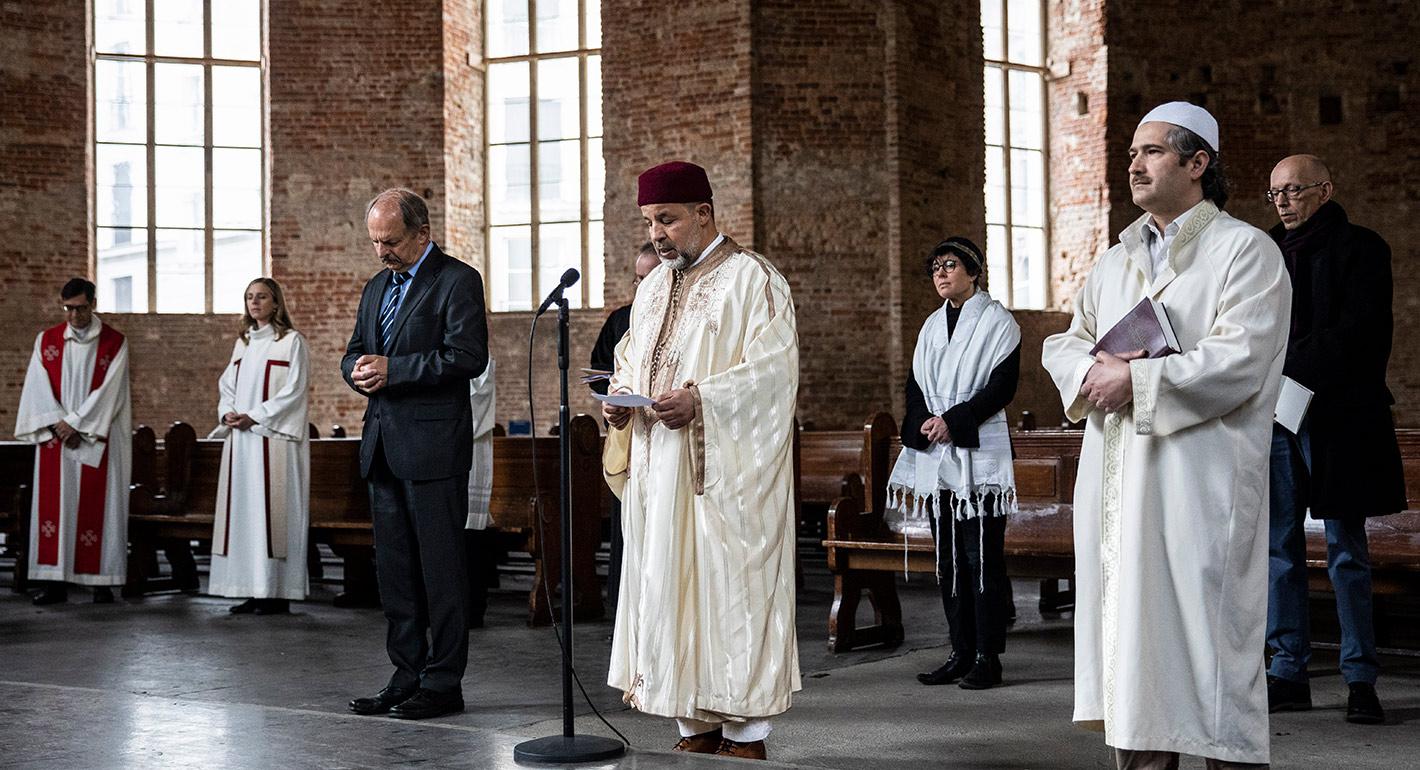
It is wholly understandable why believers want to return to churches, mosques, temples, and synagogues for congregational prayer and spiritual comfort. But that doesn’t mean religious leaders have to act irresponsibly.
Source: Foreign Policy
Until a vaccine to inoculate against the coronavirus is found, governments around the world will impose a variety of measures to adjust to this temporary normal. Beyond the worldly question of restarting a country’s economy is a spiritual question about the necessity of opening places of worship. Earlier this month, the British government announced a limited reopening of places of worship in England, and there is increasing pressure on governments to go even further.
But these calculations need to be made very carefully. As someone who has contracted the coronavirus myself along with most of my family, I’m worried that many countries are not as ready for reopening as they seem to think they are.
It is wholly understandable why believers want to return to churches, mosques, temples, and synagogues for congregational prayer and spiritual comfort. But that doesn’t mean religious leaders have to act irresponsibly.
In the space of a few days earlier this month, my entire household appeared to have COVID-19. Not all of us were tested, but most of us showed the same symptoms. As the science shows, the disease is incredibly infectious—and can pass through a family like wildfire. For elderly family members, it was far more concerning—and we still aren’t out of the woods.
It is wholly understandable why believers want to return to churches, mosques, temples, and synagogues for congregational prayer and spiritual comfort. But that doesn’t mean religious leaders have to act irresponsibly.
This disease is not something to be taken lightly. And yet, leaders like U.S. President Donald Trump, and several religious leaders, are keen to reopen places of worship without restrictions—for reasons ranging from the sacred to the profane. Or to put it more bluntly, for electoral benefit by playing on populist desires. Many people of faith are asking, reasonably: If malls and shops can open, then why can’t places of worship open too?
It’s not an unfair request. Many believers of all faiths are deeply connected to their places of worship. Over the course of the last couple of months, religious people and their leaders have been feeling the pain of being separated from those places. And now that other restrictions are being relaxed, they’re demanding the same relaxation on places of worship.
There are really two primary factors at play. The first is that economic restrictions are being lifted not because the public health safety issues have changed but because the economic cost of keeping those restrictions in force are beginning to overtake those risks, at least in the minds of government officials. One needn’t second-guess them in this regard, because the truth is that economic health is deeply connected to public health; if fewer people suffer from COVID-19 than from going hungry due to the economy shutting down, that’s a serious consideration.
When it comes to places of worship, however, the same calculations don’t apply. All people of faith know that the divine is not limited to a certain space—and worship can be adjusted in order to make all situations, including difficult ones like this, work. Congregational prayers in mosques, for example, in the Islamic tradition, can be suspended for many reasons—including for public health reasons. There is even an ancient practice of adding a line in the daily calls to prayer that urge the faithful to pray in their homes.
All people of faith know that the divine is not limited to a certain space—and worship can be adjusted in order to make all situations, including difficult ones like this, work.
It’s why, for example, the weekly Friday congregational prayer for Muslims was formally more or less suspended as an obligation in most Muslim-majority communities worldwide—even the Eid prayer following Ramadan followed that pattern—and believers were reminded by their religious leaders that their spiritual recompense would be the same. Indeed, placing undue importance on these physical places of worship is imbalanced and wrong.
Secondly, there are some situations in which restrictions on places of worship can be lifted— even right now. New Zealand and Taiwan, for example, have lifted many of the restrictions on churches because the risks have diminished tremendously owing to their success in battling the outbreak. In other countries, where the risks are not as low, other places of worship are arranging congregational communal prayer, but with very careful measures being implemented, often meaning that they pray in parking lots with social distancing enforced.
But all of this requires people to take responsibility for enforcing certain measures. It does mean enforcing social distancing measures without exception, ensuring people always wear masks, decontaminating places of worship thoroughly and regularly (which is costly), and so on.
This places huge responsibilities upon the administrators of places of worship. And it’s likely that they will not want to take up the full gambit of duties and expenses that cautious reopening requires. Rather, they’re more likely to shift those responsibilities to individual worshippers and congregants. Mosques would ask for worshippers to bring their own individual prayer mats, without being able to enforce it. Churches would have to pay the costs for sanitizing their pews, without necessarily having the budget to do so. And the list goes on.
When it comes to resuming group prayer, there is an overriding ethical-spiritual consideration: the protection of life—and particularly the lives of the most vulnerable. That includes the elderly who wish to come and pray in these buildings, but it also includes the elderly who remain at home, but who are cared for by those younger people who do want to come and pray.
When it comes to resuming group prayer, there is an overriding ethical-spiritual consideration: the protection of life—and particularly the lives of the most vulnerable.
Places of worship would have to be prepared for young people who go to places of worship, encounter others who are not distancing, and then return home to infect their elderly parents. It’s difficult to see how religious establishments are going to be able to choose who can attend prayers and who can’t—let alone where responsibility will lie if the choices are made poorly, with possibly deadly effects.
For the time being, places of worship in England will be open only for “private prayer,” which means that congregational prayer is off the table, but it’s possible that all places of worship in England may be open from July 4, at least as the government restrictions are concerned.
But just because government restrictions are lifted, it doesn’t mean religious leaders are under the obligation to fling open the gates. Religious leaders do not need to be—nor should they be—concerned with economic issues when considering the opening of their religious spaces. Rather, their concern ought to be focused purely on the health and safety of those attending those spaces.
This isn’t a permanent situation. At some point soon, there will be more effective treatments, and hopefully a vaccine so that a critical mass of people can be immunized from this virus. When that time comes, those who administer places of worship can feel secure in knowing they lived up to their responsibilities to their congregants. But most countries aren’t there yet—and until they are, religious leaders need to think very carefully about whether individual places of worship can open safely. To get this wrong is, quite literally, a matter of life and death.
Former Nonresident Scholar, Middle East Program
Dr. H.A. Hellyer was a nonresident scholar at the Carnegie Endowment for International Peace. He serves as a senior associate fellow at the Royal United Services Institute for Defence and Security Studies in London, and as a Cambridge University fellow.
Recent Work
H. A. Hellyer
H. A. Hellyer
Carnegie does not take institutional positions on public policy issues; the views represented herein are those of the author(s) and do not necessarily reflect the views of Carnegie, its staff, or its trustees.

If the Russian-speaking community in Latvia cannot articulate their interests without being seen as disloyal, they could end up embracing a pro-Kremlin agenda.

Sergejs Potapkins
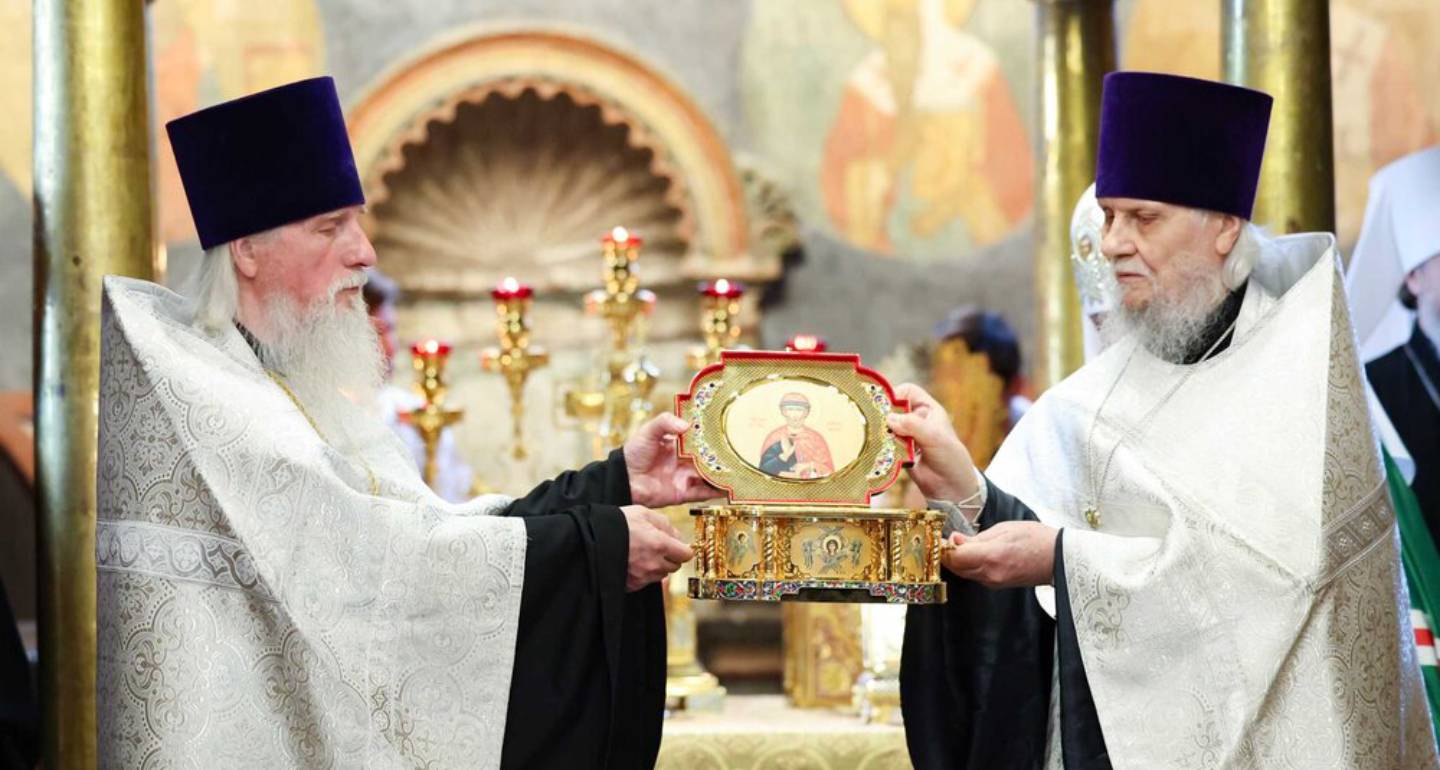
The recent uncovering of Dmitry Donskoy’s relics in the Cathedral of the Archangel is yet another attempt by the Russian Orthodox Church to help the state solve its problems. However, parroting the state’s version of Russian history leaves the Church with no message except “patriotism.”
Alexander Zanemonets
This year’s wars have made alternative routes to transit through Russia no less risky for Central Asian countries.

Galiya Ibragimova
Governments in Estonia, Latvia, and Lithuania want to ensure that a U.S. military withdrawal would not leave them dangerously exposed to a Russian attack.
Sergejs Potapkins
Not only does the fighting jeopardize regional security, it undermines Russian attempts to promote alternatives to the Western-dominated world order.
Ruslan Suleymanov