

Commentary
Putin’s conservative staffing policies and search for ever greater control have cemented parliament’s transformation into a bureaucratic appendage of the executive branch.
Andrey Pertsev
{
  "authors": [
    "Ishac Diwan",
    "Nadim Houry",
    "Yezid Sayigh"
  ],
  "type": "other",
  "centerAffiliationAll": "dc",
  "centers": [
    "Carnegie Endowment for International Peace",
    "Malcolm H. Kerr Carnegie Middle East Center"
  ],
  "collections": [
    "Coronavirus"
  ],
  "englishNewsletterAll": "menaTransitions",
  "nonEnglishNewsletterAll": "",
  "primaryCenter": "Malcolm H. Kerr Carnegie Middle East Center",
  "programAffiliation": "MEP",
  "programs": [
    "Middle East"
  ],
  "projects": [],
  "regions": [
    "Egypt",
    "North Africa"
  ],
  "topics": [
    "Political Reform"
  ]
}
Source: Getty
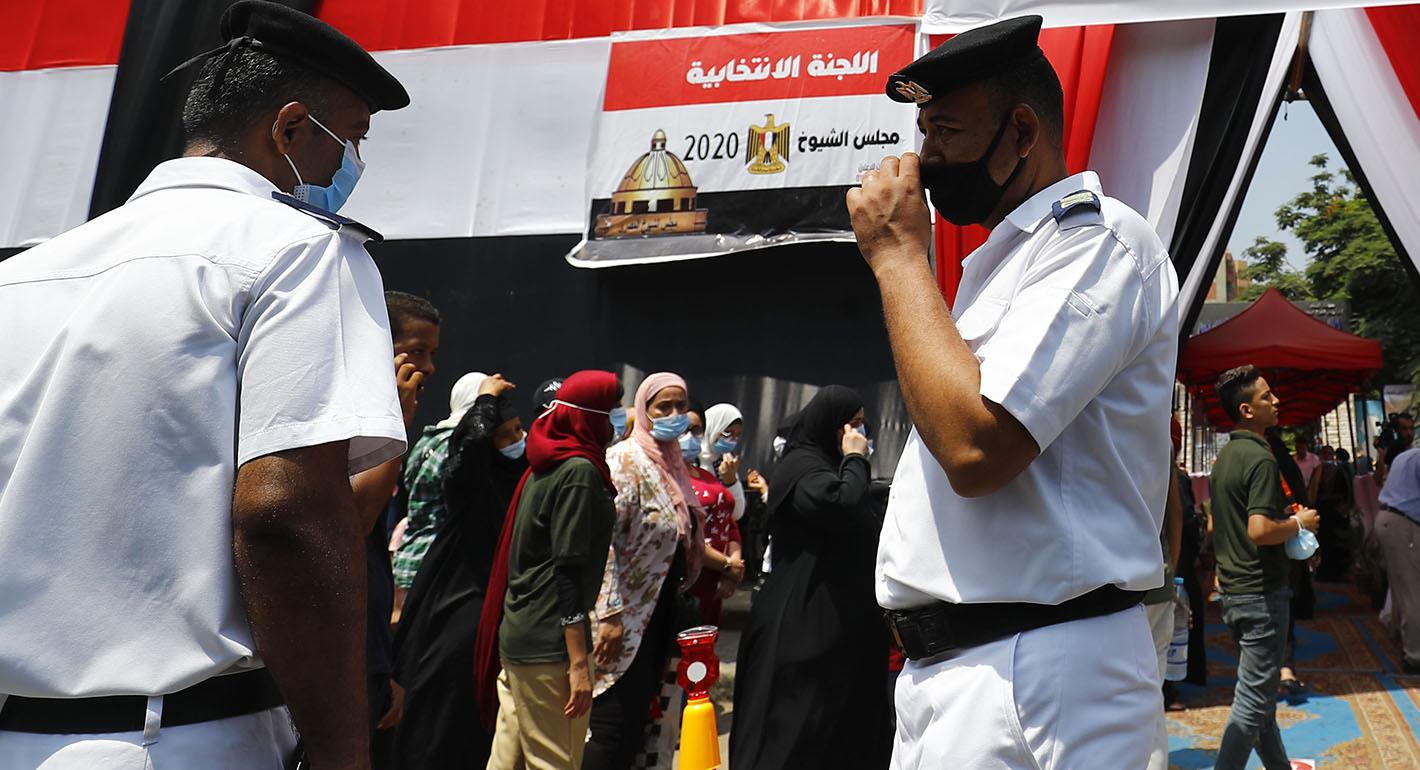
Egypt’s recent security and macro-economic stabilization has been built on weak foundations and Covid-19 has further exposed this fragility.
Source: The Arab Reform Initiative
President Sisi has managed a successful security and macro-economic stabilization, but it has been built on weak foundations. Economically, he has relied on the military and the public sector to become the engines of growth and has been unable, or unwilling, to elicit a private sector supply response. His reforms have also come at a great social cost with poverty and precarious employment increasing.
The external shock due to Covid-19 has now hit all the sources of foreign exchange (FX) in Egypt: tourism, remittances, Foreign Direct Investment (FDI), gas export, and international capital flows. On economic and social grounds, Egypt’s stability now appears brittle - resilient on the surface but fragile underneath. Can the current governance and economic model evolve to sustain stability in Egypt following the current Covid-19 crisis?
We argue below that while Egypt's financial prospects had improved after its successful 2016 stabilization, led by the IMF, it was insufficient to deal with the long term fundamental problems confronting the economy, and like previous stabilization efforts, have only provided Egypt with a window of a few years to implement deeper reforms. Post-Covid-19, this window has become much tighter. The economy is now at a serious risk of unravelling in the medium term if the key fundamentals – the economy, social conditions, and politics – do not improve. Accumulating foreign debt to push the problems away will only compound existing imbalances to the point of becoming insurmountable in the future.
Egypt is now back to square one, in a situation broadly similar to that before the 2011 revolution: stable on the surface, but with deep structural problems and simmering social grievances, and buffers available to mitigate them depleting. We discuss in this note the three main sources of vulnerability that expose Egypt to a possible blowout. These are: a macro stabilization with no private sector supply response, the militarization of its economy and the weakening of its civilian component, and the absence of a pressure valve and political space to absorb the deteriorating social conditions and rise of discontent. In order to make Egypt's growth path more resilient in the future, and in a post-Covid-19 world, some of these tensions will need to start being released. To do so will require an inflexion in the ways the country is currently governed that favour greater openness in markets as well as politics, and encouragement by the international community to finally start addressing its long-term challenges head-on. Misusing this crisis, as has repeatedly happened before, can this time around usher the beginning of the unravelling of the country.
This paper was originally published by The Arab Reform Initiative.
Ishac Diwan
Research Director at the Finance for Development Lab at the Paris School of Economics, Professor of Practice at the Department of Economics at the American University of Beirut.
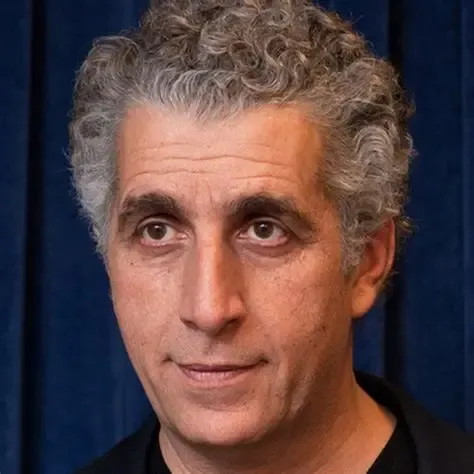
Ishac Diwan is the director of research at the Finance for Development Lab, Paris School of Economics and a professor at the American University of Beirut.
Nadim Houry
The executive director of the Arab Reform Initiative.
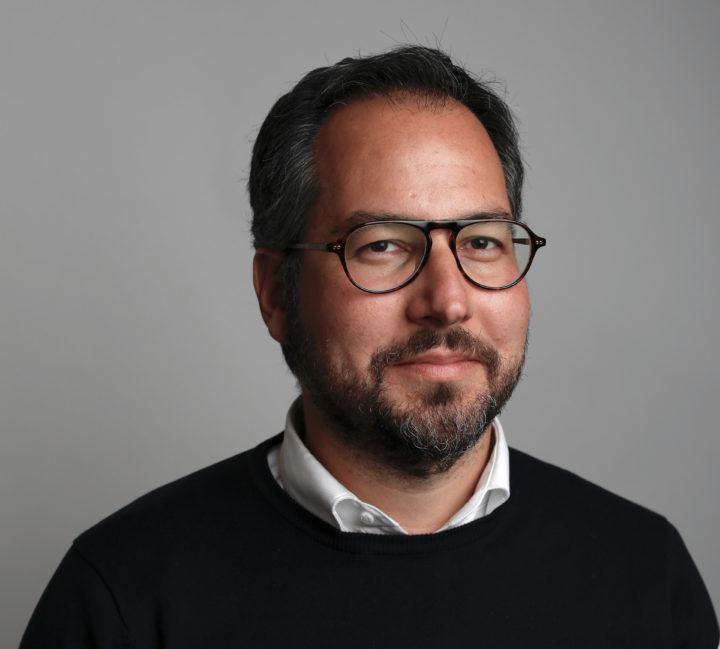
Nadim Houry is the executive director of the Arab Reform Initiative. Previously, he was at Human Rights Watch where he opened and ran the Beirut office, before taking on the role of director of HRW’s Terrorism and Counter-Terrorism Program.

Senior Fellow, Malcolm H. Kerr Carnegie Middle East Center
Yezid Sayigh is a senior fellow at the Malcolm H. Kerr Carnegie Middle East Center in Beirut, where he leads the program on Civil-Military Relations in Arab States (CMRAS). His work focuses on the comparative political and economic roles of Arab armed forces, the impact of war on states and societies, the politics of postconflict reconstruction and security sector transformation in Arab transitions, and authoritarian resurgence.
Carnegie does not take institutional positions on public policy issues; the views represented herein are those of the author(s) and do not necessarily reflect the views of Carnegie, its staff, or its trustees.

Putin’s conservative staffing policies and search for ever greater control have cemented parliament’s transformation into a bureaucratic appendage of the executive branch.

Andrey Pertsev

Ex-president Gurbanguly Berdimuhamedov remains interested in politics, but his son Serdar, Turkmenistan’s current president, is becoming increasingly independent and willing to break with his father’s legacy. If their covert rivalry goes too far, both risk losing power.

Galiya Ibragimova

Sergei Kiriyenko used Russia’s parliamentary vote to further hone his strategy of corporate mobilization that is designed to maximize votes for United Russia.
Andrey Pertsev

The European far right might fail to steer EU policy in the direction Russia wants, but they will create enough chaos inside Europe to benefit the Kremlin.

Dimitar Bechev

If the Russian-speaking community in Latvia cannot articulate their interests without being seen as disloyal, they could end up embracing a pro-Kremlin agenda.

Sergejs Potapkins