

Research
Steve Feldstein, Shreya Joshi
{
  "authors": [
    "Steve Feldstein"
  ],
  "type": "questionAnswer",
  "centerAffiliationAll": "dc",
  "centers": [
    "Carnegie Endowment for International Peace"
  ],
  "collections": [
    "Tech and Democracy"
  ],
  "englishNewsletterAll": "democracy",
  "nonEnglishNewsletterAll": "",
  "primaryCenter": "Carnegie Endowment for International Peace",
  "programAffiliation": "DCG",
  "programs": [
    "Democracy, Conflict, and Governance"
  ],
  "projects": [],
  "regions": [],
  "topics": [
    "Democracy",
    "Global Governance",
    "Technology"
  ]
}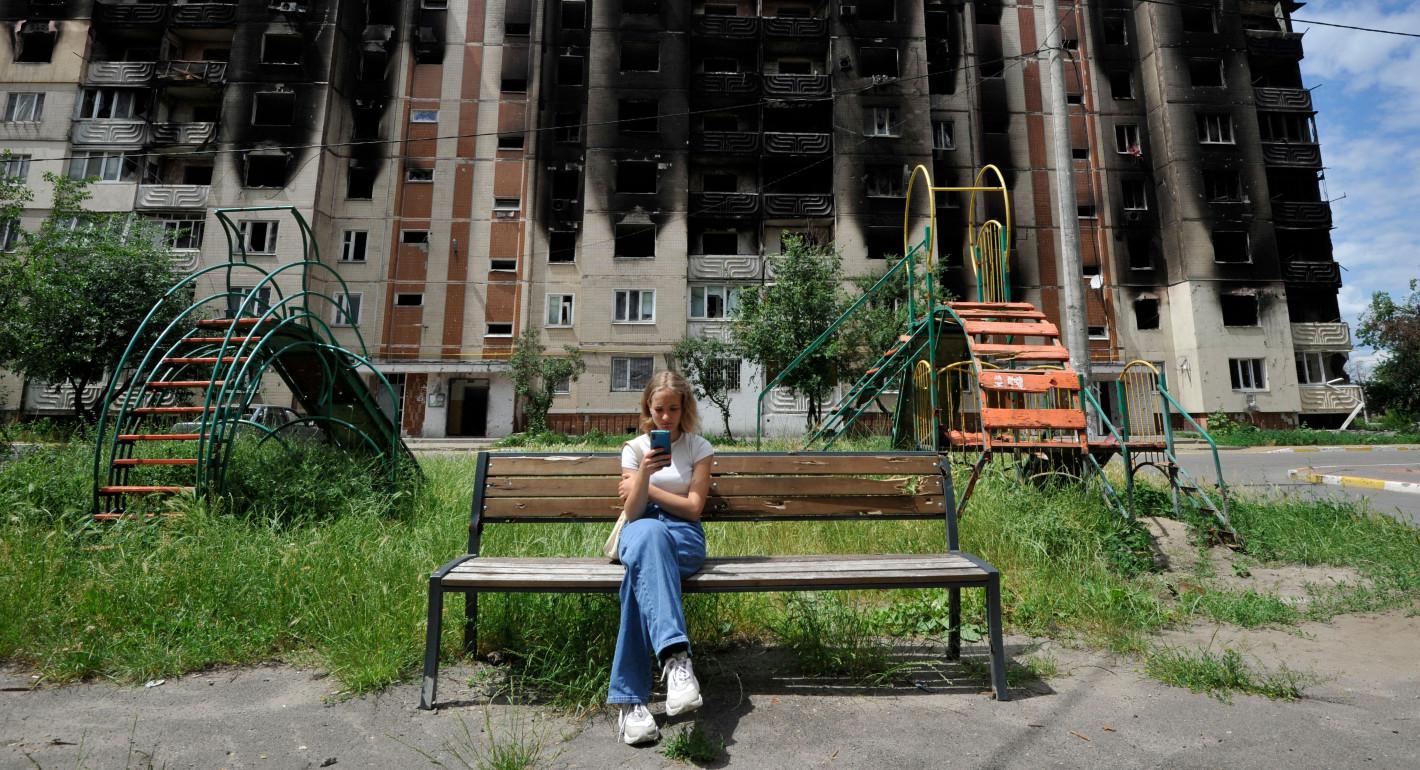
Source: Getty
“There is little doubt that technology is unleashing fundamental changes in society and reshaping the relationship between citizen and state.”
On Tuesday, Carnegie senior fellow Steven Feldstein was awarded the 2023 Grawemeyer Award for Ideas Improving World Order for his book, The Rise of Digital Repression: How Technology is Reshaping Power, Politics, and Resistance. Below, he answers questions about the award and how his book’s message has shifted since publication.
How did you become interested in this intersection of technology, power, and politics?
In my previous work at the U.S. State Department’s democracy, human rights, and labor bureau, I saw firsthand how governments were deploying and manipulating technology to advance their own interests. It was a far cry from the early 2010s, when experts celebrated the advent of “liberation technologies” and cheered as social media–fueled revolutions overturned longstanding dictatorships in the Middle East and elsewhere. Then the tables turned. Governments had learned their lessons and were deploying the very same digital tools to suppress opposition movements, monitor and track dissidents, and censor journalists. Around the world, from China and Russia to India and Ethiopia, states have developed new capacities to harness advanced technologies against their citizens. As I became aware of these developments, I wanted to better understand the effect of digital repression strategies on international politics and the global struggle for democracy.
The Grawemeyer Award for Ideas Improving World Order is bestowed for scholarship that could lead to a more just and peaceful world. How does your book advance that cause?
There is little doubt that technology is unleashing fundamental changes in society and reshaping the relationship between citizen and state. I believe that the first step to responding to these challenges is to better understand the nature and scope of the problem. That’s the overarching goal of the book—to make sense of digital repression, break down the concept logically, and use that as a basis for advancing a more just, accountable, and peaceful world.
In recent weeks, we’ve seen widespread protests in Iran and China, two countries with strong digital repression regimes. Based on your research, how would you advise citizens to navigate their authoritarian governments’ censorship?
Protesters in both countries face an uphill climb when it comes to breaking the power of their authoritarian regimes. There have been some limited successes—in China, for example, authorities have begun to roll back Zero COVID policies as a result of mass demonstrations. But the deck remains stacked against protesters. Both countries have invested significant resources in building imposing surveillance and censorship capabilities. While these tools haven’t quelled the protests—particularly in Iran—they have made it harder to mobilize citizens and have alleviated pressure against both regimes.
In the long run, protesters face significant risks. Mass surveillance methods will help police identify participants, and there is no indication that security forces will hesitate to imprison individuals who challenge their respective governments. While options are limited, there are a few steps democracies can take: helping protesters communicate safely and securely through tools such as encrypted apps or providing internet censorship circumvention tools, such as VPNs, to break the information stranglehold.
What’s changed since your book went to press? Any updates you wish you could include?
Probably the biggest development since the publication of the book has been Russia’s invasion of Ukraine. The conflict has highlighted the central role of digital technology in war. It has shown that technology companies can no longer stay on the sidelines of geopolitics. Instead, Silicon Valley’s fingerprints are visible in every aspect of the war.
As I have written for Carnegie and in Foreign Policy—and, more recently, in War on the Rocks—information and communications technologies are transforming the battlefield. Digital technology has allowed ordinary citizens to push back against Moscow’s forces. Ukrainians are using crowdsourcing apps to identify Russian tanks or conduct cyber operations against Russian targets. Individuals from around the world are conducting open-source investigations and scouring the internet for digital forensic evidence to document war crimes.
Big Tech firms are also in on the game. They are blocking access to Russian propaganda outlets and prohibiting Russian state media from running ads. Starlink satellite dishes are helping Ukraine maintain internet connectivity (and serving as a crucial communications link for Ukraine’s drones). Microsoft is playing a vital role in supporting Ukraine and NATO countries to counteract Russian cyber attacks.
These developments not only showcase the unique role information and communications technologies are playing on the battlefield, but they also raise complicated questions about the limits of international law and the future impact of technology on society.
What would you most like policymakers to take away from your book and this award?
One of my goals for the book is to underscore for policymakers how autocrats have adapted and modernized their toolkits to suppress dissent and ensure their political survival. Democracies face huge challenges in counteracting the global authoritarian wave. The level of technological innovation among authoritarian regimes is stunning—whether describing AI-enabled surveillance in Xinjiang, networked disinformation in the Philippines, or spyware operations in Saudi Arabia. I hope this book serves as a wakeup call for democracies and motivates serious thinking about how to respond to the threat of digital repression.

Director and Senior Fellow, Democracy, Conflict, and Governance Program
Steve Feldstein is a senior fellow and director of the Democracy, Conflict, and Governance Program at the Carnegie Endowment for International Peace. His research focuses on technology, national security, the global context for democracy, and U.S. foreign policy.
Recent Work
Steve Feldstein, Shreya Joshi
Steve Feldstein
Carnegie does not take institutional positions on public policy issues; the views represented herein are those of the author(s) and do not necessarily reflect the views of Carnegie, its staff, or its trustees.

Russia’s AI-driven propaganda campaigns operate in a fragmented, chaotic, and often illogical manner. That’s not necessarily a problem for the Kremlin, though: It’s much easier to mimic genuine public debate that way.

Ilya Klishin

Cargo traffic through Russia’s Northern Sea Route has increased because of the disruption caused by the conflict in the Middle East, the Ukraine war, and U.S.-China tensions.

Mikhail Korostikov

Trump has promised Belarus a massive potash deal. But Minsk is seeking something greater: restored Western transit and greater room for maneuver from Russia.

Balázs Jarábik

Minsk clearly expected the dialogue with Washington to yield more results, in particular the lifting of EU sanctions and permission to export potash.

Artyom Shraibman
While France and Australia are seeking to establish the legal obligations of messaging apps like Telegram, Russia wants total subordination.

Maria Kolomychenko