

Commentary
The war in Ukraine and a change in ownership led VK to neglect its commercial ventures in favor of implementing the Kremlin’s online agenda. Now it’s been sanctioned by the EU.
Maria Kolomychenko

REQUIRED IMAGE
In the Byzantine twilight of Russian political life it is ironically now the Communists (long-time treaty detractors) who seem ready to give the green light for the ratification of the START II treaty. The recent ascendancy of several prominent Communists into the cabinet of Prime Minister Yevgeny Primakov has turned the tide in favor of ratification.
Source: Carnegie
In the Byzantine twilight of Russian political life it is ironically now the Communists (long-time treaty detractors) who seem ready to give the green light for the ratification of the START II treaty. The recent ascendancy of several prominent Communists into the cabinet of Prime Minister Yevgeny Primakov has turned the tide in favor of ratification. Prime Minister Primakov and First Vice Prime Minister Yuriy Maslyukov personally lobbied members of the Communist-led Russian Duma – the lower house of the Russian Parliament – to ratify the treaty during closed hearings on November 10, 1998. Following these increased efforts, chances for the approval of the treaty by the Duma sometime in December are now higher than ever before.
START II was signed in January 1993 amidst the honeymoon of post-Cold War relations between the United States and Russia. Its provisions require both sides to reduce their massive deployed strategic nuclear forces by almost half — to a level of 3,000-3,500 deployed warheads each. (The United States still plans to retain a total stockpile of some 10,000 nuclear weapons, though, even as the number of deployed weapons shrinks.) The U.S. Senate ratified the treaty in 1996. The Russian Duma, in contrast, has shelved it for more than three years since President Yeltsin formally submitted it for ratification in June 1995.
The Road Ahead
Just six months ago the Duma majority would not even consider a formal discussion of the treaty, but in November these same deputies agreed to accelerate the process considerably. Now they debate not just the notion of ratification, but specific implementing legislation drafted by officials from the Duma and Foreign and Defense Ministries.
In April, President Yeltsin submitted his own START II ratification bill, which lacks Communist support and thus, popular opinion holds, has no chance of approval. In order to forestall the possibility of such a rejection, officials both in the Yeltsin government and Duma have begun to favor a Working Group approach. A Working Group draft resolution is currently being prepared jointly by representatives from both houses of Parliament, the office of the government and the presidential administration. Once this joint resolution is completed, the President will formally denounce his April bill and submit instead the agreed draft resolution. Such an approach will provide the Duma with the opportunity to consider the agreed bill from the very beginning — with much greater probability of its rapid approval.
Reportedly, the ratification bill looks similar to that passed by the U.S. Senate, containing various conditions on START III, the Anti-Ballistic Missile (ABM) treaty, and non-deployment of nuclear weapons on the territory of new NATO members. Other provisions are addressed to the executive power, and call for the development of a START II-compatible plan for strategic nuclear force modernization, and sufficient financing of that plan.
Although the Working Group probably agrees on the necessity of the conditions, concerns on specific wording remain. Some advocate more obligatory language requiring that missile deactivation under START II be initiated only after a satisfactory START III agreement is concluded. Others prefer a softer approach, perhaps requiring only a presidential recommendation on further START II implementation, contingent on progress in the negotiation of START III.
Most likely, these concerns will not permit debates to begin on the Duma floor in early December, as some observers hurriedly predicted. Given that the Duma usually considers ratification of international agreements on Friday afternoons, December 18 or December 25 seem like more realistic deadlines.
Deployed Strategic Nuclear Forces, Russian Federation and the United States
|
CURRENT |
2008 START II |
2008 START III | |||
|
Launchers | Warheads |
Launchers | Warheads |
Warheads | |
| Russia | 1,478 | 6,674 | No Heavy ICBMs | = 3,000 -3,500 | = 2,000 – 2,500 |
| United States | 1,482 | 7,982 | |||
Sources: START Memorandum of Understanding, July 1998; Carnegie Endowment for International Peace
Potential Roadblocks Remain
Despite all the recent activity, START II ratification should not be taken for granted. Communist and nationalist hardliners have so strongly committed themselves to opposition of the treaty that it will be very difficult for them to change their position — even if they want to help their newly-appointed allies in the Cabinet. Similarly, parliamentary liberals who have supported ratification for many years might now be unwilling to make concessions to the pro-leftist ministers.
Moreover, there may be some opposition from deputies precisely because of the not very subtle linking by Maslyukov of START II ratification with new loans from the International Monetary Fund. In their eyes, the treaty deserves to be rejected simply because this would be the most efficient way to liberate Russia from the IMF and what they call its ‘charlatan prescriptions.’ Finally, the entire treaty could be revoked either by the Duma or by the U.S. Senate if the United States breaks out of the ABM treaty and deploys a national missile defense system, as some Senators advocate.
Nonetheless, by January 3, 1999, six years after START II was signed with much fanfare, President Yeltsin finally has a real chance to gain its ratification. Unfortunately for him, this triumph may only be possible because of the ascendancy of his political archrivals — the Duma Communists.
— Alexander Pikayev
Alexander Pikayev is a Scholar-in-Residence at the Carnegie Moscow Center and directs the Moscow-based activities of the Carnegie Non-Proliferation Project.
Carnegie does not take institutional positions on public policy issues; the views represented herein are those of the author(s) and do not necessarily reflect the views of Carnegie, its staff, or its trustees.

The war in Ukraine and a change in ownership led VK to neglect its commercial ventures in favor of implementing the Kremlin’s online agenda. Now it’s been sanctioned by the EU.

Maria Kolomychenko
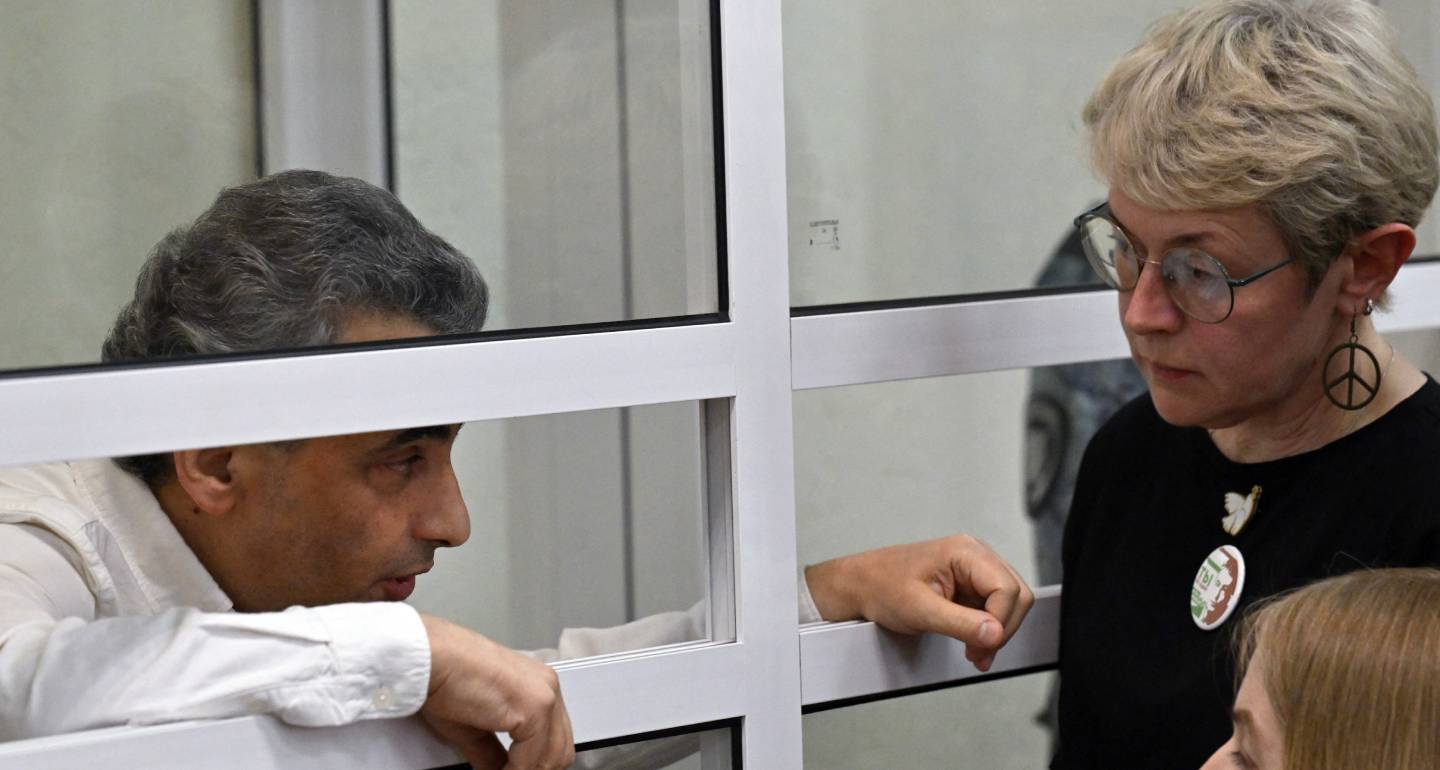
A regime founded on force, coercion, and repression does not want its propaganda, with all its flaws of logic, omissions, and outright lies, to be competing with the most simple of all messages: Thou shalt not kill.
Leonid Bershidsky
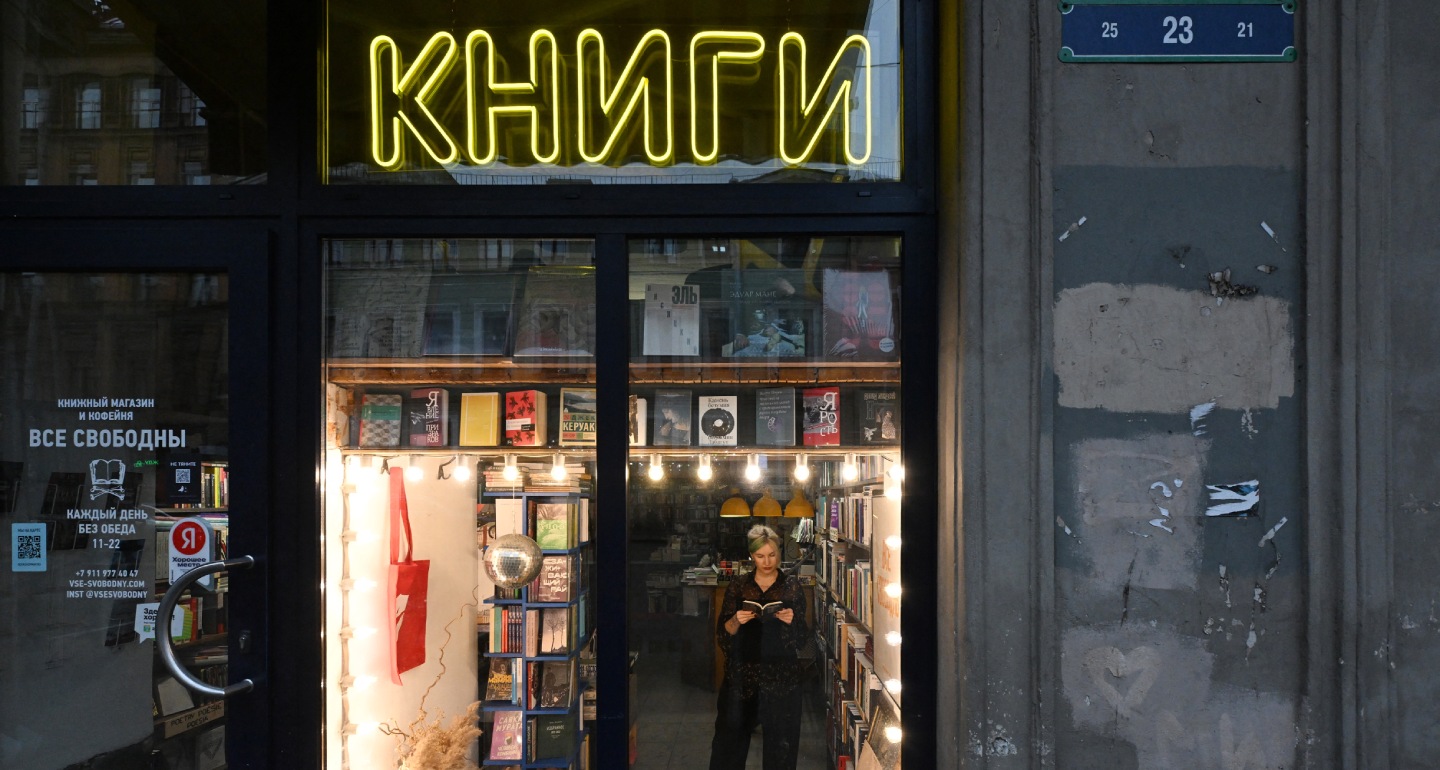
Political pressure and economic headwinds are closely intertwined problems for Russian publishers and booksellers. Together, they risk propelling Russia into a “post-literate” era.
Galina Yuzefovich

In the discussions made possible by the State Duma election campaign, one question is being asked more and more loudly. “What next?”

Andrey Pertsev
While the Nazis rushed ahead in a revolutionary fervor, Russia’s modern crusaders against enemies of the state work methodically, giving their targets time to adjust to restrictions before closing the loopholes.
Leonid Bershidsky