

Other
Fiona Hill, Anatol Lieven, Thomas de Waal
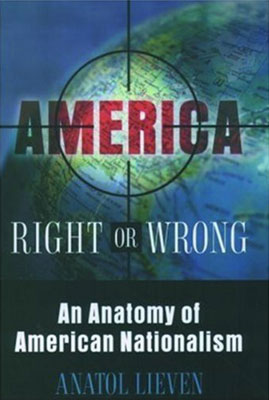
In this controversial critique of America's role in the world, Lieven contends that U.S. foreign policy since 9/11 has been shaped by the special character of our national identity, which embraces two contradictory features, the American Creed and Jacksonian nationalism.
Source: Oxford University Press

About the Author
Anatol Lieven is senior associate at the Carnegie Endowment and is author of Chechnya: Tombstone of Russian Power. A journalist, writer, and historian, Lieven writes on a range of security and international affairs issues. Previously, he was editor of Strategic Comments, published by the International Institute for Strategic Studies (IISS) in London.
Reviews
"...a book different from most of this genre...sets out to find its answers not in the dialogue of the oval office but in the US's character and history. The great virtue of this book is that it is a reminder that the policies did not spring only from Bush's convictions, but are embedded in tradition."
—TIMES Online
"...provacative and scholarly work..."
—Publishers Weekly
"...America Right or Wrong shows a serious intellectual talent...asks important questions and makes readers review some of their own most cherished convictions."
—Washington Post Book World
“A searching examination of the deep-seated sources of American behavior, Anatol Leiven’s America Right or Wrong takes on what others evade-the topics that, whether for good or ill, make us who we are and provide the engine of U. S. foreign policy."
—Andrew J. Bacevich, Author of the forthcoming The New American Militarism
Former Senior Associate
Recent Work

Fiona Hill, Anatol Lieven, Thomas de Waal
Carnegie does not take institutional positions on public policy issues; the views represented herein are those of the author(s) and do not necessarily reflect the views of Carnegie, its staff, or its trustees.

Putin’s conservative staffing policies and search for ever greater control have cemented parliament’s transformation into a bureaucratic appendage of the executive branch.

Andrey Pertsev

Ex-president Gurbanguly Berdimuhamedov remains interested in politics, but his son Serdar, Turkmenistan’s current president, is becoming increasingly independent and willing to break with his father’s legacy. If their covert rivalry goes too far, both risk losing power.

Galiya Ibragimova

Sergei Kiriyenko used Russia’s parliamentary vote to further hone his strategy of corporate mobilization that is designed to maximize votes for United Russia.
Andrey Pertsev

Trump has promised Belarus a massive potash deal. But Minsk is seeking something greater: restored Western transit and greater room for maneuver from Russia.

Balázs Jarábik

The European far right might fail to steer EU policy in the direction Russia wants, but they will create enough chaos inside Europe to benefit the Kremlin.

Dimitar Bechev