

Report
- +2
George Perkovich, Jessica Tuchman Mathews, Joseph Cirincione, …

REQUIRED IMAGE
The official end to the U.S. search for weapons in Iraq confirms what most observers had known for over a year and what UN inspections indicated before the war: Iraq did not have any significant amount of chemical, biological or nuclear weapons or long-range missiles. Some old weapons produced before the 1991 war may still be found, but it is clear that the main justification for launching the 2003 invasion of Iraq was not true. As a Carnegie study concluded one year ago, administration officials systematically misled the American people as to the nature of the threat and the need for military action.
Saddam Hussein, who had ruled the nation in a brutal dictatorship since 1979, had actively pursued such programs and had produced thousands of tons of chemical and biological weapon agents during the 1980s. The programs were ended and the stockpiles destroyed by the 1991 Gulf War and United Nations disarmament activities that followed.
(Continue)
January 13, 2005
The official end to the U.S. search for weapons in Iraq confirms what most observers had known for over a year and what UN inspections indicated before the war: Iraq did not have any significant amount of chemical, biological or nuclear weapons or long-range missiles. Some old weapons produced before the 1991 war may still be found, but it is clear that the main justification for launching the 2003 invasion of Iraq was not true. As a Carnegie study concluded one year ago, administration officials systematically misled the American people as to the nature of the threat and the need for military action.
Saddam Hussein, who had ruled the nation in a brutal dictatorship since 1979, had actively pursued such programs and had produced thousands of tons of chemical and biological weapon agents during the 1980s. The programs were ended and the stockpiles destroyed by the 1991 Gulf War and United Nations disarmament activities that followed.
Iraq’s failure to cooperate fully with UN verification measures led to the withdrawal of inspectors and the bombing of some Iraqi facilities in December 1998. After four years of frustrated attempts to continue their inventory and accounting of Iraq’s past and suspected programs, United Nations inspectors returned to Iraq in November 2002. In March 2003, the inspections ended when the United States led a coalition of countries to invade Iraq and topple Hussein’s regime. The 2003 war was the world’s first non-proliferation war--a war based primarily on the desire to prevent a nation from obtaining, using or transferring nuclear, chemical or biological weapons.
The UN inspections and the subsequent weapons hunt by U.S. forces after the war yielded three key conclusions:
1. There is no evidence of significant Iraqi nuclear, chemical or biological weapon programs or stockpiles created after the 1991 Gulf War, or any Scud missiles, warheads or unmanned aerial vehicles designed to deliver such weapons. The nuclear, chemical, and biological programs ended between 1991 and 1996, while the missile program continued, though Iraq failed to develop any missiles capable of travelling over 200 kilometers.
2. UN sanctions and inspections were highly effective in disarming Iraq after the 1991 War. Two special units dealt with the biological, chemical and missile programs: the United Nations Special Commission on Iraq (UNSCOM, 1991-1999) and the United Nations Monitoring, Verification and Inspection Commission (UNMOVIC, 1999-2003). The International Atomic Energy Agency (IAEA) supervised the nuclear disarmament and verification efforts.
3. In the year prior to the 2003 war, U.S. and British officials grievously misrepresented Iraq’s weapon capabilities. Senior officials in the U.S., UK and some other nations were convinced of the need to eliminate the Hussein regime and believed nonproliferation and other regional objectives could be reliably accomplished through military means.
It is clear now--and was to many before the war--that Saddam Hussein did not represent an urgent threat to the United States. The cost and consequences of this unnecessary war are still growing.
Related Links:
WMD in Iraq: Evidence and Implications, Carnegie study by Joseph Cirincione, Jessica T. Mathews and George Perkovich, January 2004.

Former Senior Associate, Director for NonProliferation
Recent Work


George Perkovich, Jessica Tuchman Mathews, Joseph Cirincione, …
Joseph Cirincione
Carnegie does not take institutional positions on public policy issues; the views represented herein are those of the author(s) and do not necessarily reflect the views of Carnegie, its staff, or its trustees.

Trump has promised Belarus a massive potash deal. But Minsk is seeking something greater: restored Western transit and greater room for maneuver from Russia.

Balázs Jarábik

Minsk clearly expected the dialogue with Washington to yield more results, in particular the lifting of EU sanctions and permission to export potash.

Artyom Shraibman

Ongoing uncertainty in the Middle East allows Moscow to both increase its influence in Tehran and continue to enjoy the financial windfall of higher oil prices.

Nikita Smagin

Governments in Estonia, Latvia, and Lithuania want to ensure that a U.S. military withdrawal would not leave them dangerously exposed to a Russian attack.

Sergejs Potapkins
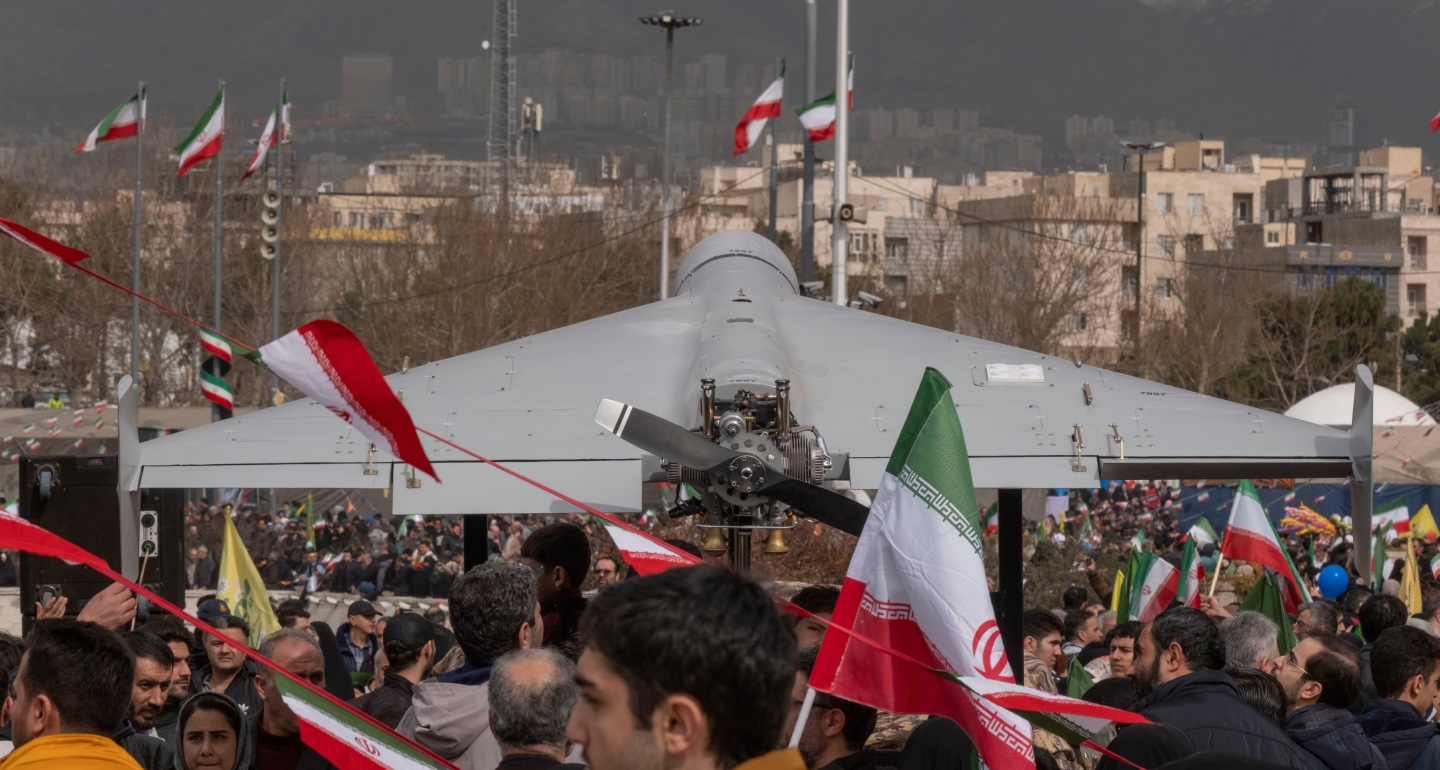
The Russian leadership wants to avoid a dangerous precedent in which it is squeezed out of Iran by the United States and Israel—and left powerless to respond in any meaningful way.
Nikita Smagin