• Research
  • Politika
  • About
Carnegie Russia Eurasia center logoCarnegie lettermark logo
  • Donate
REQUIRED IMAGE
Report

Constitution Drafting Update

Link Copied
By Nathan J. Brown
Published on Aug 8, 2005

Additional Links

Full Text (PDF)

Having passed up the opportunity of requesting a six-month extension, Iraq’s National Assembly is required to pass a draft constitution within a week or face dissolution and new elections.  Iraq’s current leaders, as well as their American backers, have decided to make constitution writing the centerpiece of their efforts at political reconstruction, making the stakes particularly high.  In this analysis I will show:

  • How much of the international analysis and lobbying distracts from the central issues and provided overly legalistic understandings of how the constitution would operate;
     
  • Why the central purpose of the constitutional process—striking a bargain among Iraq’s various groups—is so difficult; and
     
  • Why the drafters as well as external analysts should devote far more attention to practical issues of enforcement rather than general ideological language.

Click on the link to above for the full text of this Carnegie report.

About the Author

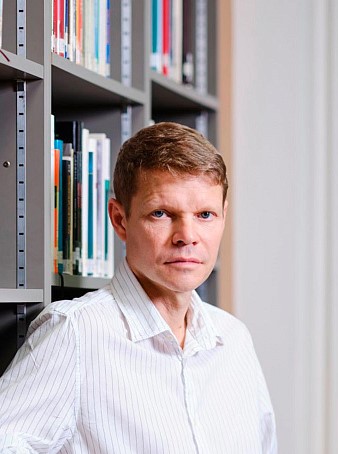
Nathan J. Brown

Nonresident Senior Fellow, Middle East Program

Nathan J. Brown, a professor of political science and international affairs at George Washington University, is a distinguished scholar and author of nine books on Arab politics and governance, as well as editor of five books.

    Recent Work

  • Article
    For Younger Palestinians, Crisis Has Become a Way of Life

      Nathan J. Brown

  • Commentary
    The Perils of the Palestinian Authority’s New Party Law

      Nathan J. Brown

Nathan J. Brown
Nonresident Senior Fellow, Middle East Program
Nathan J. Brown
Middle EastIraqPolitical ReformDemocracy

Carnegie does not take institutional positions on public policy issues; the views represented herein are those of the author(s) and do not necessarily reflect the views of Carnegie, its staff, or its trustees.

More Work from Carnegie Russia Eurasia Center

  • Commentary
    Carnegie Politika
    The Kremlin Is Destroying Its Own System of Coerced Voting

    The use of technology to mobilize Russians to vote—a system tied to the relative material well-being of the electorate, its high dependence on the state, and a far-reaching system of digital control—is breaking down.

      Andrey Pertsev

  • Commentary
    Carnegie Politika
    Notes From Kyiv: Is Ukraine Preparing for Elections?

    As discussions about settlement and elections move from speculation to preparation, Kyiv will have to manage not only the battlefield, but also the terms of political transition. The thaw will not resolve underlying tensions; it will only expose them more clearly.

      Balázs Jarábik

  • Commentary
    Carnegie Politika
    Once Neutral on the Ukraine War, Arab States Increasingly Favor Moscow

    Disillusioned with the West over Gaza, Arab countries are not only trading more with Russia; they are also more willing to criticize Kyiv.  

      Ruslan Suleymanov

  • Commentary
    Carnegie Politika
    Where Does the Split in the Ruling Tandem Leave Kyrgyzstan?

    Despite its reputation as an island of democracy in Central Asia, Kyrgyzstan appears to be on the brink of becoming a personalist autocracy.

      Temur Umarov

  • Commentary
    Carnegie Politika
    In Uzbekistan, the President’s Daughter Is Now His Second-in-Command

    Having failed to build a team that he can fully trust or establish strong state institutions, Mirziyoyev has become reliant on his family.

      Galiya Ibragimova

Get more news and analysis from
Carnegie Russia Eurasia Center
Carnegie Russia Eurasia logo, white
  • Research
  • Politika
  • About
  • Experts
  • Events
  • Contact
  • Privacy
Get more news and analysis from
Carnegie Russia Eurasia Center
© 2026 Carnegie Endowment for International Peace. All rights reserved.