

In The Media
Martha Brill Olcott

Source: Getty
None of the Central Asian leaders like the idea of Russian hegemony, but the risk of anarchy and war in the border regions of Russia frighten them even more. They might not like the idea of Moscow as regional policeman, but in the absence of a viable alternative, they might swallow it more easily if Moscow turns into an effective one.
It is amazing how many different versions of history are circling around the current conflict between Russia and Georgia. In considering the various accounts that appear in the Western press, the Georgian press, the Russian press, and the presses of the various CIS countries, it is sometimes hard to believe that one is in fact reading about the same conflict.
The fact that there are so many differing perceptions of what is going on augers very badly for any sort of rapid settlement to the crisis.
Some of these differences can be explained by conflicting goals of “public diplomacy,” which is sometimes merely a euphemism for propaganda. The Russians and Georgians are trying to mobilize their populations and retain their support in what is sure to be a drawn out process of step down and, if we are lucky, a peaceable resolution of the conflict. Western leaders too have much to explain to their publics, who had come to view Georgia as something of a fledgling family member of the western community, while those in the CIS states are clearly wondering what these developments mean for them. This is particularly true in states that are dealing their own frozen conflicts—Armenia, Azerbaijan, and Moldova. And it is no less true of those governments, being pressed to ship oil and gas through Azerbaijan, Georgia, and then on to Turkey; Azerbaijan, Turkmenistan, and Kazakhstan all fall into this group. Finally there is Ukraine, with Crimea (the status of which is not included in the frozen conflicts), long a part of the Russian federation and now is in a country that is very interested in NATO membership.
Each narrative, of course, speaks to the national concerns of the author or statesman offering the statement, but there are some striking differences between those in the United States and EU countries, with important variations within the EU interpretations. The Presidents of the three Baltic States and Poland issued the harshest condemnations, focusing exclusively on what they viewed as Russian aggression, both inside south Ossetia and beyond. The leaders of these four countries, joined by President Yushchenko of Ukraine, offered to travel to the region to help negotiate an end to the conflict. Behind their words one can sense the lurking fears that success in Georgia might empower Russia to move aggressively in their part of the world, and uncertainty as to whether NATO forces would be dispatched to protect them (all member states), when they are not offering this for eager-to-be member Georgia.
Most EU and U.S. official statements and mainstream media coverage have been highly critical of Russia. The story they tell is about Georgia versus Russia, and Georgia’s battle to regain the territorial integrity of its country against a resurgent Russia. The people of South Ossetia never get more than cameo roles. They are viewed as entitled to humanitarian relief, but whatever legitimate political claims they might have are dwarfed by the magnitude and righteousness of Georgia’s. There have been a few accounts, like a long August 9 piece in the New York Times, that examine the history of Ossetian– Georgian relations, but more frequent are treatments that call them all Georgians and Georgian citizens, one group backed by Tbilisi and the other by Moscow.
The narrative is quite different throughout the CIS. Overwhelming concern in Azerbaijan centers on what developments in Georgia might mean for their own conflict with Armenia over Karabakh. They recognize that the Georgian precedent of restoring territorial integrity indirectly supports Azerbaijan doing the same thing; but as they see Armenia as a client state of Russia, they fear that Stepanakurt and Yerevan could make the first move to allow free choice of citizenship to the residents in Karabakh. What steps President Ilham Aliyev and his government might take to stop this are not mentioned, but Azerbaijan has never renounced the ultimate use of armed force to get its way. The trick would be to convince Russia (assuming Russia does not grow weak enough that it can be ignored—a highly unrealistic assumption right now). Azerbaijan, with its oil and gas wealth, does have good bargaining cards, better ones than Armenia has. And, as today’s temporary shutdown of part of the BTC pipeline by BP makes clear, transit through a Georgia at war with Russia leads to reduced rather than enhanced oil income for Baku.
The Kazakhs too are losing money in this war. They have closed their port at Batumi (partly due to the request of local Georgian military authorities), but as one of Georgia’s biggest foreign investors Astana will have to decide if it is worth the financial risk to go forward with the massive port reconstruction project they are planning. Kazakhstan does not want to see itself get pinned between Russia and the United States, especially since it understands that relations between Georgia and South Ossetia are more complex than the black and white painting so often offered in the west.
Nazarbayev was on very good terms with Saakashvili’s predecessor Eduard Shevardnadze, and is very uncomfortable with the idea that any post-Soviet state has become a western style democracy, although he has developed a good relationship with Saakashvili. Nazarbayev also remembers the ethnic protests of late 1989–1990, in which Ossetans and Georgians fought with each other over the question of south Ossetia’s autonomy, as did Georgians and Abkhaz. It was during this period that interethnic skirmishes led to Nazarbayev’s own appointment as party secretary and then president of soviet Kazakhstan. Neither Nazarbayev, nor any of the other Central Asian leaders, would diminish the importance of the Ossetian claims to independent statehood or joining the Russian Federation, and also recognize the high cost that will be paid by any nation that seeks to absorb them involuntarily.
Russia’s north Caucasusian region is already highly unstable. North Ossetia, bordering on Ingushetia and Chechnya, is Moscow’s one dependable outpost in the region. If it had to absorb tens of thousands of refugees, its stability would be seriously at risk.
While further instability in Russia is a narrative that works well for some in the West, it is a terribly frightening one in the states that border on Russia in the east and south. None of the Central Asian leaders like the idea of Russian hegemony, but the risk of anarchy in the border regions of Russia and wars near their borders frighten them even more. They might not like the idea of Moscow as regional policeman, but in the absence of a viable alternative, they might swallow it more easily if Moscow turns into an effective one.

Former Senior Associate, Russia and Eurasia Program and, Co-director, al-Farabi Carnegie Program on Central Asia
Olcott is professor emerita at Colgate University, having taught political science there from 1974 to 2002. Prior to her work at the endowment, Olcott served as a special consultant to former secretary of state Lawrence Eagleburger.
Recent Work
Martha Brill Olcott
Martha Brill Olcott
Carnegie does not take institutional positions on public policy issues; the views represented herein are those of the author(s) and do not necessarily reflect the views of Carnegie, its staff, or its trustees.

Depleted financial reserves and a shrinking tax base mean it is no longer possible to simultaneously deliver high defense spending, price stability, and economic growth.

Alexandra Prokopenko
Blurring the line between humans and animals is a long-standing tradition in social utopian prose. In his latest novel, Leonid Bershidsky reminds us that in social experiments, people are often treated no differently than animals.

Alexander Baunov

In the tenth year of his presidency, President Mirziyoyev’s system is becoming even more personalized than that of his predecessor Karimov.

Galiya Ibragimova

While France and Australia are seeking to establish the legal obligations of messaging apps like Telegram, Russia wants total subordination.

Maria Kolomychenko
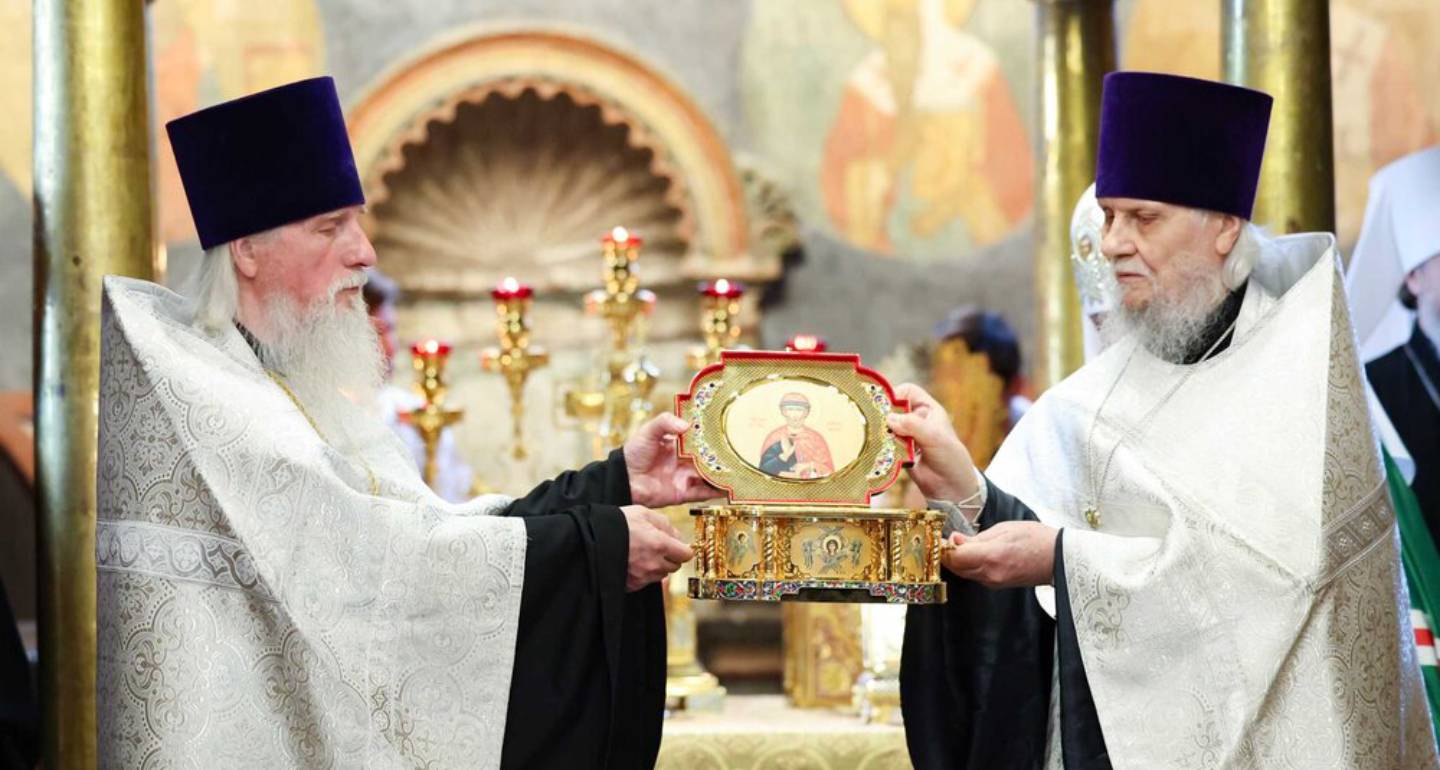
The recent uncovering of Dmitry Donskoy’s relics in the Cathedral of the Archangel is yet another attempt by the Russian Orthodox Church to help the state solve its problems. However, parroting the state’s version of Russian history leaves the Church with no message except “patriotism.”
Alexander Zanemonets