

Article
Henri J. Barkey
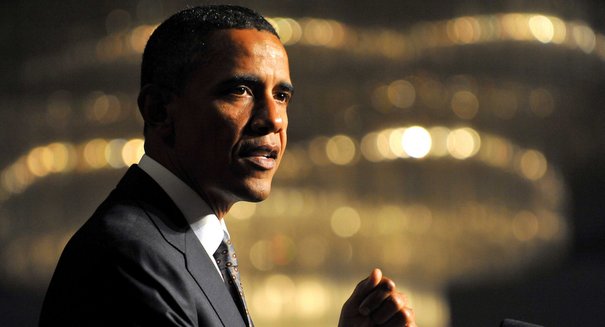
Source: Getty
Turkish President Abdullah Gul says that President Obama’s desire to visit Ankara so early in his tenure is proof of Turkey’s global importance. But from Washington, the expectations, preparations and goals of the trip could not be more out of sync.
If Turkish officials are to be believed, even Secretary of State Hillary Clinton was surprised by the news that President Obama would visit Turkey at the end of his European tour this week. The White House offered no reason for the hastily arranged visit other than to say that the President would not make his promised “Muslim World speech” there.
The Turks have interpreted Obama’s visit as confirmation of their pivotal status in the Middle East and beyond. With the renewed U.S. focus on Afghanistan, the President has no doubt asked them to contribute more to that country, but they are unlikely to increase the size of their military contingent in Kabul. The Turks have not deployed their troops in locations that would require them to fight, and they have repeatedly stated that they would rather offer non-military assistance, such as infrastructure projects. At best, they will agree to train Afghan army troops and police officers.
Nonetheless, Obama’s trip is both fraught with dangers and rich with opportunities. It offers potential diplomatic inroads with Iran, where the Turks enjoy good relations, and progress in Iraq, where they could help secure the territorial integrity of the country by deepening their ties with the Iraqi Kurds.
Yet the Turkish government is fragile, and Obama could come to grief there if he presses too hard on the Armenian question. The ruling Justice and Development Party, the AKP, is still licking its wounds from a less than stellar victory in the March 29 municipal elections, which are ordinarily dominated by local concerns, but which Turkish prime minister Recep Tayyip Erdogan unnecessarily transformed into a referendum on him and his party’s popularity. This is the first time ever that the party has suffered a decline, and it will make it even more difficult for the government to agree to an increase in troop levels. The domestic opposition is feeling emboldened, and looking to score points.
Armenia casts a long shadow over the visit, and remains a potentially explosive issue. Armenian-Americans have long sought to induce the U.S. government and Congress to officially recognize the extermination of as many as 1.5 million Armenians by the Ottoman Empire in 1915 as a genocide. For Turks, the proud inheritors of the mighty Ottoman tradition and history, the word is an unbearable affront. To date, Turkish diplomats have enlisted their allies at the State Department, the Pentagon and even the White House to prevent Congressional resolutions from making it to the floor of the House. This year, however, the president, vice president and speaker of the House are all committed to using "the G word," as Washington has come to call it.
Perhaps fearing that Congress will pass an Armenian Genocide Resolution or that Obama will use the dreaded word in a presidential statement on April 24, Ankara is negotiating a possible opening of the Turkish-Armenian border and the normalization of diplomatic relations with Yerevan. The calculation is that any improvement in Turkish-Armenian relations, especially considering the calamitous state of economic affairs in Armenia, will be looked kindly upon in Washington.
The Turks have delayed any announcement on the subject until after the municipal elections, but the administration are clearly hoping such a declaration will be made before or during the president’s visit.
If the President were to fulfill his oft-repeated campaign promise to refer to the Armenian Genocide as such, Turkish-American relations would go into a tailspin. The Turks would interpret it as a betrayal of the first order and retaliate against U.S. interests, which could include gumming up the works at the Incirlik air force base -- a key bridge in our supply route to Afghanistan and Iraq -- refusing to cooperate with Washington at the UN Security Council, and even hampering cooperation within NATO by blocking France’s return or the selection of a new Secretary General.
Worse, Ankara could retaliate against an Armenia already suffering from dire economic conditions and a terrible population exodus. Turkey could in one fell swoop eject close to 50,000 Armenian citizens working illegally within its borders and close the air corridor to the country.
An Armenian-Turkish deal could obviate the need for such a statement, but only if Obama were to frame it as positively as possible. There are ways; some Turkish intellectuals have floated the idea of referring to the 1915 events as "The Great Catastrophe," an event larger than genocide, because not only Armenians were killed or exiled, and it effectively ended multicultural, pluralist existence in that part of the world.
If Obama, in deference to American national interests, proves willing to change his position on describing the events as a genocide, then his aides ought to have explored alternative scenarios and engaged interested parties behind the scenes. The best outcome would be a Turkish-Armenian deal. But if the President intends to go ahead with the genocide statement, he would be better off never having gone to Turkey.
In its zeal to push the Afghanistan agenda, the White House has gone skating on thin ice. Turkish President Abdullah Gul says that President Obama’s desire to visit Ankara so early in his tenure is proof of Turkey’s global importance. But from Washington, the expectations, preparations and goals of the trip could not be more out of sync.

Former Visiting Scholar, Middle East Program
Barkey served as a member of the U.S. State Department Policy Planning Staff, working primarily on issues related to the Middle East, the Eastern Mediterranean, and intelligence from 1998 to 2000.
Recent Work
Henri J. Barkey
Henri J. Barkey
Carnegie does not take institutional positions on public policy issues; the views represented herein are those of the author(s) and do not necessarily reflect the views of Carnegie, its staff, or its trustees.

Despite unhappiness on the ground, Moscow is determined to use both carrot and stick to ensure there is record support for United Russia in occupied Ukraine.

Konstantin Skorkin
The recent damage inflicted by Ukrainian drones and missiles on Russia has made Belarus aware of its own vulnerabilities—and surprisingly amenable to Kyiv’s demands.

Artyom Shraibman
Russia looks set to reap economic benefits from closer ties with Southeast Asian countries that are keen to find reliable energy suppliers and diversify trade ties.

Alexander Gabuev
Ongoing uncertainty in the Middle East allows Moscow to both increase its influence in Tehran and continue to enjoy the financial windfall of higher oil prices.

Nikita Smagin
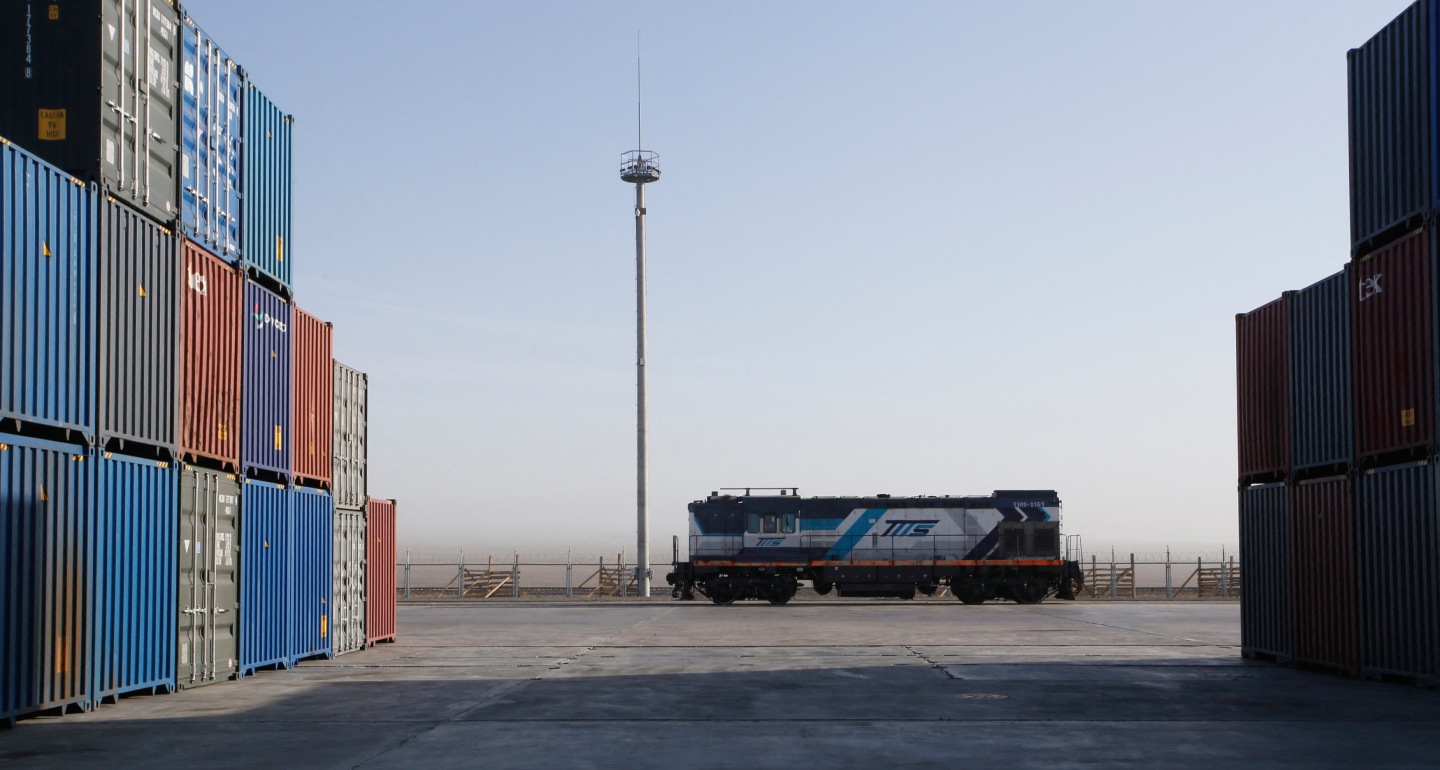
This year’s wars have made alternative routes to transit through Russia no less risky for Central Asian countries.

Galiya Ibragimova