

Commentary
Fabrice Pothier
Source: Getty
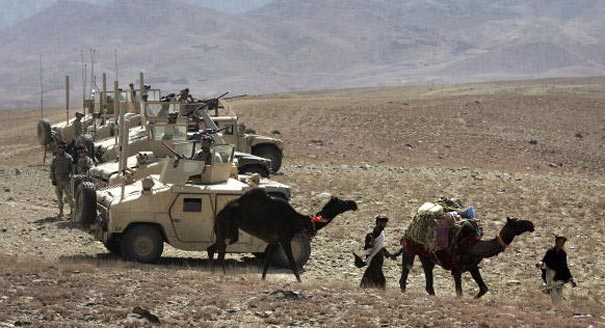
Although Obama's renewed strategy towards Afghanistan has been received well in Europe, the war in Afghanistan will now be an American war with international help rather than a coalition effort.
Last Friday, President Obama outlined his new strategy toward Afghanistan and Pakistan. After seven years of under-resourced, poorly focused and largely ineffective efforts, the mission in Afghanistan has been given strategic direction, and more resources. The most critical change was Obama’s decision to focus the overall mission toward the narrow but all-important counter-terrorist goal to, ‘disrupt, dismantle and defeat Al Qaeda in Afghanistan and Pakistan’. Ahead of the NATO Summit, the conventional wisdom is that the U.S. is to take charge of hard security matters whilst the EU will focus on soft, civilian matters like institution-building and development. But this is unlikely to resist the test of Europe’s limitations, mainly its depleting public opinion for the mission in Afghanistan, its reluctance to prosecute a war against terrorism, and its largely insufficient collective external security model.
The war on terror revisited
Obama’s strategic shift is driven by a sober analysis of the situation in Afghanistan (and Pakistan), as well as by domestic realities. At a time when American public support for engagement in Afghanistan has been showing signs of erosion, Obama has rightfully re-positioned the Afghanistan mission at the core of America’s post-9/11 narrative. In contrast, even though Europe has been the target of several Al Qaeda attacks since 2001, the urgency of the European fight against terrorism has diminished. Recent opinion polls indicate that the majority of Europeans are disillusioned with the mission in Afghanistan. Although European leaders owe clear and realistic explanations to their electorates on the risks and prospects in Afghanistan, we should be hesitant about their ability to rally European public opinion around the new Obama strategy.
Boots and bullets
The first pillar of Obama’s new strategy is the deployment of 17,000 additional U.S. combat troops predominantly to the south and east of Afghanistan this year. Although the decision to concentrate troops in the south and east instead of strengthening strategic areas like Kabul could be disputed, the increase means that U.S. troops will now make up the biggest share of the international frontline fighting capacity. In contrast to the American surge, other coalition troops like the Dutch and the Canadians are on the exit, whilst France and the UK are unlikely, for political and capacity reasons, to make significant additions to their military presence.
Delivering ‘afghanization’
The second pillar of Obama’s strategy is to build and strengthen Afghan institutions that can deliver security and essential services to the Afghan people. The U.S. will send 4,000 additional trainers and mentors with the aim of doubling the size of the Afghan national army and police forces and to support national and local institutions. This pillar, if successful, represents Obama’s best possible exit strategy, and it is where the President is likely to turn to his European allies for help. Indeed Europe has repeatedly called for resolution of the conflict through civilian efforts rather than military means. Yet it has seldom delivered on this aspect. Its police training project is terminally ill: the EU has failed to commit the 400 police trainers promised this year, and is still far from reaching the overall target of the 2,300 trainers required to build a fully-functional Afghan police force. Even though the EU tries to channel a larger share of its aid money through Afghan institutions, the total disbursement of pledged aid remains well below the 50% line. Afghanistan reveals Europe’s incapacity to formulate coherent and robust collective security responses, and dedicate the resources required to implement them.
Pakistan-the new frontline, for the US
A key element in Obama’s new Afghanistan equation is Pakistan. In addition to U.S. military aid, Obama is committing US$1.5bn per year to Pakistani civilian development. He has promised to tie this aid to clear benchmarks for progress. Statistically, the EU is Pakistan’s first trading partner, but apart from few bilateral ties, Pakistan is nowhere to be found on Europe’s strategic map. There is a clear need for the EU to reflect upon its potential for strategic involvement, especially toward the development of Pakistan’s economy and civilian institutions.
Some tactical rapprochements
Despite the generally pessimistic prospects for Europe in Afghanistan, there are a few positive signs. Europe can show its savoir-faire in preparing and monitoring the upcoming Afghan presidential elections this August. The Obama administration has also re-aligned its counter-narcotics approach by shelving the controversial forced poppy crop eradication and focusing rather on interdiction and rural development, something much closer to the European drug policy thinking. Finally, the growing call from the U.S. administration to ‘talk to the Taleban’ is welcomed with enthusiasm in European capitals. However, much caution must be applied to what could be the latest ‘silver-bullet’ of an international community desperate for exit solutions.
But strategic resolve unlikely
Overall, Europe can certainly do more and better, and Obama’s strategy has created some opportunities for tactical alignment with the transatlantic partners. But when Afghanistan urgently requires strategic re-engagement and resolve, Europe is unlikely to do enough. Clearly, 2009 is the year when Afghanistan is set to become an American fought war with international support rather than a coalition effort.

Former Director, Carnegie Europe
Pothier, director of Carnegie Europe, is a noted commentator on European policy in Afghanistan and Pakistan, transatlantic issues, and global drug policy.
Recent Work
Fabrice Pothier
Fabrice Pothier
Carnegie does not take institutional positions on public policy issues; the views represented herein are those of the author(s) and do not necessarily reflect the views of Carnegie, its staff, or its trustees.

When faced with fuel shortages in the past, Central Asian governments could always count on additional supplies from Moscow. That safety net no longer exists.

Galiya Ibragimova

Two divergent trends—Putin’s hardline vision of how to prosecute the war in Ukraine, and a growing desire for change in Russia—could tear the regime apart.

Tatiana Stanovaya
Andrey Melnichenko’s essay offers no answer to the fundamental question of how, under any kind of negotiated settlement, Europe can protect itself from the Russian ressentiment that is inevitable in all scenarios except for an outright victory for Putin.

Leonid Bershidsky

Despite unhappiness on the ground, Moscow is determined to use both carrot and stick to ensure there is record support for United Russia in occupied Ukraine.

Konstantin Skorkin

Whether PAS can refocus on the unfinished business of state-building may ultimately prove more consequential for Moldova’s European future than the pace of its accession negotiations.

Balázs Jarábik