

Commentary
Putin’s conservative staffing policies and search for ever greater control have cemented parliament’s transformation into a bureaucratic appendage of the executive branch.
Andrey Pertsev
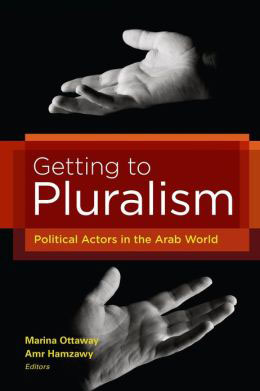
This volume examines the Arab world’s major political actors, assesses the weaknesses of secular parties, and evaluates how incumbent regimes have maintained their grip on power in spite of reform-oriented claims.
Source: Washington

Getting to Pluralism: Political Actors in the Arab World explores the balance of power between the disparate political forces of the Arab world. The essays in this volume examine the characteristics of the major political actors in great detail and assess the weaknesses of the secular parties. They also illustrate the complexities of Islamist participation in the political processes of several Arab countries—pointing out both similarities and differences. Finally, the authors evaluate how incumbent Arab regimes have been able to maintain their grip on power in spite of their claims that they support political and social reform.
Included in this volume:
"A first-rate think tank should produce work whose conclusions are directly useful to policy makers with insights equally valuable to scholars. This volume more than meets that test."
—Jessica T. Mathews, President, Carnegie Endowment for International Peace

Former Senior Associate, Middle East Program
Before joining the Endowment, Ottaway carried out research in Africa and in the Middle East for many years and taught at the University of Addis Ababa, the University of Zambia, the American University in Cairo, and the University of the Witwatersrand in South Africa.

Director, Middle East Program
Amr Hamzawy is a senior fellow and the director of the Carnegie Middle East Program. His research and writings focus on Egypt’s and other middle powers’ involvement in regional security in the Middle East, particularly through collective diplomacy and multilateral conflict resolution
Carnegie does not take institutional positions on public policy issues; the views represented herein are those of the author(s) and do not necessarily reflect the views of Carnegie, its staff, or its trustees.

Putin’s conservative staffing policies and search for ever greater control have cemented parliament’s transformation into a bureaucratic appendage of the executive branch.

Andrey Pertsev

Ex-president Gurbanguly Berdimuhamedov remains interested in politics, but his son Serdar, Turkmenistan’s current president, is becoming increasingly independent and willing to break with his father’s legacy. If their covert rivalry goes too far, both risk losing power.

Galiya Ibragimova

Sergei Kiriyenko used Russia’s parliamentary vote to further hone his strategy of corporate mobilization that is designed to maximize votes for United Russia.
Andrey Pertsev

The European far right might fail to steer EU policy in the direction Russia wants, but they will create enough chaos inside Europe to benefit the Kremlin.

Dimitar Bechev

If the Russian-speaking community in Latvia cannot articulate their interests without being seen as disloyal, they could end up embracing a pro-Kremlin agenda.

Sergejs Potapkins