

Article
Marina Ottaway, Omar Hossino

REQUIRED IMAGE
With a combined total of 296 parties and independent candidates registered to compete for a place in a 275-seat parliament, Iraq displays a degree of political fragmentation usually found in first-time multi-party elections but rarely seen thereafter.
With a combined total of 296 parties and independent candidates registered to compete for a place in a 275-seat parliament, Iraq displays a degree of political fragmentation usually found in first-time multi-party elections but rarely seen thereafter. Even the number of coalitions—at least six, at present—suggests deep fragmentation.
Several factors explain the continuing fragmentation of the Iraqi political scene. First, the legacy of the struggle against Saddam Hussein already led to fragmentation. Much of Saddam’s opposition was organized along confessional lines, with exiles in different countries creating separate organizations and drawing backing from different sources. But none of the organizations was particularly effective, so in 2003, there was no group that could claim the glory of having liberated the country. The 2005 elections created a fragmented parliament, worsening the problem.
The electoral system chosen by the November 8 election law—proportional representation with open lists—is likely to perpetuate the fragmentation. Not only will it do nothing to reduce the number of parties and coalitions competing against each other; but it also will encourage an undesirable degree of competition among candidates of the same parties.
In general, intraparty competition is a positive outcome of open-list systems in that it gives more power to the voters than to the party hierarchy. In situations of extreme fragmentation, however, open-list systems may deepen divisions and exacerbate problems.

Former Senior Associate, Middle East Program
Before joining the Endowment, Ottaway carried out research in Africa and in the Middle East for many years and taught at the University of Addis Ababa, the University of Zambia, the American University in Cairo, and the University of the Witwatersrand in South Africa.
Recent Work
Marina Ottaway, Omar Hossino
Marina Ottaway
Carnegie does not take institutional positions on public policy issues; the views represented herein are those of the author(s) and do not necessarily reflect the views of Carnegie, its staff, or its trustees.

If the Russian-speaking community in Latvia cannot articulate their interests without being seen as disloyal, they could end up embracing a pro-Kremlin agenda.

Sergejs Potapkins

Russia’s ruling party would have benefited from Putin appearing as its distant patron, but as an active frontman imposing his views on the public, he has done nothing but harm both the party’s election campaign and the ruling system overall.

Andrey Pertsev

In the tenth year of his presidency, President Mirziyoyev’s system is becoming even more personalized than that of his predecessor Karimov.

Galiya Ibragimova

The greater threat to Zelensky comes not from Fedorov alone, but from the convergence between the former defense minister’s political campaign and the anti-corruption investigations moving ever closer to the presidential administration.

Balázs Jarábik
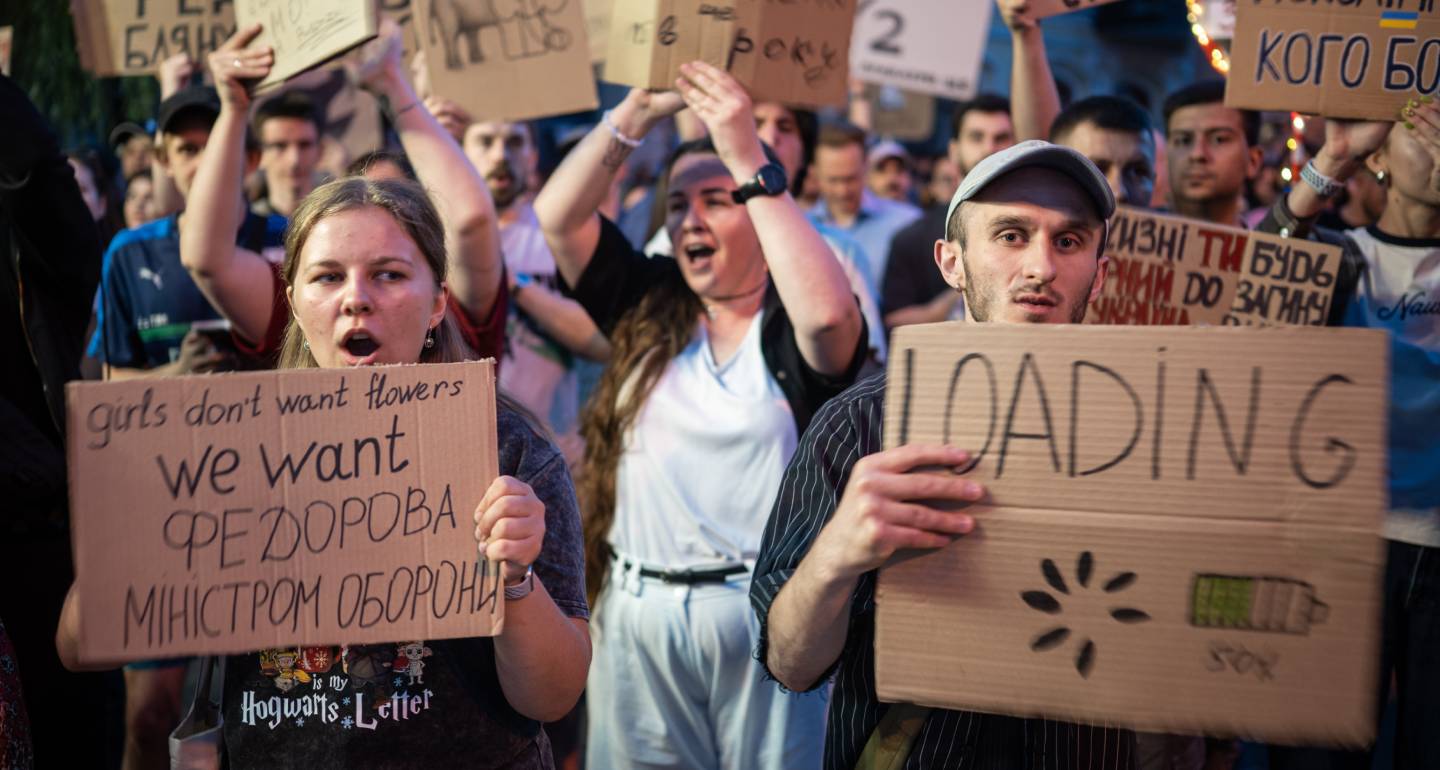
With his public call for new elections in Ukraine, ex-defense minister Mykhailo Fedorov has opened Pandora’s box.

Konstantin Skorkin