

Commentary
Sergei Kiriyenko used Russia’s parliamentary vote to further hone his strategy of corporate mobilization that is designed to maximize votes for United Russia.
Andrey Pertsev
Source: Getty
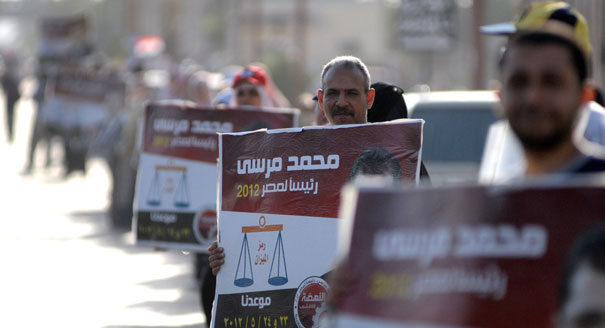
By scaling back its political engagement to focus on a traditional religious, educational, and social agenda, the Egyptian Muslim Brotherhood is leaving behind an even greater lack of political competition in the country.
The Egyptian Muslim Brotherhood has begun to scale back its political engagement because the results have been few, government repression continues, and other opposition groups mistrust the movement. Instead it will focus on a traditional religious, educational, and social agenda. The result will be an even greater lack of political competition.
In a detailed profile of the Muslim Brotherhood’s activities over the last decade, this paper examines the Brotherhood’s relations with the Mubarak regime and other opposition groups, its legislative priorities and accomplishments, and its internal debate over the value of political participation.
Key Conclusions:
“With the Brotherhood’s retreat, a fleeting opportunity that seemed to arise in the middle of the decade for building a more pluralistic political system and for an open political contest between competing visions for Egypt’s future appears to have been lost,” the authors conclude.

Director, Middle East Program
Amr Hamzawy is a senior fellow and the director of the Carnegie Middle East Program. His research and writings focus on Egypt’s and other middle powers’ involvement in regional security in the Middle East, particularly through collective diplomacy and multilateral conflict resolution

Nonresident Senior Fellow, Middle East Program
Nathan J. Brown, a professor of political science and international affairs at George Washington University, is a distinguished scholar and author of nine books on Arab politics and governance, as well as editor of five books.
Carnegie does not take institutional positions on public policy issues; the views represented herein are those of the author(s) and do not necessarily reflect the views of Carnegie, its staff, or its trustees.

Sergei Kiriyenko used Russia’s parliamentary vote to further hone his strategy of corporate mobilization that is designed to maximize votes for United Russia.

Andrey Pertsev

The European far right might fail to steer EU policy in the direction Russia wants, but they will create enough chaos inside Europe to benefit the Kremlin.

Dimitar Bechev

If the Russian-speaking community in Latvia cannot articulate their interests without being seen as disloyal, they could end up embracing a pro-Kremlin agenda.

Sergejs Potapkins

Russia’s ruling party would have benefited from Putin appearing as its distant patron, but as an active frontman imposing his views on the public, he has done nothing but harm both the party’s election campaign and the ruling system overall.
Andrey Pertsev

In the tenth year of his presidency, President Mirziyoyev’s system is becoming even more personalized than that of his predecessor Karimov.

Galiya Ibragimova