

Paper
Paul Salem
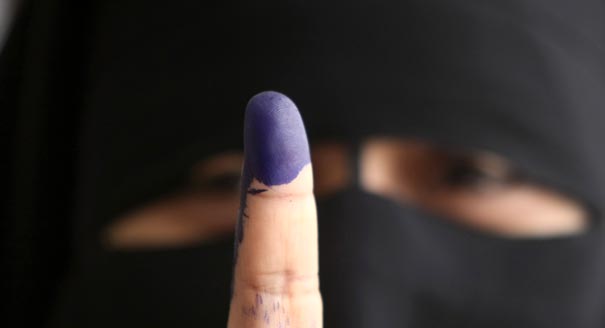
Source: Getty
Although full democracy in the Arab world remains a distant goal, broader participation in the political process, with a marked effect on human development, can be achieved.
Good governance is key to improving peoples’ lives; but the Arab world falls short on many governance indicators. Most Arab states remain highly authoritarian, although there is a growing dynamism in civil society and among opposition parties, both secular and Islamist. Problems in governance have impeded development in the Arab world and limited the achievement of the Millennium Development Goals.
There are strong historical causes for the current state of governance in the Arab world. Nevertheless, progress has been made in limited but significant ways. This should be reinforced by strengthening civil society, reinforcing electoral progress, supporting parliaments and the judiciary, enhancing local government, improving governance performance, and empowering women. The international community should play an important role in this process.
Although full democracy in the Arab world is a distant goal, broader participation in the political process, with a marked effect on human development, can be achieved.
Senior Fellow at the Middle East Institute
Paul Salem is a senior fellow at the Middle East Institute.
Recent Work
Paul Salem
Paul Salem
Carnegie does not take institutional positions on public policy issues; the views represented herein are those of the author(s) and do not necessarily reflect the views of Carnegie, its staff, or its trustees.

Putin’s conservative staffing policies and search for ever greater control have cemented parliament’s transformation into a bureaucratic appendage of the executive branch.

Andrey Pertsev

Ex-president Gurbanguly Berdimuhamedov remains interested in politics, but his son Serdar, Turkmenistan’s current president, is becoming increasingly independent and willing to break with his father’s legacy. If their covert rivalry goes too far, both risk losing power.

Galiya Ibragimova

Sergei Kiriyenko used Russia’s parliamentary vote to further hone his strategy of corporate mobilization that is designed to maximize votes for United Russia.
Andrey Pertsev

The European far right might fail to steer EU policy in the direction Russia wants, but they will create enough chaos inside Europe to benefit the Kremlin.

Dimitar Bechev

If the Russian-speaking community in Latvia cannot articulate their interests without being seen as disloyal, they could end up embracing a pro-Kremlin agenda.

Sergejs Potapkins