

Commentary
Nikolay Petrov
Source: Getty
Prominent blogger Alexey Navalny’s new site, RosPil.net, is helping to expose corruption in Russia. Economists estimate that stopping theft within the state procurement system could double Russia’s yearly economic growth rate.
The Russian anti-corruption campaign pursued with great fanfare over the last few years has been largely illusive. While the number of anti-corruption publications has increased, the number of people tried and convicted for corruption has remained unchanged over the last three years, according to the Research Center for Combating Corruption of the Scientific Research Institute at the Russian Law Academy of the Ministry of Justice. At the same time, the number of bank licenses revoked under the law to prevent money laundering has fallen sharply.
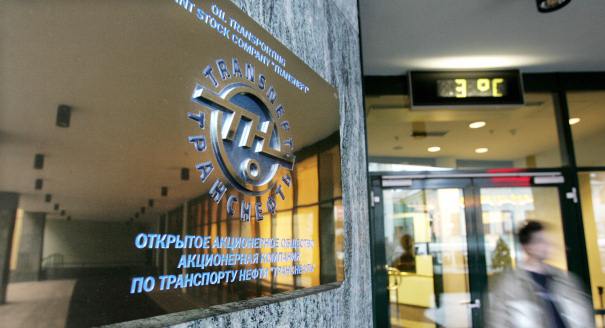
But the “Navalny effect” is causing a lot of stir. Recently, prominent blogger Alexey Navalny—a lawyer who made a name for himself by campaigning for the rights of minority shareholders in major companies to gain access to corporate information—accused the Russian state-owned company Transneft of embezzling $4 billion of public money during construction of the Eastern Siberia-Pacific Ocean oil pipeline, citing an Accounts Chamber report. Coincidentally, just as this scandal came to light, Prime Minister Vladimir Putin, speaking on the government’s behalf, thanked Transneft—headed by his former intelligence colleague in Dresden, Nikolay Tokarev—for its effective work.
On December 4, Navalny announced the launch of RosPil.net. The site collects information on obvious violations within the state procurement system. As such, it serves as an example of realizing one of the goals set out in President Dmitry Medvedev’s recent annual presidential address: a revision of the corruption laws relating to state purchases. Approximately 1 trillion rubles per year has been embezzled within the procurement system, according to the Presidential Administration’s Control Directorate.
Navalny’s site has been active since the moment it launched, with hundreds of recommendations and links posted on major social networks such as Facebook, Twitter, and VKontakte. It has also received “recognition” from civil servants: a number of state agencies have removed the most dubious tender dates and contract timetables from their sites. Navalny earlier exposed the Health and Social Development Ministry’s tender to develop a social network for medical sector workers and patients—a 55 million ruble contract that had to be completed within 16 days. The tender wound up being cancelled and the official who set its terms resigned.
Navalny—whose fame in Russia is growing almost as quickly as that of WikiLeaks founder Julian Assange—represents a new generation of political activists, one who sees the system’s vulnerabilities and targets his blows accordingly. In an unofficial Internet vote organized by the newspaper Kommersant and the electronic resource Gazeta.Ru in October, Navalny was the most popular candidate to succeed Yury Luzhkov as mayor of Moscow, garnering 45 percent of the votes.
Prominent economists Sergey Guriyev and Oleg Tsyvinsky—in their article on the “Navalny effect,” published in the newspaper Vedomosti on December 7—drew a parallel between WikiLeaks and Navalny’s disclosures. In it, they estimated that if Russia could reduce corruption by stopping theft in the state procurement system, the country could see its annual economic growth rate double.
Former Scholar-in-Residence, Society and Regions Program, Moscow Center
Nikolay Petrov was the chair of the Carnegie Moscow Center’s Society and Regions Program. Until 2006, he also worked at the Institute of Geography at the Russian Academy of Sciences, where he started to work in 1982.
Recent Work
Nikolay Petrov
Nikolay Petrov
Carnegie does not take institutional positions on public policy issues; the views represented herein are those of the author(s) and do not necessarily reflect the views of Carnegie, its staff, or its trustees.

Japan’s long-term security policy is driven by concerns about China, and there is little appetite for (or interest in) pursuing a confrontation with Moscow.

James D.J. Brown

The truth of the strategic situation is that Europe and Russia are extremely unlikely to be able to “turn the page” on their confrontation within the next two decades.

Arkady Moshes
Russia spent years building a “sovereign internet,” concentrating web infrastructure exclusively within Russian territory. Ukrainian drone attacks have shown how vulnerable that approach has left the Russian internet.

Maria Kolomychenko

Putin’s conservative staffing policies and search for ever greater control have cemented parliament’s transformation into a bureaucratic appendage of the executive branch.

Andrey Pertsev

Russia’s AI-driven propaganda campaigns operate in a fragmented, chaotic, and often illogical manner. That’s not necessarily a problem for the Kremlin, though: It’s much easier to mimic genuine public debate that way.

Ilya Klishin