

In The Media
Vikram Nehru
Source: Getty
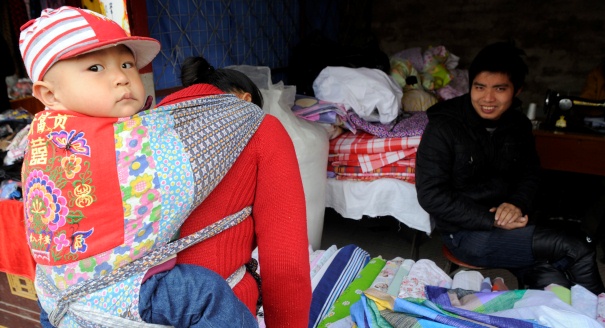
Rising income, not the one-child policy, has driven down China's fertility rate. The policy has outgrown its limited purpose and should be ended to reverse lingering gender imbalances.
Over 30 years ago, in 1980, China launched its one-child policy. Today, the country’s demographic dividend is spent. Its labor force is set to decline in absolute terms. The old-age dependency ratio (the number of people above the age of 65 for every person of working age) is expected to double over the next two decades, reaching the level of Norway or the Netherlands by 2030. Some observers have put two and two together and argued that the one-child policy has been the reason behind this demographic transition.
But that’s not so. The sharp decline in China’s fertility rate—from 5.9 in 1960–1965 to near 1.5 today—would probably have occurred anyway. After all, other rapidly growing East Asian countries also have fertility rates that have declined just as fast as China’s—such as Korea, Thailand, and even Indonesia (although Indonesia, with a lower per capita income, is behind by a couple of decades—see graph). And none of them had a one-child policy.
The reason behind declining fertility rates in most countries is rising incomes and living standards. As these factors rise, health services improve, which in turn reduces infant and child mortality. Couples don’t find it necessary to have many children to help them in their old age. Higher incomes and more education, especially for young girls, means that women tend to have fewer children later in life. Moreover, children become less important as a safety net in old age as other social security instruments become available. And with higher incomes, education is less a luxury and more a necessity—and the cost of education becomes an important factor in deciding family size.It is true that these factors were not predominant in the decisionmaking of most Chinese couples. Their decisions were dictated by the one-child policy. But had the one-child policy not been in place, there is a strong likelihood that the decision to have fewer children would have been voluntary with exactly the same results—just as it was in Thailand and Korea.
Interestingly, China’s one-child policy was not applied uniformly across the country. Urban areas were stricter than rural ones, and different provinces had different rules. Minorities were usually exempted. When couples had a child with disabilities, they were allowed to have a second child. Given the preference of most Chinese to have at least one son, those with a daughter were sometimes allowed to have another child (especially in rural areas).
More recently, some provincial governments have relaxed the requirements in a few select areas as a policy experiment. In most, if not all cases, the fertility rate has barely budged. All this suggests that if the one-child policy were to be removed tomorrow, China’s fertility rate would probably not rise appreciably. And even if it did, it would be a one-off increase and would immediately begin to fall again. Indeed, if China were to grant its rural population and urban migrants the same access to social services as urban residents enjoy, the fertility rate is likely to decline even faster.
So removing the one-child policy will unlikely have any impact on the overall population of China. The government recognizes this and is beginning to dismantle it, albeit slowly. This slow pace is unfortunate for two reasons. First, parents choosing a second child are prevented from having one on account of the policy, and in some cases may be forced to undergo an abortion. As important, the one-child policy is an important factor contributing to China’s “missing women”—there are over 30 million fewer women in China today than would be the case if its gender balance resembled that of other countries. This has occurred for a number of reasons: sex-selective abortions, infanticide, neglect, or abandonment. Some of this can be attributed to the constraints imposed on families as a result of the one-child policy, and is all the more reason China should accelerate the removal of the one-child policy.


Former Nonresident Senior Fellow, Asia Program
Nehru was a nonresident senior fellow in the Carnegie Asia Program. An expert on development economics, growth, poverty reduction, debt sustainability, governance, and the performance and prospects of East Asia, his research focuses on the economic, political, and strategic issues confronting Asia, particularly Southeast Asia.
Recent Work
Vikram Nehru
Vikram Nehru

A much-discussed disagreement over internet restrictions in Russia was never an existential threat for Putin: It was about elite groups protecting their interests.

Alexandra Prokopenko

The demands of the Kremlin’s war in Ukraine, demographic problems, and public hostility toward Central Asians mean Russia does not have enough workers.

Salavat Abylkalikov

Minsk’s faith in the future of its larger neighbor’s economy is fading as Belarusian firms in Russia see record losses.

Olga Loiko
With no key agreement signed on the Power of Siberia 2 gas pipeline, there is a risk that the window of opportunity for Russia will close if Chinese power generation becomes so green that new gas sources are no longer of any interest to Beijing.

Alexander Gabuev

The cost of air defense has become an unregistered tax on revenue for businesses. While military rents are consolidated in the federal budget, the costs of defense are being spread across the balance sheets of companies and regional governments.
Alexandra Prokopenko